
Andy Robertson: Liverpool Legend Joins Spurs as New Leader
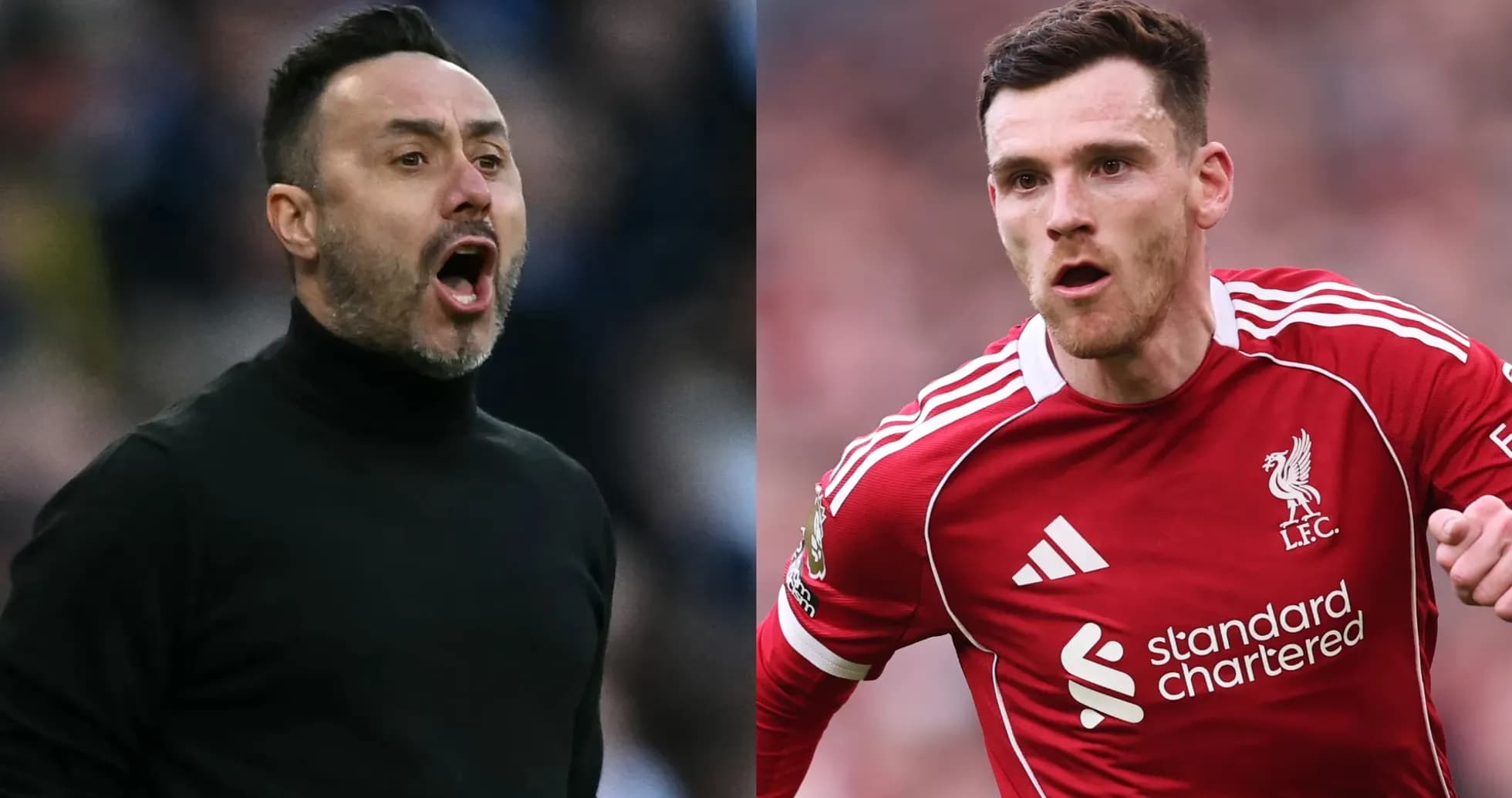
Andy Robertson leaves Liverpool with his place in the club’s modern history already carved in stone. Now he walks into Tottenham Hotspur as something very different: a serial winner asked to drag a talented, fragile squad up to his level.
A left-back for the ages
At Anfield, Robertson was far more than a dependable full-back. For the best part of a decade he was the heartbeat of Jurgen Klopp’s left flank, a relentless presence who blurred the line between defender, winger and midfield enforcer.
He won everything there was to win in red: two Premier League titles, a UEFA Champions League, an FA Cup, two League Cups and a FIFA Club World Cup. In the Premier League era, Liverpool have never had a better left-back. Stretch the comparison across the club’s entire history and only Alan Kennedy, scorer of two European Cup-winning goals, can realistically stand alongside him.
Klopp’s football demanded suffering, sprinting and courage. Robertson embraced all three. He charged up and down that touchline, with and without the ball, as if wired directly into the manager’s touchline fury. The system suited him perfectly. He, in turn, helped define the system.
Opposition managers noticed. After Liverpool beat Manchester United 3-1 at Anfield in December 2018, Jose Mourinho admitted he was exhausted just watching Robertson, describing a player who seemed to hit “100-metre sprints every minute”. It wasn’t hyperbole. It was a fair description of a full-back who turned work rate into a spectacle.
The running machine
The numbers back up the eye test. During the 2020/21 season Robertson covered 389.3km in the Premier League, the second-highest total of any full-back, just behind Luke Ayling. He didn’t just run far, he ran fast, and he did it again and again.
From 2019 to 2022, no full-back in the division sprinted more. He topped the sprint charts in three straight seasons:
- 2019/20: 567 sprints
- 2020/21: 843 sprints
- 2021/22: 656 sprints
That relentlessness fed directly into Liverpool’s pressing game. One moment, in particular, captured it. Against Manchester City in January 2018, Robertson launched a 13-second press that has become part of Premier League folklore. He chased Bernardo Silva, Kyle Walker, John Stones, Ederson and Nicolas Otamendi in one astonishing, continuous burst, harrying City all the way back towards their own goal. Anfield roared. A cult hero was born.
Spurs fans, who have craved players willing to run themselves into the ground for the shirt, will recognise that kind of attitude instantly.
Creative force from the flank
Robertson’s reputation is often framed around energy and aggression, but his attacking output has been just as remarkable.
Only two full-backs in Premier League history have recorded 10 or more assists in three separate seasons: Trent Alexander-Arnold and Andy Robertson. They did it together, in the same team, in 2018/19, 2019/20 and 2021/22. In those campaigns Robertson posted assist tallies of 11, 12 and 10 respectively, while Alexander-Arnold edged him by a single assist each time.
Since joining Liverpool from Hull City for a reported £8m in 2017, Robertson has set the benchmark for left-backs across the league. From the start of 2017/18, he ranks first among Premier League left-backs in:
- Touches in the opposition box (612)
- Chances created, including assists (430)
- Big chances created (88)
- Assists (56) – the most by any Premier League left-back
- Open-play crosses attempted (973)
- Successful passes ending in the final third (4,000)
Only Lucas Digne has delivered more successful open-play crosses from left-back in that period. Across all defenders, Robertson sits second in most of those attacking categories. He has been, in statistical terms as well as in reputation, an elite creator from deep.
Is he the greatest left-back the Premier League has seen? Ashley Cole still holds that crown for many, given his longevity at the very highest level with Arsenal and Chelsea. But Robertson has pushed that conversation closer than almost anyone expected when he arrived from relegated Hull.
Why Spurs moved for him
So why Tottenham, and why now?
Spurs were among a pack of clubs trying to secure Robertson on a free transfer as his Liverpool contract ran down. They had already attempted to bring him in during January, only for the move to collapse when Liverpool were unable to recall Kostas Tsimikas from his loan at Roma.
Roberto de Zerbi, newly installed in north London, wanted the deal revived. He got his wish, beating reported interest from Juventus to land a 32-year-old who still has plenty of miles in his legs and even more in his head.
On paper, Spurs are not short of left-backs. Destiny Udogie and Djed Spence are already in the building. What they lack is experience and proven leadership. De Zerbi didn’t hide the reasoning. “He brings experience, mentality and qualities,” he said when the signing was confirmed. “He’s a big player for us.”
This is a dressing room that has just endured back-to-back 17th-place finishes. Standards have slipped. Habits have frayed. Robertson walks into that environment as someone who has lived inside a culture where anything less than a title challenge felt like failure. He knows what it looks like when a group truly believes it can win.
That is exactly what Spurs are buying.
What’s left in the tank?
At 32, Robertson is not the same force he was at 26, but he is far from finished. He will captain Scotland at the FIFA World Cup 2026, a sign of both his enduring importance and his physical condition.
For Liverpool in 2025/26, he started 11 Premier League matches and came off the bench 13 times. Across all competitions he featured in 35 games. He no longer lives permanently in the opposition penalty area, yet his heat map from last season still shows a player who attacks aggressively, hugging the touchline high up the pitch and offering constant width.
The output remains impressive. Measured per 90 minutes last season, Robertson outperformed every Spurs defender in tackling, crossing productivity and chance creation. When you stack him directly against Spurs’ current left-sided options, the gap becomes obvious.
Per 90 minutes in 2025/26:
- Passes played into the box: Robertson 5.07, Spence 2.67, Udogie 1.75
- Tackle success: Robertson 75.00%, Spence 61.36%, Udogie 61.29%
- Successful open-play crosses: Robertson 0.92, Spence 0.44, Udogie 0.34
- Chances created: Robertson 1.54, Spence 0.81, Udogie 0.44
Those are the numbers of a player who can still shape games, not just survive in them. Slot him into De Zerbi’s aggressive, possession-heavy system and he instantly upgrades the left flank, offering angles, delivery and a level of decision-making Spurs have lacked in that area.
He should not need long to become a regular starter.
Raising the bar in north London
This transfer is about more than crosses and sprints. It is about standards.
Robertson arrives as a serial winner, a player used to dressing rooms where senior figures police the culture as fiercely as the coaching staff. Spurs have been short of that type since their last great side broke apart. Harry Kane’s departure left a void in personality as much as in goals.
De Zerbi wants intelligent, technical footballers who also play with ferocity and courage. Robertson ticks every one of those boxes. He may not be at his physical peak, but the edge, the competitiveness, the refusal to drift through games – those remain intact.
For Spurs, this is an astute piece of business: low risk, high influence, and a clear signal that the club wants players who know what winning actually feels like.
The question now is simple. Surrounded by a new cast, in a new city and under a new coach, can Andy Robertson drag Tottenham closer to the standards he once helped set at Liverpool – or will this be remembered as the moment Spurs finally found the leader their left flank has been missing for years?
Related News

Wilfred Ndidi’s Marriage Reportedly Ends as He Enters New Relationship

Cristiano Ronaldo's Top 5 Most Valuable Cars in His Extraordinary Collection
Ben Whittaker’s Challenge to Prove Eddie Hearn’s Bold British Boxing Bet
Peter Handscomb on the Challenge of Facing Indian Bowlers
How to Watch UFC 332: Silva vs. Wang Live on CBS and Paramount+ This Saturday
Raul Rosas Jr. Shares His Thoughts on the Shocking UFC Vegas 121 Finish Against Raoni Barcelos