
Arteta's Tactical Dilemma: Zubimendi, Timber and Kvaratskhelia
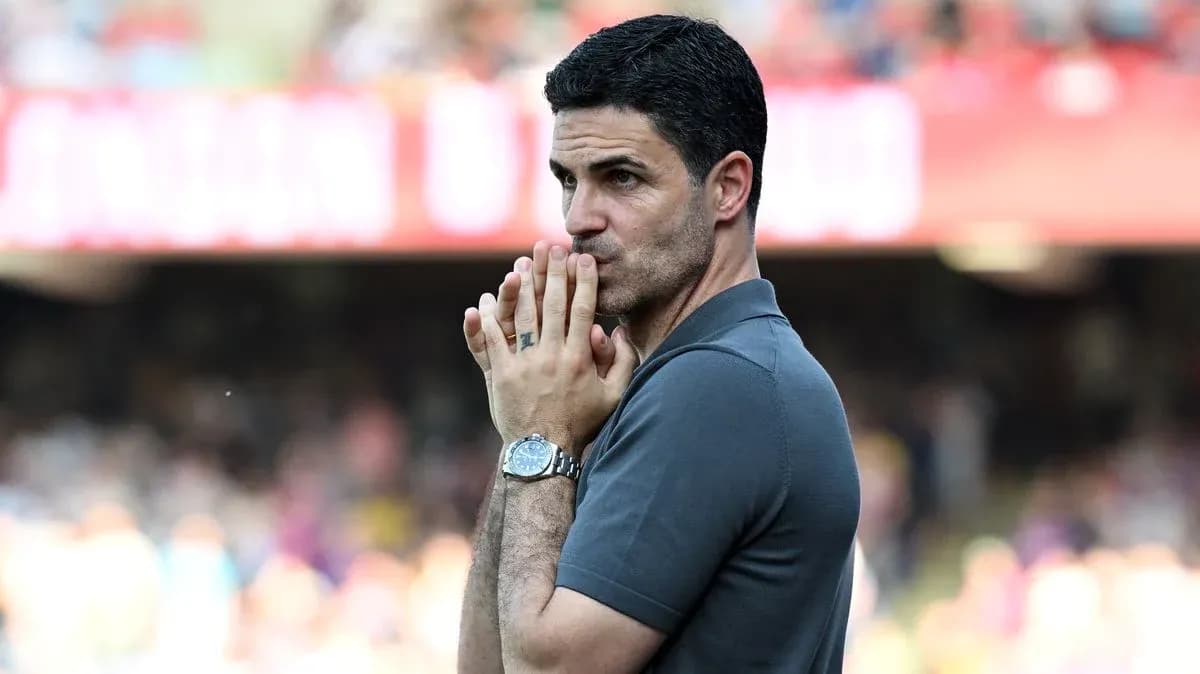
On the eve of the Champions League final, Mikel Arteta’s board is crowded with magnets and arrows. Systems, rotations, pressing triggers. But one problem sits in thick red ink at the top of the page: how to deal with Khvicha Kvaratskhelia.
The Arsenal manager has several big decisions to make before facing PSG, yet everything keeps circling back to that left flank and the man who terrorises it.
A clue from last November
UEFA may have given the game away. On Thursday, its social media team pushed out a clip from Spain’s 4-0 win over Georgia last November. The headline moment was a goal, but not the one you might expect.
Martin Zubimendi, the Arsenal midfielder whose season has quietly underpinned so much of Arteta’s work, was on the scoresheet that night. More telling, though, was another sequence: Zubimendi sprinting down the wing, hunting Kvaratskhelia, and cleanly stripping the Georgian star of the ball.
Fast forward to tomorrow. Same winger, different shirt, much bigger stage. Arsenal now need a repeat of that duel, only this time with a European crown on the line.
Timber’s race against time
The simplest solution on paper would be Jurrien Timber. A natural defender, comfortable on the ball, athletic enough to live with the very best wide players. But this is no tactical whiteboard. This is a player who has not kicked a ball in a competitive match since mid-March, when he damaged his groin against Everton.
He has returned to training this week. That is one thing. Throwing him straight into a Champions League final to face one of the most explosive wingers on the planet is something else entirely.
Arteta has never shied away from a brave selection, but this would be a leap of faith of a different order. Timber’s name is on the list, yet every passing hour without meaningful minutes weighs against him.
Mosquera’s case – and his limits
Cristhian Mosquera is another option pushing hard. A centre-back by trade, he offers presence, timing and decent recovery pace. He can defend the box, he can win duels, he can step out with the ball.
What he does not possess in abundance is the kind of lateral agility and one-v-one slipperiness that Kvaratskhelia forces you to show. Playing him wide of his natural role would be a calculated risk: secure in some moments, exposed in others, especially when dragged into space and forced to turn.
Right now, Mosquera probably sits as the favourite to start, largely because Timber could not even make the squad at Crystal Palace last weekend. Match rhythm matters, and Arteta knows it.
The Zubimendi experiment
And then there is Zubimendi, the wildcard that suddenly does not look so wild.
Arteta has always been willing to redraw a player’s job description if the bigger picture demands it. Last Sunday at Crystal Palace, eyebrows shot up when the team sheet dropped and Zubimendi appeared at right-back. No build-up, no hints, just a straight positional switch.
On the pitch, it looked anything but random. The Spaniard’s awareness, timing in the tackle and calmness in tight areas translated neatly to the flank. That old clip of him chasing down Kvaratskhelia now feels less like a coincidence and more like a proof of concept.
Zubimendi reads danger early. He angles his body well. He does not dive in. Against a winger who lives off half-feints and sudden bursts, those traits matter as much as raw pace.
A midfielder squeezed to the edge
There is another layer to this. Zubimendi’s status in the heart of Arsenal’s midfield has shifted in recent weeks. Myles Lewis-Skelly’s resurgence has changed the chemistry in the centre of the pitch, with the young Englishman thriving alongside Declan Rice.
On form, Lewis-Skelly deserves to keep his place. That squeezes Zubimendi out of his usual role, a difficult call given how decisive he has been across the campaign. For a manager as loyal as Arteta, leaving his compatriot out of the XI in a game of this magnitude would sting.
A move to full-back, then, solves two problems at once: it finds a spot for a trusted lieutenant and offers a bespoke answer to Kvaratskhelia. It is unconventional, yes. It is also exactly the sort of left-field solution Arteta has used to tilt big nights in his favour.
One decision, two seasons on the line
So the equation is stark. Timber, if cleared, brings natural defensive instincts but no recent match load. Mosquera offers solidity but risks being dragged into areas that do not suit him. Zubimendi, a midfielder by trade, carries that tantalising image of once having shut down Kvaratskhelia in full flight, and a manager willing to test him there again.
If Timber does not make it, do not be shocked if Zubimendi’s name appears at full-back when the teams are announced. The safer bet, for now, remains Mosquera, with Arteta weighing trust against sharpness, structure against surprise.
One way or another, Arsenal’s plan to stop PSG’s superstar will hinge on that single selection. Get it right, and the night could belong to Arteta. Get it wrong, and Kvaratskhelia may decide the final himself.
Related News

Wilfred Ndidi’s Marriage Reportedly Ends as He Enters New Relationship

Cristiano Ronaldo's Top 5 Most Valuable Cars in His Extraordinary Collection
Ben Whittaker’s Challenge to Prove Eddie Hearn’s Bold British Boxing Bet
Peter Handscomb on the Challenge of Facing Indian Bowlers
How to Watch UFC 332: Silva vs. Wang Live on CBS and Paramount+ This Saturday
Raul Rosas Jr. Shares His Thoughts on the Shocking UFC Vegas 121 Finish Against Raoni Barcelos