
Atletico Madrid Edges Osasuna in La Liga Clash
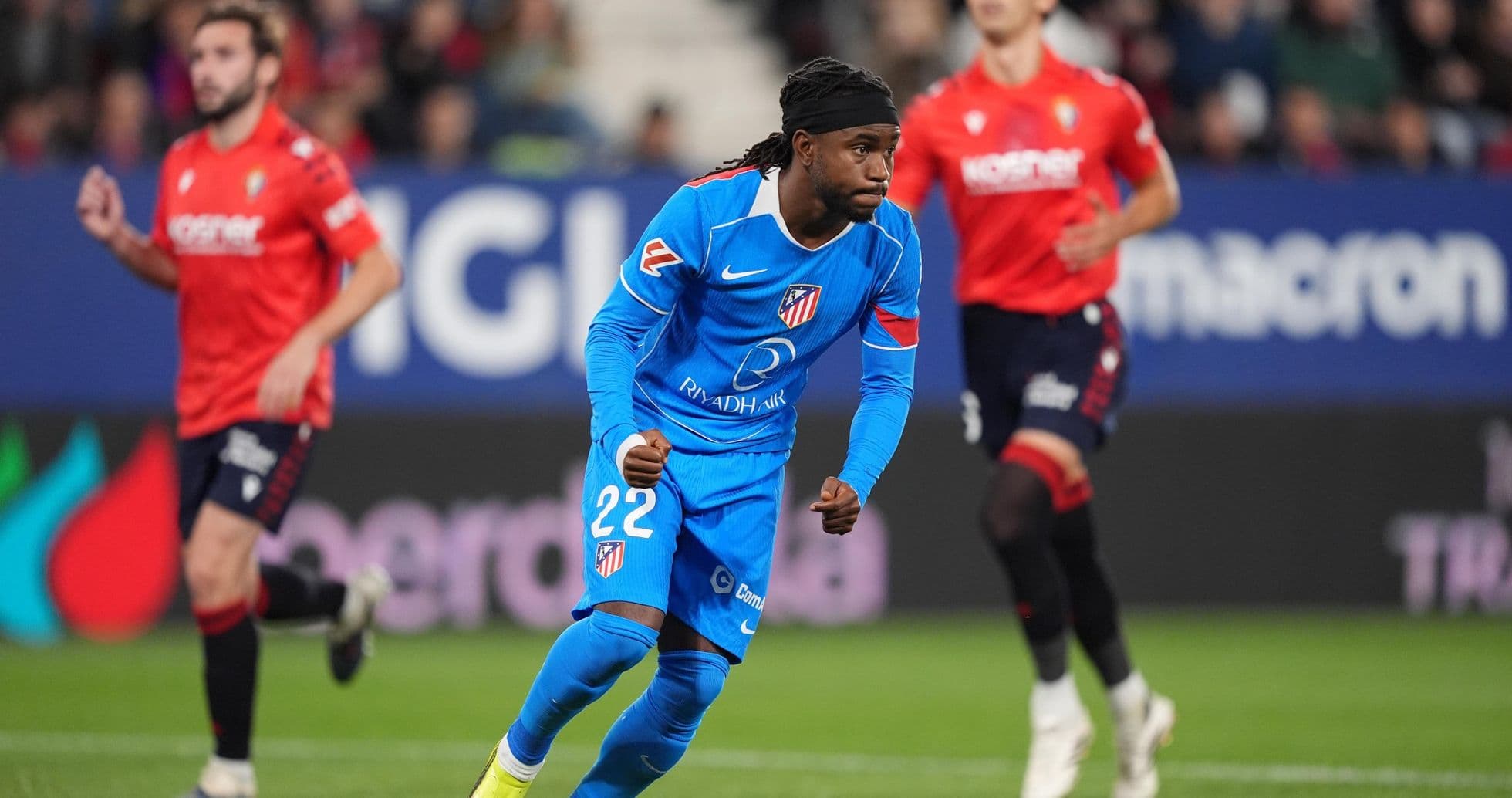
Under the Pamplona floodlights at Estadio El Sadar, this was a meeting of contrasting La Liga identities: Osasuna, the rugged mid-table spoiler, and Atletico Madrid, the hardened Champions League chaser. In Regular Season Round 36, Atletico’s 2–1 away win preserved their top‑four push, while Osasuna, 12th on 42 points heading into this game, were reminded of the fine margins that separate stubborn resistance from a statement result.
I. The Big Picture – Structures and Seasonal DNA
The tactical shapes told their own story before a ball was kicked. Alessio Lisci trusted his most-used blueprint, a 4‑2‑3‑1 that has underpinned Osasuna’s solid home campaign. At home they had played 18, winning 9 and drawing 5, with 30 goals scored and 22 conceded. That home profile – 1.7 goals for and 1.2 against on average at El Sadar – framed them as a dangerous host, particularly with Ante Budimir leading the line.
Diego Simeone, by contrast, doubled down on Atletico’s season-long structural identity: a 4‑4‑2 that has been used 24 times overall. With 20 wins in total this campaign and a goal difference of 21 (60 scored, 39 conceded), Atletico arrived as the more polished machine, even if their away form – 6 wins, 5 draws, 7 defeats, with 22 scored and 22 conceded – hinted at vulnerability on their travels.
The first half followed the script of the standings. Atletico, 4th on 66 points heading into this game, leaned on their superior collective rhythm. The visitors struck before the break and went in 1–0 up at half-time, asserting the kind of control that their total averages – 1.7 goals for and only 1.1 against per match – have made familiar. Osasuna, for all their home resilience, were chasing a side whose season has been defined by ruthless streaks, including a longest winning run of 6.
II. Tactical Voids – Absences and Discipline
Both coaches had to navigate notable absences that subtly reshaped the contest.
For Osasuna, S. Herrera’s suspension for a red card removed a combative midfield option who typically helps anchor the press and protect the back four. V. Munoz, out with a muscle injury, further thinned Lisci’s options between the lines. That context made the double pivot of Jon Moncayola and Lucas Torro even more central to the plan: shielding the back line and providing first-phase distribution from deep.
Atletico’s absentee list was longer and more structurally significant. J. Alvarez (ankle), A. Baena (suspended for yellow cards), P. Barrios (muscle injury), J. Cardoso (contusion), J. M. Gimenez (injury), N. Gonzalez (muscle injury), N. Molina (muscle injury) and G. Simeone (hip injury) all missed out. Between them, they stripped Simeone of a natural right‑back, a key centre‑back, and one of La Liga’s most productive wide playmakers in Giuliano Simeone, who had contributed 6 assists and 4 goals overall.
The knock-on effect was visible in selection: M. Llorente dropped into the back line, M. Ruggeri filled the left‑back slot, and the midfield four of T. Almada, R. Mendoza, Koke and O. Vargas had to balance creativity with extra defensive work.
Disciplinary profiles coloured the tactical risk. Osasuna’s season-long yellow-card distribution shows a pronounced late-game spike: 20.45% of their bookings have arrived between 76–90 minutes, and another 14.77% between 91–105. Red cards are also clustered in high-stress phases, with 28.57% between 31–45, 28.57% between 76–90 and 28.57% between 91–105. Atletico, meanwhile, are more front-loaded in their cautions, with 21.05% of yellows coming between 31–45 and a fairly even spread thereafter. That pattern suggested that if Osasuna were chasing late, their aggression could tip into indiscipline – a risk that hung over the final stages as they tried to overturn the deficit.
III. Key Matchups – Hunter vs Shield, Engine Room Battles
The headline duel was always going to be Ante Budimir against Atletico’s defensive shield. Budimir came into the fixture as one of La Liga’s elite finishers: 17 goals overall from 84 total shots, 39 on target. He is not just a penalty-box presence; he had also blocked 6 shots and made 20 tackles, emblematic of Osasuna’s workmanlike edge. Crucially, his penalty record was not flawless – 6 scored but 2 missed overall – so even from the spot there was no guarantee.
Up against him, Simeone’s reconfigured back four had to lean on the positional intelligence of D. Hancko and the adaptability of M. Pubill. Without Gimenez and Molina, Atletico’s usual aerial dominance and right‑side security were compromised, making Budimir’s duels and lay-offs a constant threat whenever Osasuna could deliver from wide areas through J. Galan and V. Rosier.
In midfield, the engine-room confrontation pitted Moncayola and Torro against Koke and R. Mendoza. Moncayola’s season numbers underline his two-way importance: 34 appearances, 2889 minutes, 4 assists, 50 tackles and 20 interceptions overall. He is also a disciplinary risk, with 9 yellow cards, but his ability to connect passes (1342 in total at 80% accuracy) is central to Osasuna’s attempts to play through pressure.
Koke, by contrast, orchestrated Atletico’s tempo, dropping alongside Mendoza to form a double pivot in build-up before releasing Almada and Vargas into the half-spaces. With Atletico averaging 2.1 goals at home but 1.2 on their travels, the onus was on this midfield to translate their structured possession into enough chances for Antoine Griezmann and Ademola Lookman to exploit transitions.
IV. Statistical and Tactical Verdict
Following this result, the numbers behind the narrative hold firm. Atletico’s total goal difference of 21 (60 scored, 39 conceded) remains the statistical backbone of their top‑four status. Their 13 clean sheets overall underline a defensive unit that, even when patched up, usually bends rather than breaks. The away profile – 22 scored and 22 conceded across 18 matches – again suggested that winning at El Sadar would require efficiency rather than domination, and a 2–1 scoreline fits that template.
Osasuna’s overall goal difference of -4 (43 scored, 47 conceded) encapsulates a season of narrow margins. At home they remain a strong proposition, but their total average of 1.2 goals for and 1.3 against tells of a side often operating on the edge of one goal either way. With no penalties missed overall this campaign (6 scored from 6), they usually maximise their big moments, yet against an opponent of Atletico’s calibre, their reliance on Budimir and set‑piece moments was not quite enough.
From an xG and defensive-solidity standpoint, Atletico’s structural discipline, even amid injuries, gave them the higher ceiling. Their compact 4‑4‑2, the leadership of Koke, and the high-end attacking quality of Griezmann and Lookman tilted the probability curve in their favour. Osasuna’s 4‑2‑3‑1, anchored by Moncayola and Torro and aimed at feeding Budimir, created a contest rather than a mismatch, but the broader season data always hinted that the visitors were likelier to edge a tight encounter.
In the end, this was a match that stayed true to each side’s seasonal identity: Osasuna combative and competitive, Atletico clinical and just a step higher in both execution and depth.
Related News

Barcelona Dominates Sevilla in Tactical Showdown
Atletico Madrid vs Real Madrid: A Tactical Derby Analysis
La Liga Officials Admit Refereeing Mistake in Madrid Derby Over Lee Kang-in's Tackle on Federico Valverde

Elche vs Real Madrid: A Clash of Opposites in La Liga

Atletico Madrid Dominates Osasuna 4-0 in La Liga Showdown
Barcelona's Dominance: 7-2 Triumph Over Racing Santander