
Forge Secures 1–0 Victory Over Supra in CPL Showdown
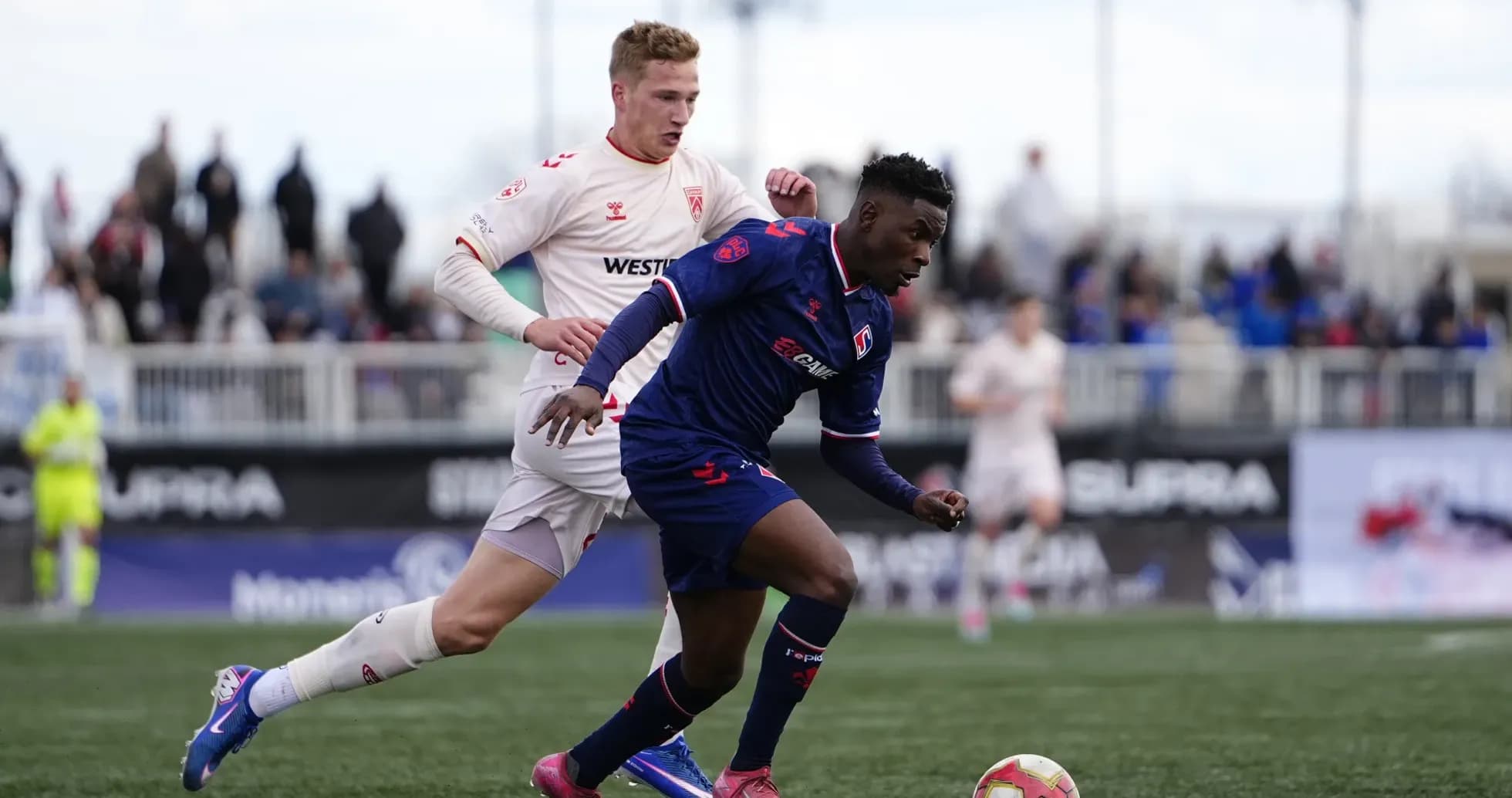
Under a cool Hamilton sky at Tim Hortons Field, Forge did what league leaders are supposed to do: control the tempo, absorb the tension, and find just enough incision to turn a cagey Group Stage tie into three points. The 1–0 win over Supra du Quebec was not a spectacle of chaos, but a quiet assertion of hierarchy in the Canadian Premier League’s emerging landscape.
Heading into this game, Forge were already setting the standard. Top of the table with 16 points from 6 matches, they had built their position on ruthless efficiency: 8 goals for and only 1 against overall, a goal difference of 7 that spoke to balance as much as brilliance. At home, they had been almost ascetic in their control – 3 goals scored, none conceded across 3 fixtures, averaging 1.0 goal for and 0.0 against. Supra arrived as the league’s intriguing newcomer: 4th, dangerous in flashes, but fragile. Their 5 goals for and 6 against overall left them with a goal difference of -1, and they had yet to keep a single clean sheet in 5 outings.
The lineups underlined the contrast in identity. Bobby Smyrniotis again trusted a familiar Forge core: D. Bertaud in goal, protected by a defensive unit featuring R. Rama, D. Nimick, A. Batisse and M. Jevremovic. In front, the double pivot of N. Jensen and A. Aromatario offered structure, while B. Paton and T. Borges linked phases to the spearhead, B. Wright, flanked by the energy of H. Massunda. On the bench, the presence of K. Bekker and M. Babouli gave Forge late-game control and guile if needed.
Supra’s XI, by contrast, looked like a side still defining itself. J. Milli started in goal behind a back line of C. Auguste, K. Ferdinand, S. Deslandes and C. Bayiha. In midfield, the blend of S. Mlah, O. Boughanmi and A. Sissoko hinted at technical quality, while T. Lebeuf and A. Marcoux supported the creative fulcrum, D. Choiniere. On the bench, impact and volatility were both present: the dangerous wide threat of D. Abzi, the high-rating defender M. Chretien, and the inventive S. Rea.
Discipline and availability always shape the tactical voids in a match like this, and both teams carried baggage into the contest. Forge’s defensive structure has been immaculate, but there is an edge to it: R. Rama arrived as one of the league’s more combustible defenders, with 2 yellow cards and a yellow-red already this season. In midfield, A. Aromatario had also collected 2 yellows, his role as disruptor occasionally tipping into risk. For Supra, the disciplinary load was even heavier. D. Abzi led the league charts with 3 yellows, while M. Chretien, A. Sissoko and S. Mlah had 2 apiece. Alessandro Biello, not in this matchday squad, had already seen red this season, underlining a wider pattern: Supra’s yellow-card distribution peaks between 46–60 minutes and again from 76–90, with 28.57% of their cautions in each of those late-game windows. This is a side that frays under pressure.
That fragility met Forge’s methodical pressure in the game’s key duels. The “Hunter vs Shield” storyline centered on B. Wright against a Supra back line that, on their travels, conceded an average of 1.5 goals per match and had never kept an away clean sheet. Wright’s season profile – 2 goals from 5 appearances, 5 shots with 2 on target, and a perfect penalty record (1 scored from 1, 0 missed) – framed him as the sharp end of Forge’s otherwise collective attack. His movement between the lines, supported by Borges’ creativity and Paton’s late runs, repeatedly tested a Supra defense that has shown it can be opened by direct play and second-phase pressure.
Opposite him, Supra’s “Shield” was more distributed than singular. C. Auguste, with 3 tackles and 4 interceptions this season, and the ultra-efficient passing of M. Chretien (78 passes at 96% accuracy, 1 blocked shot, 1 interception) spoke to a back line capable of playing through pressure but not always of surviving it. The decisive difference was that Forge’s attack did not need volume; their seasonal averages – 1.3 goals for overall, 1.0 at home – fit perfectly with a game plan built on control, not chaos.
In the engine room, the matchup was equally nuanced. For Forge, B. Paton has quietly become a two-way pillar: 1 goal from 4 shots, 2 on target, 10 tackles and 2 interceptions overall. His ability to step into midfield, win duels (18 of 26) and then play forward gave Forge verticality. Alongside him, Aromatario’s 128 passes at 77% accuracy and 9 interceptions this season underlined why Smyrniotis trusts him to dictate tempo and break up play.
Supra’s counterweight came through S. Rea and S. Mlah. Rea, one of the league’s top assist providers with 1 assist and 5 key passes from 46 total passes at 84% accuracy, is the creative thread Supra look to when they break lines. Mlah, with 1 goal from 1 shot on target and 2 yellow cards in just 27 minutes of league action, embodies their volatility: capable of a decisive contribution, but always walking a disciplinary tightrope. Around them, A. Sissoko’s tidy passing (91% accuracy) and physical presence offered ballast, but against Forge’s compact block and outstanding clean-sheet record (5 in total this campaign, 3 at home), space between the lines was scarce.
Statistically, the match unfolded almost exactly along expected lines. Forge’s defensive numbers – conceding just 0.2 goals per match overall and 0.0 at home – suggested that if they scored first, the contest would tilt heavily in their favor. Supra, with 1.0 goals for and 1.2 against overall, and 0 clean sheets, needed either an overperformance in finishing or a rare defensive shutout to leave Hamilton with points. Neither materialized.
Without explicit xG data, the underlying patterns still point clearly: Forge’s structure, discipline (no penalties missed, limited red-card exposure in open play this season) and control of game state make them a low-variance side. Supra, by contrast, are high variance: their card spikes late in matches, lack of clean sheets, and reliance on moments from Rea or Mlah mean they are always one mistake away from collapse.
Following this result, Forge’s identity hardens further: a champion’s profile built on defensive suffocation, timely contributions from Wright and Paton, and a midfield that rarely loses control. Supra leave with the familiar feeling of having competed but not imposed themselves, their promising individuals – Auguste, Rea, Mlah, Choiniere – still searching for a collective structure robust enough to withstand nights like this on their travels.
Related News

Vancouver FC vs Forge Prediction: Key Stats and Betting Tips

HFX Wanderers FC vs Atlético Ottawa Prediction: Key Stats and Betting Tips

Cavalry FC vs Supra du Quebec: Canadian Premier League Clash

Cavalry FC vs Supra du Quebec Prediction: Key Stats and Betting Tips

Atlético Ottawa Upset by Supra du Quebec in Canadian Premier League Clash

Vancouver FC vs York United: Predicted Lineups and Team News