
Getafe Overcomes Mallorca 3-1: A Tactical Breakdown
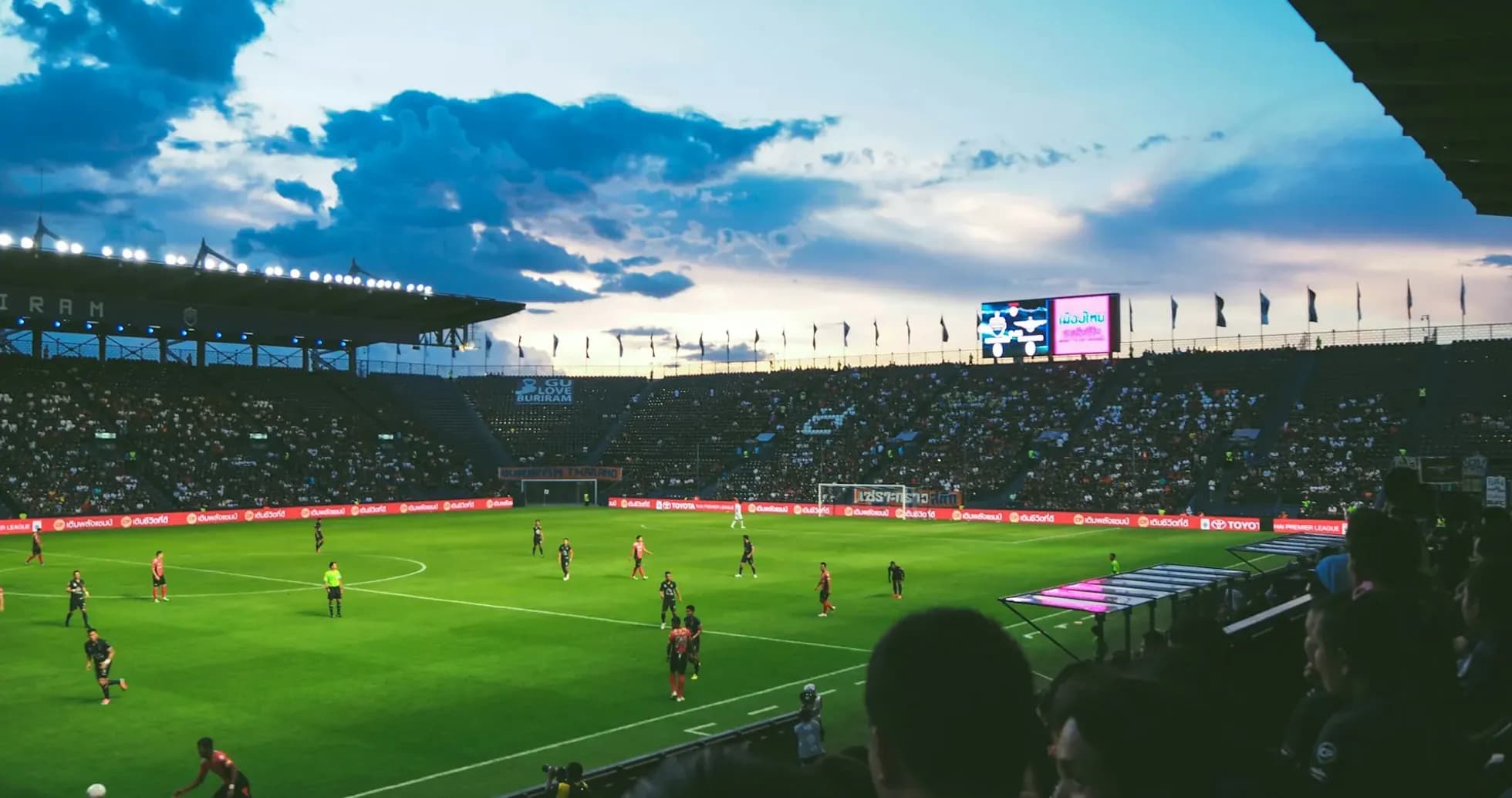
Getafe’s 3-1 win over Mallorca at the Coliseum was a textbook example of how structure, verticality and penalty-box efficiency can overturn a possession deficit. In a La Liga match where Mallorca saw 60% of the ball and completed 406 accurate passes, it was Jose Bordalas Jimenez’s compact 5-3-2 that dictated the key zones and the tempo that mattered. Getafe struck twice before half-time through M. Satriano, then added a third via Z. Romero to kill the game early in the second half. Mallorca’s late tactical reshaping and O. Mascarell’s goal altered the rhythm but never the overall control of the scoreboard.
I. Executive Summary
Over 90 minutes, the match was defined by contrasting identities: Getafe’s low-block, direct attack and set-pattern transitions against Mallorca’s more patient 4-2-3-1 circulation. Despite producing only 6 total shots (4 on target), Getafe converted three of them, outperforming their 1.62 xG and punishing Mallorca’s structural imbalances in defensive transition. Mallorca, with 9 shots and just 0.39 xG, struggled to convert sterile dominance into high-quality chances. The Coliseum saw a disciplined, combative contest: 17 fouls from Getafe, 18 from Mallorca, and a total of 7 yellow cards in a game where physical duels were central to the tactical story.
II. Scoring Sequence & Disciplinary Log
Goals (chronological, all locked to the final 3-1 score):
- 14' M. Satriano (Getafe) — assisted by A. Nyom Getafe’s first goal emerged from their right side, perfectly aligned with the 5-3-2 blueprint: A. Nyom advanced from wing-back, exploiting the space behind Mallorca’s left-back line, and delivered for M. Satriano to finish. It set the tone for Getafe’s vertical threat.
- 41' M. Satriano (Getafe) — (no assist) The second goal reinforced Getafe’s clinical edge. Satriano again capitalized inside the box, turning limited possession into maximum impact and sending the halftime score to 2-0 in favour of Getafe.
- 63' Z. Romero (Getafe) — assisted by L. Milla From a set or second-phase pattern, centre-back Z. Romero stepped up to finish after L. Milla’s delivery. At 3-0, Getafe had fully leveraged their xG profile, punishing Mallorca’s inability to defend static and semi-static situations.
- 65' O. Mascarell (Mallorca) — assisted by P. Torre Mallorca’s only goal came quickly after a substitution-driven reshuffle. P. Torre, just introduced, provided the assist for O. Mascarell, who arrived from midfield to pull it back to 3-1, briefly shifting the momentum but not the outcome.
Disciplinary log (all cards, exact reasons, chronological):
- 31' Omar Mascarell (Mallorca) — Foul
- 43' Pablo Maffeo (Mallorca) — Foul
- 74' Pablo Torre (Mallorca) — Foul
- 78' Domingos Duarte (Getafe) — Foul
- 80' Davinchi (Getafe) — Foul
- 81' Antonio Sánchez (Mallorca) — Foul
- 86' Mario Martín (Getafe) — Foul
Totals: Getafe 3 yellow cards, Mallorca 4 yellow cards, Total 7.
III. Tactical Breakdown & Personnel
Getafe lined up in a 5-3-2 with D. Soria in goal behind a back five of A. Nyom, Djene, Domingos Duarte, Z. Romero and J. Iglesias. The midfield trio of L. Milla, D. Caceres and M. Arambarri provided central density, while M. Martin and M. Satriano formed a narrow, hard-working front two.
The defensive shape was the match’s key tactical platform. Getafe defended deep, with the wing-backs dropping to form a flat back five and the three central midfielders screening the half-spaces. This compact block limited Mallorca’s 4-2-3-1 to low-value shooting zones: Mallorca’s 9 shots yielded only 0.39 xG, a clear sign that Getafe successfully forced attempts from distance or poor angles. D. Soria faced only 2 shots on target and made 1 save; the goals prevented figure of -0.93 underlines that, if anything, the finishing slightly outperformed the underlying goalkeeping model, but Mallorca simply did not generate enough clear looks.
In possession, Getafe were direct and selective. With only 40% of the ball and 314 total passes (225 accurate, 72%), they rarely tried to build slowly. Instead, they looked to:
- Use A. Nyom and J. Iglesias as release valves wide, especially Nyom on the right, whose forward run and cross at 14' produced the opener.
- Find early vertical passes from L. Milla and M. Arambarri into the channels for M. Satriano and M. Martin.
Satriano’s brace encapsulated this plan: aggressive runs into the box, occupying the centre-backs and punishing any disorganization after turnovers. Z. Romero’s goal at 63' highlighted another Bordalas hallmark: centre-backs attacking set-piece or second-ball situations, with L. Milla’s delivery quality central to the execution.
Substitutions were used to maintain defensive intensity and fresh legs in the block. At 64', Davinchi (IN) came on for A. Nyom (OUT), a like-for-like change at wing-back to preserve the wide defensive work-rate. At 71', S. Boselli (IN) came on for Djene (OUT), helping manage the back line’s physical load as Mallorca pushed.
Mallorca’s 4-2-3-1, coached by Martin Demichelis, had L. Roman in goal behind a back four of P. Maffeo, D. Lopez, M. Valjent and L. Orejuela. The double pivot of M. Morlanes and O. Mascarell sat behind an attacking band of Z. Luvumbo, S. Darder and J. Virgili, with V. Muriqi as the lone striker.
With 60% possession and 493 total passes (406 accurate, 82%), Mallorca controlled territory but not the penalty area. Their structure often saw the full-backs high and wide, but Getafe’s five-man line and narrow midfield three compressed the central lanes, leaving Mallorca to circulate without penetration. Muriqi was often isolated, with crosses either blocked (3 blocked shots for Mallorca) or contested by the aerially strong Getafe back line.
Demichelis attempted to shift the dynamic with several substitutions:
- 46' P. Torre (IN) came on for Z. Luvumbo (OUT) — adding a more creative, half-space playmaker.
- 66' T. Asano (IN) came on for J. Virgili (OUT) — injecting pace and directness from wide areas.
- 66' A. Sánchez (IN) came on for S. Darder (OUT) — fresh legs and energy between the lines.
- 79' A. Prats (IN) came on for M. Morlanes (OUT) — tilting the team towards a more attacking posture.
The most impactful change was P. Torre, whose entry directly led to Mascarell’s goal at 65'. Operating between the lines, he finally found a seam in Getafe’s block, feeding Mascarell’s late run. Yet even after that, Mallorca’s attacks remained largely from outside the prime zones, as evidenced by their low xG despite numerical presence in Getafe’s half.
L. Roman, like Soria, had 1 save in a match where quality of chance mattered more than volume. Mallorca’s goals prevented value of -0.93 indicates their goalkeeper also conceded slightly more than the model expectation, but the decisive factor was defensive structure: a back four repeatedly exposed to direct runs and second balls.
The disciplinary pattern also reflected the tactical battle. Mallorca’s midfielders and full-backs — Omar Mascarell, Pablo Maffeo, Pablo Torre and Antonio Sánchez — all saw yellow for Foul, underlining the difficulty they had in stopping Getafe’s transitions without breaking play. For Getafe, Domingos Duarte, Davinchi and Mario Martín were booked for Foul, showing the cost of sustaining an aggressive, contact-heavy low block.
IV. The Statistical Verdict
The numbers support the tactical reading. Getafe, with 6 total shots and 1.62 xG, were ruthlessly efficient, scoring 3 goals from 4 shots on target. Their 40% possession and 314 passes (225 accurate, 72%) underline a deliberate choice to cede the ball and focus on compactness, duels and direct attacks. Defensively, they allowed 9 shots but only 0.39 xG, a strong defensive index that validates the 5-3-2 block and disciplined spacing.
Mallorca’s 60% possession, 493 passes (406 accurate, 82%) and territorial control did not translate into danger. Their 2 shots on goal and low xG show that Getafe successfully pushed their attempts into low-probability areas. The 18 fouls and 4 yellow cards for Foul reflect a team repeatedly forced into reactive defending against counters. With both goalkeepers registering 1 save and goals prevented at -0.93 for each side, the real separation came from structure, not shot-stopping: Getafe’s system created and finished better chances, while Mallorca’s ball dominance remained largely cosmetic against a well-drilled block.
Related News

Barcelona Dominates Sevilla in Tactical Showdown
Atletico Madrid vs Real Madrid: A Tactical Derby Analysis

La Liga Officials Admit Refereeing Mistake in Madrid Derby Over Lee Kang-in's Tackle on Federico Valverde
Elche vs Real Madrid: A Clash of Opposites in La Liga

Atletico Madrid Dominates Osasuna 4-0 in La Liga Showdown

Barcelona's Dominance: 7-2 Triumph Over Racing Santander