
Minnesota United II Secures 2–0 Victory Over Colorado Rapids II
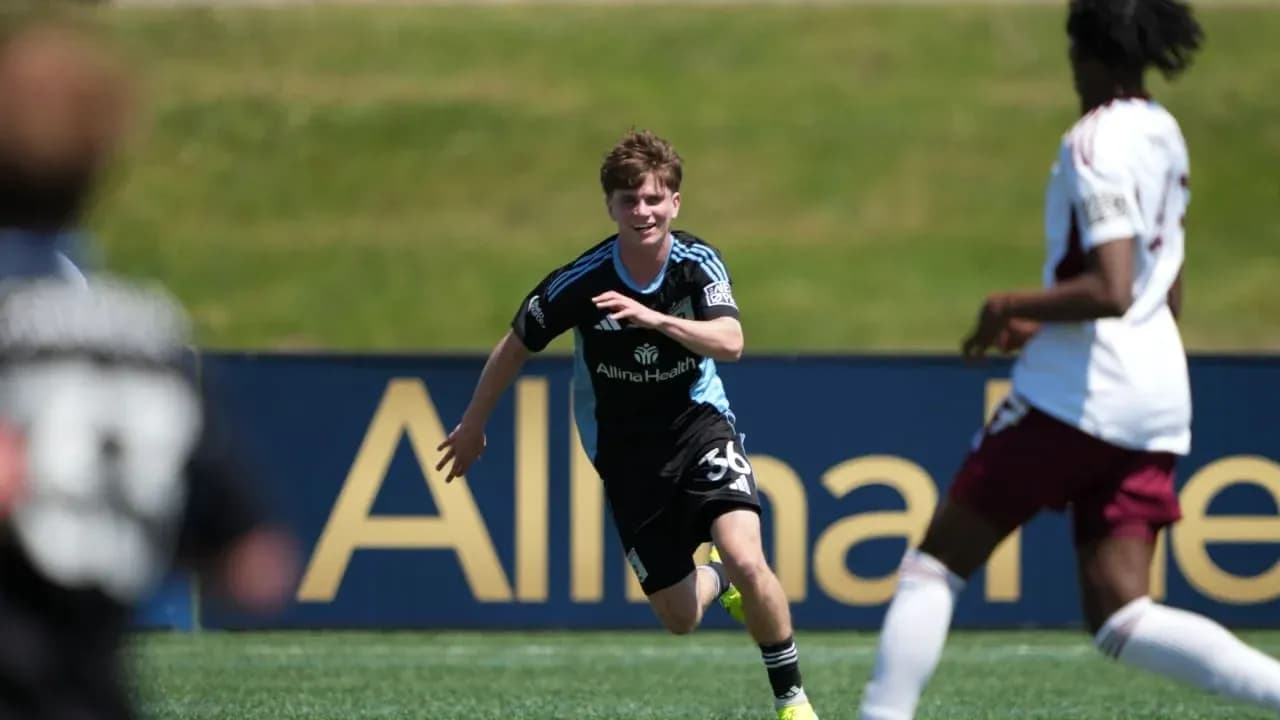
Under the lights at Allianz Field, Minnesota United II closed out a quietly pivotal MLS Next Pro night with a controlled 2–0 win over Colorado Rapids II, a result that crystallised the gap between a side clinging to play-off relevance and one spiralling at the foot of the conference.
Following this result, Minnesota sit on 18 points from 12 matches, their overall record finely balanced at six wins and six defeats. Across the season they have scored 14 goals overall and conceded 15, for a goal difference of -1 that underlines how thin the margins have been. At home they have been pragmatic rather than explosive: 5 goals scored and 4 conceded at Allianz Field, with averages of 1.0 goals for and 0.8 against per home game.
Colorado arrive at the same 12‑match mark in a very different reality. They have lost all 12 games overall, scoring 10 and conceding 31 for an overall goal difference of -21. On their travels, the numbers are even more unforgiving: 4 goals scored and 14 conceded away, an average of 0.7 goals for and 2.3 against per away game. The table confirms the story the eye test suggests: Minnesota are 8th in the Eastern Conference, inside the zone marked “Promotion – MLS Next Pro (Play Offs: 1/8-finals)”, while Colorado sit 14th, bottom of that same conference.
The match itself followed the logic of those trajectories. Minnesota led 1–0 at half-time and tightened their grip after the interval, adding a second to close out a professional 2–0 victory in regulation time.
Tactical Voids and Discipline
With no official absentees listed, both coaches essentially had full decks to shuffle, but the lineups hinted at contrasting stages of development.
Erik Bushey’s Colorado Rapids II named a youthful XI built on raw athleticism: K. Starks, J. De Coteau and C. Harper formed part of a back line that has been overexposed all season, shielded by the likes of A. Fadal and B. Jamison. Ahead of them, A. Harris, C. Aquino and M. Diop carried the creative and pressing burden, while the bench—Z. Campagnolo, L. Strohmeyer, J. Copeland, L. Garcia, J. Chan Tack, G. Gilmore and N. Tchoumba—offered energy rather than proven end-product.
Minnesota, by contrast, looked more balanced across the pitch. The defensive spine of K. Perkins, C. Harvey, N. Dang and J. Clarkson has underpinned three home clean sheets overall, with only 4 goals conceded at home all season. In front of them, S. Vigilante and M. Harwood provided the connective tissue between defence and attack, while the attacking band of A. Kabia, K. Chandler, J. Friedman, D. Randell and T. Putt gave the hosts multiple lanes to goal. The bench was deep: from the direct running of J. Adebayo-Smith to the technical profiles of M. Caldeira and L. Pechota, and the fresh legs of P. Tarnue, J. Farris, J. Bernard, H. Cruz, M. Bojang and K. Zeruhn.
Disciplinary trends framed the risk profiles. Heading into this game, Minnesota’s yellow-card timing showed a clear late-half spike: 27.27% of their cautions arriving between 31–45 minutes and another 27.27% in the 76–90 window. Colorado mirrored that volatility, with 27.59% of their yellows in both the 31–45 and 61–75 ranges. More worryingly for Bushey, all of Colorado’s red cards this season have been spread from 16–75 minutes, each 25.00% in those four 15‑minute bands, a pattern of mid-game indiscipline that consistently derails any tactical plan.
Key Matchups
The narrative duel of the night pitted Minnesota’s improving attack against one of the league’s most porous defences. Overall, Minnesota average 1.2 goals per game, while Colorado concede 2.6 per match. At Allianz Field specifically, Minnesota’s 1.0 goals scored at home met a Colorado back line that concedes 2.3 goals per away outing.
Within that structure, the “hunters” were collective rather than individual. With no top-scorer data available, the threat was distributed across Kabia, Chandler, Friedman, Randell and Putt, all capable of arriving in the box from different angles. Their task was to probe the spaces around Colorado’s central defenders—players like K. Sawadogo and J. Cameron—who have been repeatedly exposed by transitions and poor compactness.
On the other side, Colorado’s attacking hope rested with the fluidity of M. Diop and the support runs of C. Aquino and A. Harris. But they were running into one of the more stubborn home units in the conference: Minnesota’s defence at Allianz Field has allowed just 0.8 goals per game, with three clean sheets overall. Perkins’ command of his area and the positioning of Harvey and Dang have been central to that resilience.
Engine Room
The midfield battle was always going to be decisive. For Minnesota, M. Harwood and S. Vigilante formed the metronome and screen, tasked with dictating tempo and denying Colorado easy counters. Their job was to ensure that when Minnesota pushed numbers forward, the rest defence stayed intact.
Colorado’s “engine room” was more about firefighting than orchestration. A. Fadal and B. Jamison had to close passing lanes into Randell and Friedman while also providing an outlet for transition. The problem, as the season-long numbers show, is that Colorado rarely sustain those transitions: they average only 0.8 goals per game overall and have failed to score in 4 matches, including 3 times on their travels.
Statistical Prognosis and Verdict
Even before a ball was kicked, the statistical balance tilted heavily towards Minnesota. Overall, they had won 6 of 12, with 4 clean sheets and only 3 matches in which they failed to score. Colorado, by contrast, had no wins, no clean sheets, and a defence conceding nearly a full goal more per game than Minnesota’s overall average of 1.3 goals against.
While xG figures are not provided in the data, the underlying indicators—Minnesota’s stable home defensive record, Colorado’s away average of 2.3 goals conceded, and the visitors’ chronic indiscipline—pointed towards a game in which Minnesota would generate the higher quality chances and Colorado would be forced into low‑percentage efforts.
The 2–0 scoreline ultimately felt like a statistical and tactical confirmation rather than a surprise. Minnesota’s structured pressing, depth on the bench and balanced squad profile allowed them to manage the game in waves, while Colorado’s season-long patterns—leaky defending, mid-game cards, and a blunt attack—once again proved decisive.
Following this result, Minnesota United II look every inch a live contender for the 1/8-finals play-off picture, a side whose narrow negative goal difference disguises a competitive edge. Colorado Rapids II, meanwhile, remain trapped in a cycle that numbers and narrative agree on: without a drastic defensive recalibration and more cutting edge from the likes of Diop, Aquino and Harris, their season risks becoming a long lesson in damage limitation rather than development.
Related News

MLS Winners and Losers: Cavan Sullivan’s USMNT Rise, St. Louis City SC’s Smart Moves, and Chicago Fire’s Hugo Cuypers Gap

MLS Winners and Losers: Portland Timbers' Historic Hat-Trick, Josh Sargent Shines, and Cavan Sullivan's Rising Star
Tacoma Defiance Injury List: Players Out and Return Dates vs Colorado Rapids II

Carolina Core injury list: Players out, potential return dates
Tacoma Defiance vs Colorado Rapids II Predicted Lineups and Team News

Orlando City II vs Huntsville City Predicted Lineups and Team News