
New England II's Statement Win Over New York City II
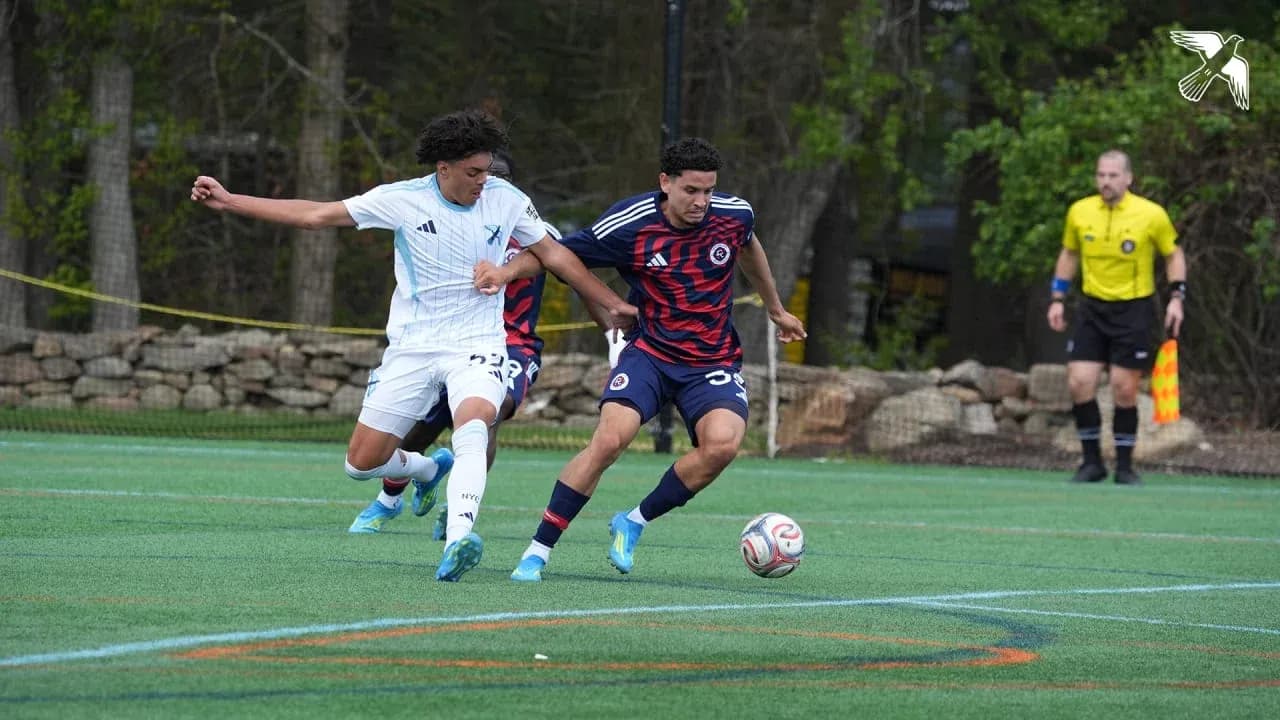
On a cool evening at Gillette Stadium, New England II turned a fragile season narrative into a statement win, edging New York City II 3–2 after trailing at the break. Following this result, the match feels less like a standalone thriller and more like a crystallization of each side’s 2026 MLS Next Pro identity: New England II as a ruthless home operator with a taste for chaos, New York City II as a talented but brittle group that cannot translate ideas into away points.
Heading into this game, New England II sat on 14 points from 8 matches, with a goal difference of 2 in both the Northeast Division (4th) and Eastern Conference (8th). The numbers painted a clear picture: they were a home-driven project. At home they had played 6, winning 5 and losing just 1, scoring 9 and conceding 6. Their home goals-for average stood at 1.8, with 1.0 goals against on average. On their travels they were winless in 2, scoring only 1 and conceding 3, for away averages of 0.5 scored and 1.5 conceded. Gillette Stadium is their fortress, and this five-goal contest simply reinforced that.
New York City II arrived as the inverse. They also had 8 matches behind them, with 9 points and a goal difference of -6 (8 goals for, 14 against) in both the Northeast Division (7th) and Eastern Conference (13th). At home they had been competitive – 3 wins and 1 defeat from 4, scoring 5 and conceding 8, an attacking average of 1.5 and a leaky 2.0 conceded. Away, though, the story was bleak: 4 played, 4 lost, 3 goals for and 6 against, for away averages of 0.8 scored and 1.8 conceded. This 3–2 defeat simply extended a pattern: they can score on their travels, but they cannot close the door.
The starting XIs, even without formal formations listed, hinted at each side’s tendencies. New England II’s spine ran through D. Parisian, D. McIntosh, G. Dahlin, C. Mbai Assem and S. Mimy at the back, with J. Mussenden and E. Klein offering structure in front. Ahead of them, A. Oyirwoth, C. Oliveira, M. Morgan and S. Sasaki formed an attacking band built for vertical thrust and direct running. The bench – with options like J. Da, J. Siqueira, S. George and C. Zambrano – gave them the ability to change the tempo or add late energy.
New York City II, under Matt Pilkington, leaned into a youthful, technical core: M. Learned anchoring from the back, with D. Randazzo, J. Loiola, J. Suchecki and K. Smith forming the defensive shell. In midfield and attack, the likes of P. Molinari, C. Flax, C. Danquah, D. Duque, D. Kerr and S. Musu offered mobility and interchanging roles. Off the bench, B. Klein, D. McDermott, E. Martin, A. Campos, H. Hvatum and G. de Souza provided fresh legs but not the structural steel they so clearly lack away from home.
Tactically, the match unfolded along the fault lines the season statistics had already drawn. New England II’s season form line of “WWWWLLLW” suggested a side that either overwhelms opponents or gets punished in open games. Their biggest home win, 2–0, and the fact that they had scored as many as 3 at home before, showed they were comfortable in front-foot scenarios. The 3–2 full-time score fits that profile: high-tempo, high-risk, but underpinned by confidence at Gillette.
Defensively, New England II remain imperfect. Overall they had conceded 9 in 8 matches heading into this game, an overall average of 1.1 goals against, with 6 of those at home. Allowing 2 to New York City II is above their usual home rate, but the trade-off is clear: they trust their attack to outgun opponents in Foxborough. Their 2 clean sheets (both at home) and the fact they had never failed to score at home before this fixture underline why they were content to let the game open up after the break.
New York City II’s vulnerabilities were always going to surface once the match became stretched. Heading into this contest they had conceded 15 in total, for an overall average of 1.9 against, with 7 of those on their travels at 1.8 per away match. A 3-goal concession here is slightly above their typical away rate, but consistent with the trend: once pressure mounts, they crack. They had yet to keep a clean sheet anywhere, and their failed-to-score tally of 3 (1 at home, 2 away) suggested that when they do not score early, their defensive issues are exposed. Even after taking a 1–0 lead into half-time, they could not stabilize the second half.
Discipline and game management also shaped the narrative. New England II’s yellow-card distribution across the season shows a pronounced spike between 46–60, 61–75 and 76–90 minutes, each window carrying 23.81% of their total yellows. They are an aggressive second-half team, sometimes walking a disciplinary tightrope as they chase or protect games. New York City II, by contrast, cluster 31.25% of their yellows between 16–30 minutes and 37.50% between 76–90, with their only red card this season also arriving in the 76–90 window. This pattern tells of a side that starts edgy and finishes frantic, and a late red can easily tilt an away fixture like this one beyond rescue.
From a “Hunter vs Shield” perspective, New England II’s attack at Gillette – averaging 1.8 goals at home before this match and now boosted by a 3-goal haul – continues to look like one of the more efficient units in the Eastern Conference context, especially given they had converted both of their penalties this season (2 total, 2 scored, 100.00%). New York City II’s “shield” is anything but: 1.8 away goals conceded on average heading into this game, 0 clean sheets, and their heaviest away loss a 3–2 scoreline that this result has now echoed. The hunter won that duel decisively.
In the “Engine Room”, New England II’s blend of workers and technicians – players like J. Mussenden, E. Klein and C. Oliveira – outlasted the more fragile structure of P. Molinari, C. Flax and C. Danquah. New England II’s ability to sustain pressure and keep their lines connected in the second half contrasted with New York City II’s habit of losing control of the midfield once the match state turns chaotic.
Statistically, any xG model would likely tilt heavily towards the hosts: a side averaging 1.5 goals overall and 1.8 at home, facing an opponent conceding 1.9 overall and 1.8 away, is primed to generate more and better chances. The final 3–2 scoreline feels like the logical extension of those numbers. New England II’s defensive solidity is not absolute, but relative to New York City II’s away fragility it is enough – especially in the familiar expanse of Gillette Stadium.
Following this result, the trajectories are clear. New England II deepen their identity as a home powerhouse capable of wild comebacks and multi-goal performances. New York City II, meanwhile, leave Foxborough with their away narrative unchanged: brave in moments, creative in flashes, but structurally too soft to withstand ninety minutes of sustained pressure on their travels.
Related News

MLS Winners and Losers: Cavan Sullivan’s USMNT Rise, St. Louis City SC’s Smart Moves, and Chicago Fire’s Hugo Cuypers Gap

MLS Winners and Losers: Portland Timbers' Historic Hat-Trick, Josh Sargent Shines, and Cavan Sullivan's Rising Star
Tacoma Defiance Injury List: Players Out and Return Dates vs Colorado Rapids II
Carolina Core injury list: Players out, potential return dates
Tacoma Defiance vs Colorado Rapids II Predicted Lineups and Team News
Orlando City II vs Huntsville City Predicted Lineups and Team News