
New York RB II's Tactical Deficiencies Exposed by Connecticut FC
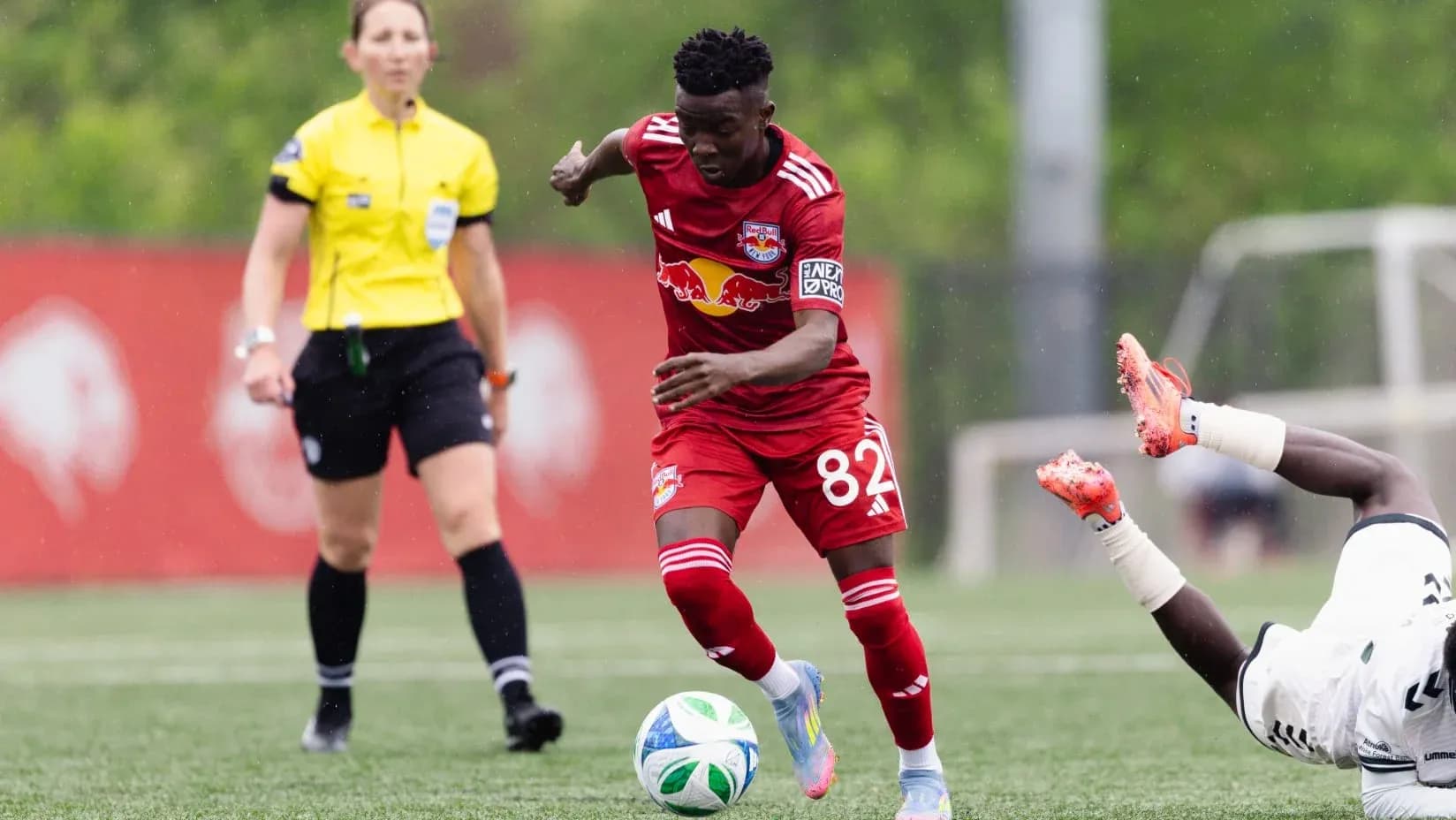
On a cool night at MSU Soccer Park, New York RB II walked out as Eastern Conference leaders, but left with a 3–1 defeat that exposed as much about their tactical DNA as it did about Connecticut FC’s growing menace on their travels.
I. The Big Picture – leaders undone by an away specialist
Following this result, the numbers behind the narrative are stark. New York RB II sit on 23 points from 11 matches in the Eastern Conference, ranked 2nd in that table snapshot with a goal difference of 10, built on 25 goals scored and 15 conceded overall. Their seasonal profile is clear: high-risk, high-reward football. At home they average 2.6 goals scored and 1.7 conceded, and on their travels 1.8 scored and 1.3 conceded, for an overall attacking average of 2.3 goals per match and 1.5 against.
Connecticut FC arrive from the opposite end of the Eastern Conference spectrum. Ranked 13th with 11 points from 10 matches, they carry a negative goal difference of -5, with 13 goals scored and 18 conceded overall. But that broad picture hides a crucial split: at home they average only 0.8 goals for and 1.8 against, yet away they score 1.8 and concede 1.8. On their travels, they are a different beast – volatile, but dangerous.
This match, a group-stage fixture in MLS Next Pro, became a live demonstration of that split personality. Connecticut struck twice before the interval, went in 2–0 up at half-time, and managed the second half well enough to see out a 3–1 full-time win.
II. Tactical Voids – discipline, fatigue, and structural gaps
Neither side’s missing-player list is available, but the lineups themselves tell their own story. New York RB II’s XI – with A. Stokes, D. Gjengaar, A. Sanchez, J. Masanka Bungi and C. Faello among the starters – looked like a youthful, high-rotation group. With no formation data, we infer structure from the club’s seasonal tendencies: an aggressive, front-foot approach that rarely settles for control over chaos. They have failed to score in 0 matches overall this campaign, a perfect record in that sense, but have only kept 1 clean sheet in total, and just 1 at home. The balance is tilted heavily toward attacking risk.
Their disciplinary profile amplifies that. Heading into this game, 37.50% of their yellow cards arrived between 76–90 minutes, with another 20.83% between 61–75. Add a solitary red card in the 61–75 window, and you see a side that often finishes games on the edge – emotionally and structurally. When chasing a deficit, that late-game surge in aggression can easily turn into tactical voids in transition.
Connecticut FC share some of that volatility, but it is more evenly spread. Their yellow cards are clustered between 31–60 minutes (40.00% combined in those two 15-minute windows) and 26.67% in the final quarter-hour. Crucially, their only red card heading into this game came between 76–90 minutes, underlining that their late-game phase is also combustible. In a match where New York RB II were forced to chase after going 2–0 down at the break, those overlapping aggression spikes created a second half primed for counters, duels, and tactical fouls.
III. Key Matchups – Hunter vs Shield, Engine Room battles
Without individual goal data in the JSON, the “Hunter vs Shield” duel is framed by collective units rather than a single talisman. New York RB II’s attack, averaging 2.6 goals at home, is built on volume and rotation. Starters like B. Rodriguez, M. Jimenez and D. Nelich give them multiple vertical runners and pressing triggers, while creative responsibility is shared among players such as P. Sokoloff and N. Worth.
Connecticut FC’s “shield” is not statistically impressive overall – they concede 1.8 goals per match both at home and away – but the away context matters. On their travels they have allowed 11 goals in 6 games, matching their 11 scored. This is not a low-block, low-event team; it is a side that is willing to trade chances. In that environment, defenders like R. Van Hees, J. Stephenson and L. Kamrath are less about shutting games down and more about surviving waves and winning key duels in transition.
In the “Engine Room”, Connecticut’s profile is intriguing. S. Sserwadda and R. Mora-Arias, flanked by D. Lacy and A. Applewhaite, form a midfield that suits away-day football: mobile, combative, and comfortable playing without the ball. Ahead of them, I. Kasule and B. Tanyi provide the connective tissue to Caua Paixao, whose presence as a central reference point is essential to springing attacks quickly once possession is won.
For New York RB II, the midfield band of C. Faello, D. Cadigan and P. Sokoloff is built to sustain pressure and recycle attacks rather than sit in a low block. That aligns with a team that has never drawn a match this season – 7 wins and 4 losses overall, 4 wins and 3 losses at home. There is no compromise in their approach; they push to tilt the game, even if it leaves them exposed.
IV. Statistical Prognosis – what this result really says
Following this result, the statistical arc of both sides sharpens. New York RB II remain a promotion-chasing force, but their defensive trend is a warning: 17 goals conceded overall from 11 matches, 12 of them at home, and only 1 clean sheet. The late-card profile (37.50% of yellows in the final quarter-hour) suggests that when they fall behind, they chase in ways that stretch their structure and invite further damage.
Connecticut FC, meanwhile, continue to live and die by their away form. With 3 away wins and 3 away defeats from 6 matches, and an away scoring average of 1.8, they are perfectly suited to punishing leaders who overcommit. Their season-long goal difference of -5 still reflects defensive fragility, but nights like this show how their vertical, transition-heavy model can flip the script against a high-possession favourite.
If we project this performance into an xG-style reading, New York RB II’s volume-heavy attack likely produced chances, but Connecticut’s ability to score 3 times in a match where they typically average 1.8 away suggests they maximised high-quality transitions and punished structural gaps. In a playoff-style 1/8-final scenario, this profile would be dangerous: New York RB II’s relentless attack versus Connecticut FC’s ruthless away counters is a matchup that promises goals, chaos, and a tactical battle defined less by shape on a whiteboard and more by how each side manages the emotional and physical intensity of the final 30 minutes.
On this night, Connecticut FC mastered that chaos. For New York RB II, the lesson is clear: their attacking identity can carry them deep into the season, but without a more controlled defensive phase – especially late on – nights like this will keep puncturing their title credentials.
Related News

MLS Winners and Losers: Cavan Sullivan’s USMNT Rise, St. Louis City SC’s Smart Moves, and Chicago Fire’s Hugo Cuypers Gap

MLS Winners and Losers: Portland Timbers' Historic Hat-Trick, Josh Sargent Shines, and Cavan Sullivan's Rising Star
Tacoma Defiance Injury List: Players Out and Return Dates vs Colorado Rapids II

Carolina Core injury list: Players out, potential return dates
Tacoma Defiance vs Colorado Rapids II Predicted Lineups and Team News
Orlando City II vs Huntsville City Predicted Lineups and Team News