
Portland Timbers II vs Ventura County: A Thrilling Penalty Shootout Showdown
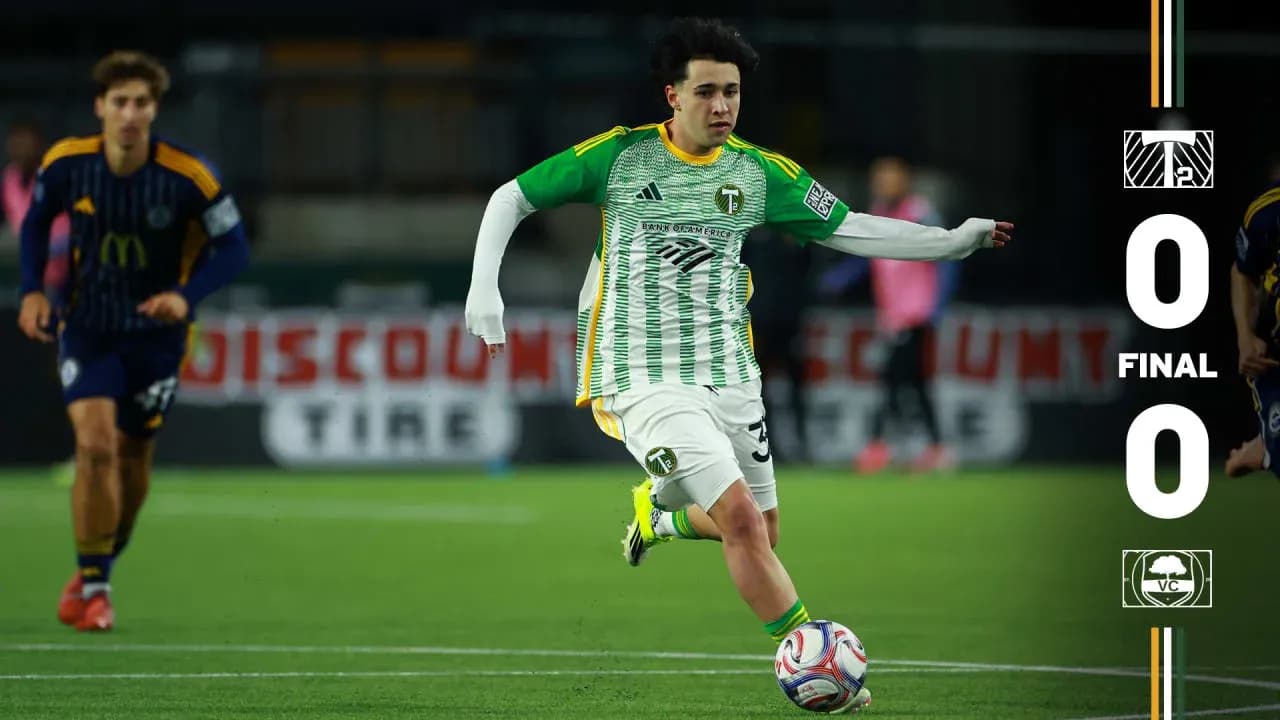
Providence Park under the lights, 120 minutes in the legs, and a penalty shootout to separate them: Portland Timbers II and Ventura County turned a routine MLS Next Pro group-stage fixture into something that felt much closer to a knockout tie. The 3–3 draw in normal time, followed by a 7–6 penalty triumph for Ventura County, was less about structure on a tactics board and more about mentality, depth, and how each squad’s season-long identity surfaced under stress.
I. The Big Picture – Two Identities Colliding
Heading into this game, the numbers framed a clash of contrasting profiles. Portland Timbers II sat 4th in the Pacific Division with 14 points and a goal difference of 0, the purest expression of their balance: 11 goals for and 11 against overall in league play. Their broader season stats reinforce that equilibrium. In total this campaign, Portland averaged 1.5 goals for per match and 1.6 goals against, with their home averages locked at 1.6 scored and 1.6 conceded. They are rarely outclassed, rarely dominant; instead, they live on the knife-edge of one-goal margins and emotional swings.
Ventura County arrived as Pacific Division leaders with 19 points and a goal difference of 3, built on a more aggressive attacking profile. In total this season they had 22 goals for and 17 against, an overall average of 2.0 scored and 1.5 conceded per match. On their travels, Ventura County were even more ruthless: 12 away goals in 6 away fixtures, an away average of 2.0 scored and only 1.2 conceded. Their form line – WWLWWWLLLWW – reads like a team that either overwhelms or gets dragged into chaos, but always plays on the front foot.
This fixture’s 3–3 scoreline in regular time mirrored those season arcs perfectly: Portland’s volatility against Ventura County’s high-event football, stretched over 120 minutes and then distilled into a penalty shootout where the league’s most clinical away side held its nerve.
II. Tactical Voids and Disciplinary Undercurrents
The raw data offers no confirmed absentees, so the tactical voids here are more structural than personnel-based. Portland’s lineup under Jack Cassidy leaned into youth and flexibility. H. Sulte anchored them from goal, with a defensive and build-up platform built around C. Ferguson, A. Bamford, N. Lund and C. Ondo. Ahead of them, the midfield and attacking lines carried a distinctly developmental flavour: E. Izoita and L. Fernandez-Kim offering connective tissue, V. Enriquez and D. Cervantes providing vertical running, and N. Santos supporting Colin Griffith, who came into the match as the club’s headline figure in the league’s top-scorer, top-assist and disciplinary charts despite not yet registering a goal or assist.
Ventura County’s XI, without a named coach in the data, still projected a clear structure. B. Scott in goal, shielded by a defensive group including M. Vanney, E. Martinez, Pepe and S. Hernandez. The midfield axis of B. Phan and A. Vilamitjana, flanked and supported by V. Garcia, D. Vanney, E. Preston and J. Placias, suggested a side comfortable playing through the thirds and committing numbers forward.
Disciplinary tendencies shaped the emotional tempo. Heading into this game, Portland’s yellow-card timing was heavily back-loaded: 26.32% of their yellows arrived between 61–75 minutes, with another 21.05% in both the 46–60 and 76–90 windows, plus 10.53% between 91–105. This is a team that grows more combative as fatigue and jeopardy rise. Ventura County, by contrast, concentrated 31.25% of their yellows in each of the 46–60, 61–75 and 76–90 ranges. Both squads, then, were primed for late-game edge – the kind of edge that, in a 120-minute match, can tip into chaos or resilience.
Portland’s season-long penalty record added another layer of tension. In total this campaign they had taken 9 penalties, scoring 8 and missing 1, an 88.89% conversion rate that is excellent but not flawless. That single miss hung over any shootout scenario. Ventura County, in contrast, had a perfect penalty record in league play: 1 taken, 1 scored, a 100.00% success rate. In the end, those season-long truths echoed in the shootout, where Ventura County edged it 7–6.
III. Key Matchups – Hunter vs Shield, Engine Room vs Enforcer
Without detailed positional data, the matchups are more about roles and tendencies than strict man-marking duels.
For Portland, Colin Griffith is the narrative hub. He entered this fixture as the club’s leading figure across the league’s top-scorer, top-assist and card charts, despite not yet having registered a goal or assist in his single recorded appearance. Listed as a forward, Griffith represents Portland’s intent to build an attacking identity around a young, mobile focal point. His presence in the starting XI, supported by V. Enriquez, D. Cervantes and N. Santos, framed Portland’s “hunter” role: a forward line asked to stretch Ventura County’s away defensive record of 7 goals conceded in 6 away matches.
Ventura County’s “shield” is more collective than individual. On their travels, they had conceded an away average of just 1.2 goals per match before this fixture, underpinned by a back line used to playing under pressure and a midfield that can absorb and then spring transitions. M. Vanney and E. Martinez, together with Pepe and S. Hernandez, formed a defensive unit accustomed to protecting B. Scott while the rest of the side pushed forward.
In the engine room, Portland’s E. Izoita and L. Fernandez-Kim were tasked with linking play and resisting Ventura County’s central press. On the other side, B. Phan and A. Vilamitjana operated as Ventura County’s metronomes and disruptors, responsible for controlling tempo and launching their own attacking waves through V. Garcia, D. Vanney and E. Preston. The balance of that midfield battle went a long way to explaining how the match opened up into a six-goal thriller.
IV. Statistical Prognosis and What the Shootout Reveals
From a season-long statistical lens, a high-scoring draw was always in play. Portland’s home average of 1.6 goals for and 1.6 against, combined with Ventura County’s away average of 2.0 scored and 1.2 conceded, pointed towards a match where both sides would find the net but Ventura County might edge the xG narrative through volume and efficiency.
Portland’s clean-sheet profile – 3 in total this campaign, with 1 at home – suggested they were unlikely to completely shut down the league’s most prolific away attack. Ventura County, with 4 clean sheets overall and 3 on their travels, usually impose more control than they managed here, but their attacking ambition always risked turning the game into a shootout long before penalties.
The eventual 3–3 scoreline over 90 minutes, stretched to 120, can be read as both sides playing to type: Portland leaning into volatility and late surges, Ventura County trusting their capacity to trade chances and back their forwards. Once the match tipped into a penalty decider, the season’s penalty data became prophetic. Portland, excellent but not perfect from the spot, blinked once. Ventura County, who had not missed a penalty in league play, extended that psychological edge into the shootout, converting 7 to Portland’s 6.
Following this result, the tactical lesson is clear. Portland Timbers II have the raw materials of a dangerous, emotionally charged side, but their defensive balance and disciplinary spikes in the final third of matches remain a vulnerability. Ventura County, meanwhile, reinforced their identity as the division’s most dangerous travellers: high-scoring, resilient, and ice-cold from 12 yards when the night demands it.
Related News

MLS Winners and Losers: Cavan Sullivan’s USMNT Rise, St. Louis City SC’s Smart Moves, and Chicago Fire’s Hugo Cuypers Gap

MLS Winners and Losers: Portland Timbers' Historic Hat-Trick, Josh Sargent Shines, and Cavan Sullivan's Rising Star
Tacoma Defiance Injury List: Players Out and Return Dates vs Colorado Rapids II

Carolina Core injury list: Players out, potential return dates
Tacoma Defiance vs Colorado Rapids II Predicted Lineups and Team News

Orlando City II vs Huntsville City Predicted Lineups and Team News