
Real Madrid vs Oviedo: A Tactical Analysis of La Liga's Round 36
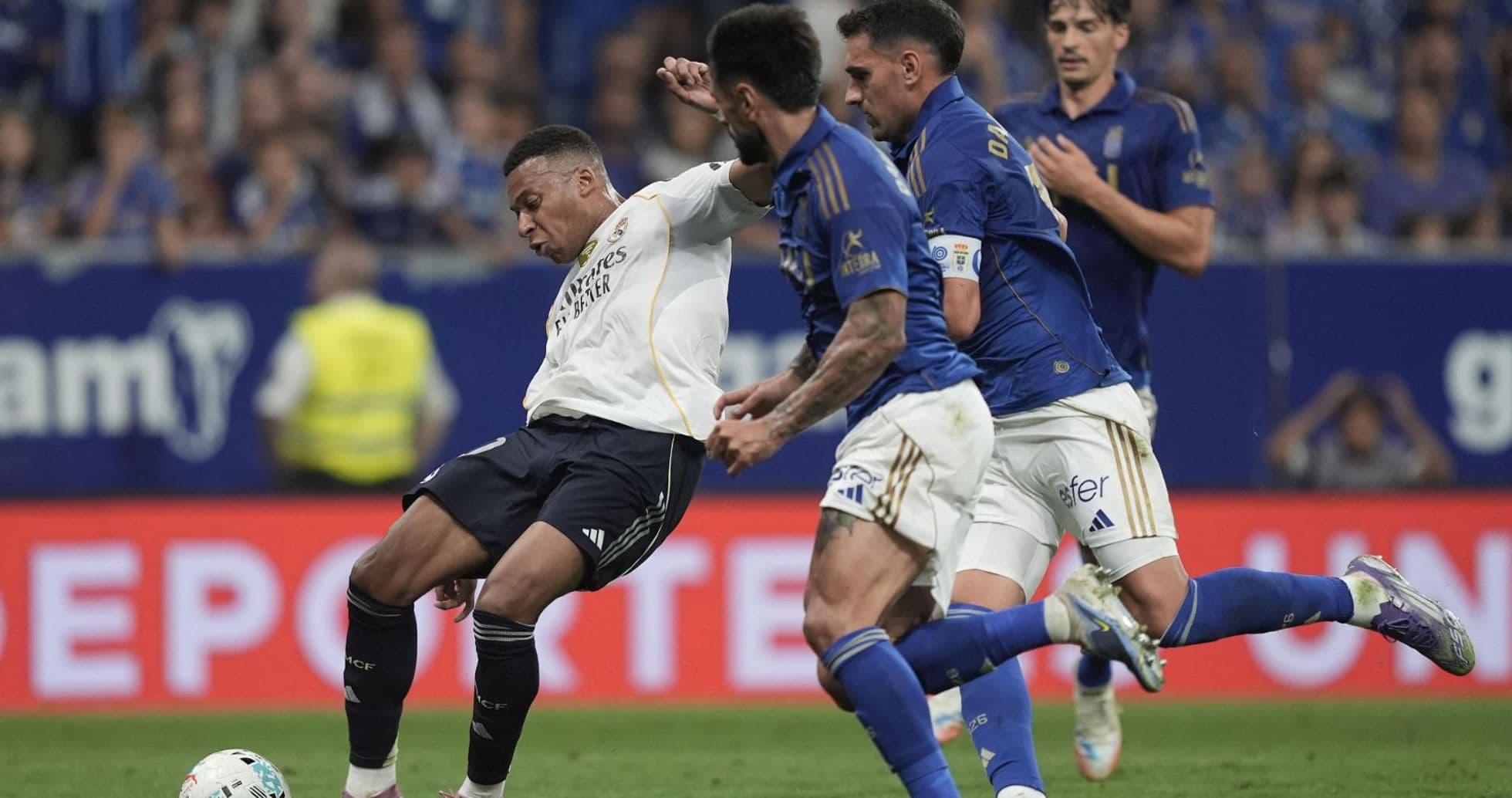
Under the Bernabéu lights, this was a meeting of opposites in La Liga’s Round 36: Real Madrid, second in the table with 80 points and a goal difference of 39, against bottom‑placed Oviedo, marooned on 29 points with a goal difference of -30. The 2–0 home win felt almost pre‑written, but the way the squads were constructed and adapted on the night told a richer tactical story.
I. The Big Picture – Structure and Seasonal DNA
Real Madrid leaned into their season’s dominant identity: a high‑control, high‑output side that, heading into this game, had scored 72 goals in total and conceded 33 across 36 matches. At home they have been ruthless, averaging 2.3 goals for and just 0.8 against, with 15 wins from 18. Alvaro Arbeloa mirrored that power with a 4‑4‑2 that was anything but old‑fashioned.
T. Courtois anchored the side behind a back four of T. Alexander‑Arnold, R. Asencio, D. Alaba and A. Carreras. Ahead of them, a narrow but aggressive midfield band of F. Mastantuono, E. Camavinga, A. Tchouameni and B. Diaz supported a front two of G. Garcia and Vinicius Junior. It was a shape designed to dominate central zones, then explode into the channels.
Oviedo arrived in Madrid with the numbers of a side permanently on the brink. On their travels they had won only 2 of 18, conceding 39 goals away (an average of 2.2 per game) and scoring 17 (0.9 per game). Guillermo Almada responded with a 4‑3‑3: A. Escandell in goal, a back line of N. Vidal, E. Bailly, D. Costas and R. Alhassane, a compact midfield trio of N. Fonseca, S. Colombatto and A. Reina, and a front three of I. Chaira, F. Vinas and T. Fernandez. It was less an attacking trident than a defensive screen, designed to survive Madrid’s waves.
II. Tactical Voids – Absences and Discipline
Both squads were reshaped by notable absences. Real Madrid were without D. Ceballos (coach’s decision), Eder Militao and A. Guler (muscle injuries), D. Huijsen (lacking match fitness), A. Lunin (illness), F. Mendy (muscle injury), Rodrygo (knee injury) and F. Valverde (head injury). That list stripped Arbeloa of a natural right‑sided interior in Valverde, a line‑breaking centre‑back in Militao, and a creative left‑footed playmaker in Guler.
The response was revealing: Alexander‑Arnold’s inclusion at right‑back, with Mastantuono and Diaz pinching inside, effectively recreated some of Valverde’s verticality and Guler’s craft through full‑back play and inverted wingers. Alaba’s leadership and Asencio’s presence at centre‑back compensated for Huijsen’s absence, while Camavinga and Tchouameni formed a double‑pivot shield that allowed the full‑backs to advance.
Oviedo’s voids were more brutal. L. Dendoncker and O. Ejaria were out injured, B. Domingues sidelined with a knee problem, and crucially J. Lopez and K. Sibo were suspended after red cards. That double suspension ripped out two options in the spine and forced Almada to lean heavily on Colombatto and Reina as both screen and outlet. With a squad already accustomed to suffering – 19 total league defeats and 56 goals conceded – those losses pushed Oviedo even deeper into reactive mode.
Disciplinary trends added another layer. Real Madrid’s yellow card distribution this season shows a concentration from 61‑75 minutes at 22.06%, suggesting their aggression spikes as they press to kill games. Oviedo’s own yellow peak is also in the 61‑75 band at 23.38%, with a worrying 16.88% from 76‑90. In other words, both sides tend to become more desperate and stretched late on – a dangerous pattern for a relegation candidate facing an elite finisher.
III. Key Matchups – Hunter vs Shield, Engine Room vs Enforcer
Even starting on the bench, K. Mbappe’s shadow hung over the night. Heading into this game he had 24 total league goals and 5 assists, with 102 shots (61 on target) and a penalty record of 8 scored, 1 missed. That single miss matters: Real Madrid cannot be framed as flawless from the spot, even if the team’s season penalty record is 12 scored from 12, with 0 missed. Mbappe is the pure “Hunter” in this squad – relentless volume, vertical runs, and a 7.56 average rating that reflects his centrality.
The “Shield” for Oviedo was a collective rather than an individual. Their away goals‑against figure of 39 tells its own story: this is not a side that protects its box well. E. Bailly’s presence at centre‑back offered experience and aggression, but with Oviedo conceding 1.6 goals per game overall, the back four’s margin for error was negligible. F. Vinas, curiously, sits at the other end of the disciplinary spectrum: top of the league’s red‑card chart with 2 reds and 1 yellow-red. His 49 tackles and 4 blocked shots show work rate, but his 5 yellows and 45 fouls committed underline a forward who defends on the edge.
In the engine room, the duel was clear. Camavinga and Tchouameni formed Madrid’s double anchor: one to carry and connect, the other to patrol and intercept. Their job was to suffocate Colombatto and Reina, preventing Oviedo from ever turning Madrid’s pressure into clean counters. With Valverde absent, the vertical surges from midfield had to come from Camavinga and the tucked‑in Mastantuono, while Diaz drifted between the lines to replicate some of Guler’s creative zones.
IV. Statistical Prognosis – Control, xG Profile and Defensive Solidity
Even without explicit xG numbers, the profiles are stark. Real Madrid, heading into this game, averaged 2.0 goals for and 0.9 against in total, with 13 clean sheets and only 4 matches where they failed to score. Oviedo, by contrast, averaged just 0.7 goals for and 1.6 against overall, failing to score in 19 of 36 fixtures. On their travels they had kept only 1 clean sheet and failed to score in 10 away games.
Translate that into an expected‑goals landscape and the picture is clear: Madrid are structurally built to generate multiple high‑value chances per match, especially at home, while Oviedo’s attack projects as low‑volume, low‑probability, reliant on set‑pieces and isolated transitions. Defensively, Madrid’s home record of 14 goals conceded in 18 games underpins a strong likelihood of suppressing Oviedo’s limited threat.
The 2–0 final scoreline fits that statistical script: a high‑control home performance, a probable xG skew heavily towards Madrid, and a relegation‑threatened side unable to convert sporadic pressure into goals. In narrative terms, this was less an upset than an affirmation: Real Madrid’s depth and structure absorbed a long list of absences, while Oviedo’s fragility, disciplinary strain and away frailty converged under the Bernabéu’s unforgiving glare.
Related News

Barcelona Dominates Sevilla in Tactical Showdown
Atletico Madrid vs Real Madrid: A Tactical Derby Analysis
La Liga Officials Admit Refereeing Mistake in Madrid Derby Over Lee Kang-in's Tackle on Federico Valverde

Elche vs Real Madrid: A Clash of Opposites in La Liga

Atletico Madrid Dominates Osasuna 4-0 in La Liga Showdown

Barcelona's Dominance: 7-2 Triumph Over Racing Santander