
Socceroos Progress in World Cup: Concerns Over No.9 Position
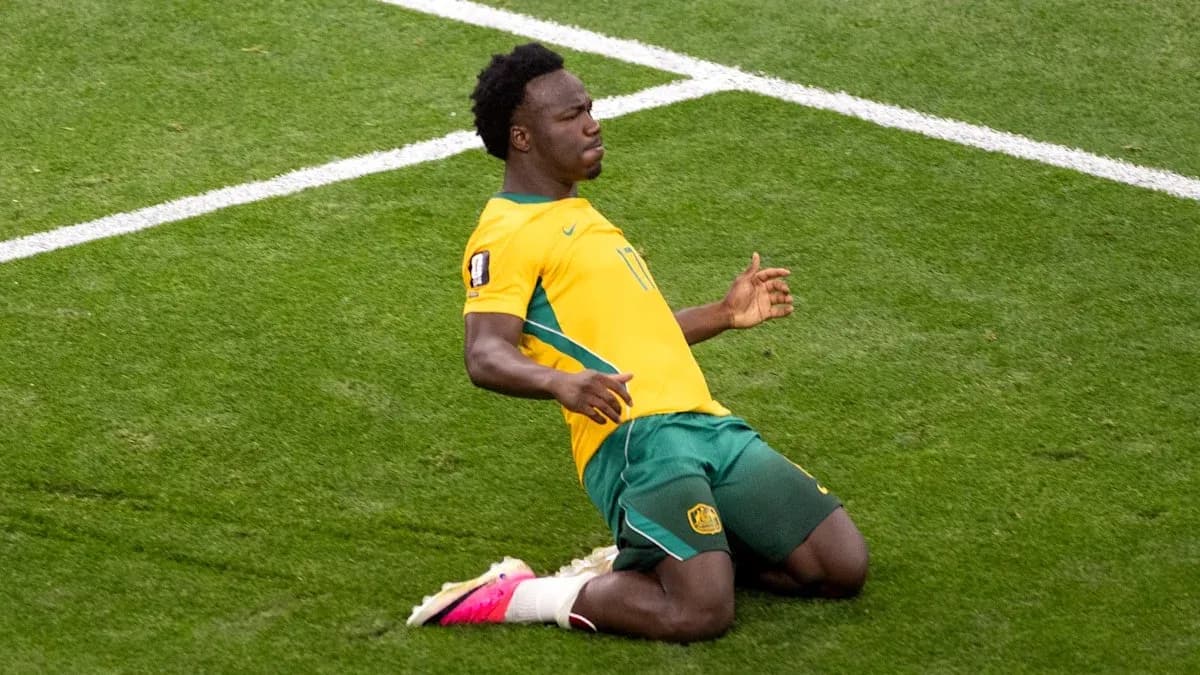
The Socceroos are through, but the alarm bells are ringing.
Australia’s goalless draw with Paraguay booked a place in the World Cup round of 32, a solid if unspectacular result against rugged South American opposition. The story, though, wasn’t a ruthless striker or a scheming playmaker.
Bos the bright spark in a blunt attack
Jordan Bos, drafted in on the right after Jacob Italiano’s late injury withdrawal, became the unexpected star turn. Tony Popovic shuffled his deck, pushing Melbourne City left-back Aziz Behich across to the left vacancy and handing Bos the role on the opposite flank.
It worked. In fact, it worked too well for some people’s liking.
Former Socceroos Scott McDonald and Robbie Slater watched Bos drive Australia forward and saw not just a breakout performance, but a warning sign.
“Up front is a bit of a worry when we’re looking at Jordy Bos as one of the most threatening (for Australia),” Slater said on Stan Sport’s Added Time.
When your most dangerous outlet is a converted full-back, the spotlight naturally swings to those meant to carry the scoring burden.
No.9 conundrum exposes trust issues
McDonald did not dodge the issue. For him, this is supposed to be Mo Toure’s stage or Nestory Irankunda’s moment. Instead, Toure stayed on the bench against Paraguay, and Irankunda – usually a winger – found himself leading the line as Australia’s No.9.
McDonald cannot see that as a long-term fix.
“There is a problem in terms of the No.9. Not bringing (Mo) Toure on instead of Tete Yengi tells me today that there’s no trust there,” he said.
That single decision, in his eyes, cuts deep. What does it say to a young striker desperate for minutes?
“Does he go and start him (Toure) out of the blue in the next game? You just can’t tell with Tony. But as a striker, being Toure, I don’t like that. That doesn’t fill me with confidence that my coach trusts me.”
The criticism did not stop at selection. It went to the heart of the role itself.
“No matter who we put up there, it’s a thankless task up there. Look at Nestory (on Friday), he had very little and was living off scraps,” McDonald said.
Without a genuine focal point in the box, the entire structure shifts. Crosses lose their target, second balls have no reference point, and defenders can step out without fear.
“But also when he plays up top, we don’t have a box outlet. Jordy Bos playing on the right-hand side was brilliant and it gave us that outlet.”
A full-back offering the presence that a centre-forward could not. That is the crux of the concern.
Irankunda’s growing pains in the middle
Irankunda, just 20, carries enormous expectation. His pace, power and directness from wide areas have made him one of the most talked-about young talents in Australian football. Shoved into the No.9 or even No.10 role at a World Cup, he suddenly has to play with his back to goal, hold up the ball, occupy centre-backs and time his runs inside the box.
McDonald always feared that shift.
He acknowledged the brutal reality of facing a physical, streetwise Paraguay back three and questioned how much more Irankunda realistically could have done in those conditions.
“Look, he’s gotta hold it up a little bit better,” he said. “I think at times he struggled because it’s not his natural game. But if there are some players getting closer to you, then what are you meant to do?”
Paraguay’s shape closed the doors he usually sprints through.
“He wants to get in those wider areas and drift but with the way Paraguay were set up as well with the back three, it is very hard for him to get down the sides of the opposition. There was no space.
“They were aware of his threat also, with three taking care of him. But he probably sometimes needs to be more in central positions and wait for things to happen.”
That patience, that almost cold detachment, is what separates the elite penalty-box strikers from the restless wide forwards.
“As we see the best strikers in the world – like Erling Haaland – they’re not interested any more. They just get into the right areas and allow others and trust others to do the dirty work then get on the end of things.
“That’s not naturally probably where (Irankunda) thinks. He wants to be the guy creating that and doing things, getting on the edge of the box and having shots. So if you’re gonna play that role, you just need to play it a little bit more smarter and be a bit more patient.”
The old truth about Australian No.9s
McDonald’s reflections carried the weight of a man who has lived the role.
“I didn’t like it either. I mean, for the majority of my career it was always you played off the big man or whatever.”
Australian fans know that image well: a towering No.9, a magnet for long balls and crosses, a battering ram who can head, hold and harass.
“But I’ve always said it, if you can head it, you’ve got a better chance of being a No.9 for the Socceroos. It’s as simple as that.”
Right now, the Socceroos are winning without that classic figure. They are into the round of 32, carried in part by the energy and adventure of a young full-back in Jordan Bos.
The question now is whether Popovic can find a true spearhead to match that spark – or whether Australia will keep asking its defenders to lead the way in the games that really matter.
Related News
Anthony Joshua Names Murat Gassiev as Next Opponent if He Defeats Tyson Fury
UFC 332: Start Time and Fight Highlights for Natalia Silva vs. Wang Cong
Court McGee Opens Up About Choosing UFC 332 as His Final MMA Fight
WBC Orders Lightweight Title Unification: William Zepeda vs Jadier Herrera
BCCI Pension List: Monthly Payments to Retired Indian Cricketers in 2025
Why Fury vs Joshua Is Set for Cardiff, and Dua Lipa’s Unexpected Role