
Toronto II vs Philadelphia Union II: Playoff Implications in MLS Next Pro
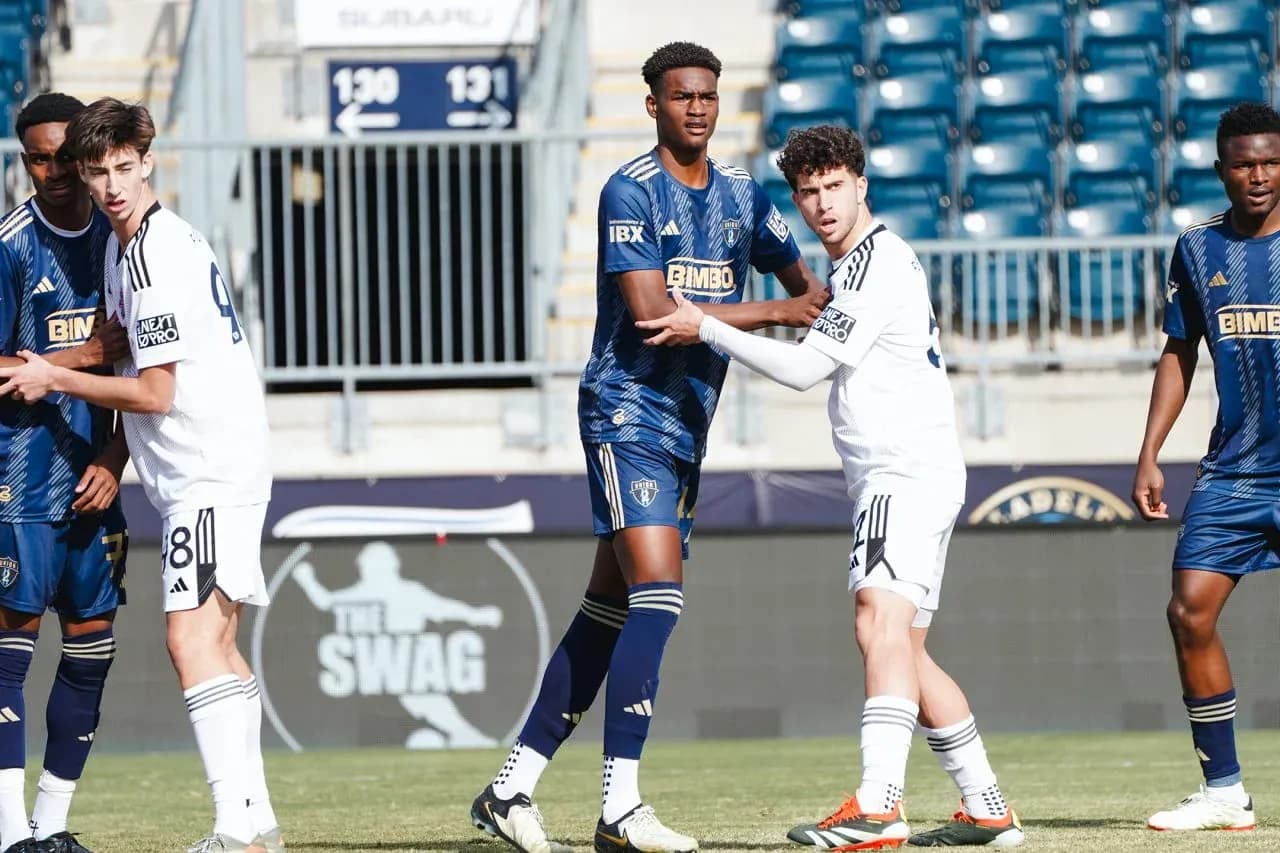
Toronto II host Philadelphia Union II at York Lions Stadium in a mid-group-stage fixture that carries clear playoff implications: in the league phase, Philadelphia arrive 4th in the Northeast Division on 18 points while Toronto sit 5th on 16, so a home win would flip the order and tighten the Eastern Conference playoff race, whereas an away victory would create a five-point gap and strengthen Union II’s position in the promotion race toward the MLS Next Pro play-offs 1/8-finals.
Head-to-Head Tactical Summary
The recent head-to-head pattern is finely balanced but venue-sensitive. In 2026, the sides have already met twice in the MLS Next Pro group stage. On 28 February 2026 at Subaru Park, Philadelphia Union II beat Toronto II 1-0 (HT 1-0), underlining Union II’s capacity to protect a narrow lead at home. On 17 April 2026 at York Lions Stadium, Toronto II responded with a 1-0 home win (HT 1-0), showing they can mirror that controlled, low-margin game on their own pitch.
Looking back to 2025, the rivalry was more open. On 26 September 2025 at York Lions Stadium, Philadelphia Union II won 2-1 (HT 1-1), successfully turning an even first half into an away victory. On 20 August 2025 at Subaru Park, the sides drew 2-2 in regular time (HT 2-1) before Toronto II edged an 8-7 penalty shootout, indicating Toronto’s resilience in high-pressure situations. Earlier that year on 6 July 2025, Philadelphia Union II recorded a dominant 5-0 home win over Toronto II at Subaru Park (HT 1-0), their clearest attacking statement in this matchup.
Overall, Philadelphia have produced the heaviest win (5-0 at Subaru Park) and have been slightly more efficient away at York Lions Stadium (2-1 win in 2025), while Toronto’s recent 1-0 home success in April 2026 shows a tactical shift toward tighter, more controlled contests on their own ground.
Global Season Picture
- League Phase Performance: In the league phase, Toronto II are 5th in the Northeast Division with 16 points from 11 matches (5 wins, 0 draws, 6 losses), scoring 18 goals and conceding 17 (goal difference +1). Their home record is 2 wins and 2 losses with 7 goals for and 6 against. Philadelphia Union II are 4th in the Northeast Division with 18 points from 11 matches (6 wins, 0 draws, 5 losses), scoring 14 and conceding 11 (goal difference +3). Away from home, they have 2 wins and 1 loss with 3 goals scored and 3 conceded. In the Eastern Conference table, Philadelphia sit 8th on 18 points with a promotion note toward the MLS Next Pro play-offs 1/8-finals, while Toronto are 10th on 16 points.
- Season Metrics: Scope detection shows team statistics and standings both at 11 games, so these metrics are also in the league phase. Toronto II have scored 19 and conceded 19 across their 11 league matches, averaging 1.7 goals both for and against per game, which points to a high-variance profile (1.7 goals scored and 1.7 conceded per match). They have 3 clean sheets and have failed to score 3 times, indicating inconsistency in both penalty areas. Disciplinary data show a steady yellow-card presence, with notable clustering between minutes 31-45 (5 yellows, 25.00%) and 46-60 (4 yellows, 20.00%), suggesting pressure and defensive interventions around the middle phases of each half.
- Philadelphia Union II have scored 15 and conceded 12 in the league phase, with averages of 1.4 goals for and 1.1 against per match, reflecting a more controlled defensive profile (1.1 goals conceded per game) and slightly lower attacking output than Toronto. They have 2 clean sheets and have failed to score twice. Their yellow cards are spread across the match, with peaks in the 16-30 and 61-75 minute ranges (both 6 yellows, 17.65%), and they have recorded red cards in the 31-45 and 61-75 minute bands, pointing to a more aggressive, risk-prone defensive approach in key transition periods.
- Form Trajectory: In the league phase, Toronto II’s form string of WWLLW shows three wins in their last five, but with back-to-back defeats embedded in that run, underlining streaky performance: they can build momentum but are vulnerable to sudden drops. Philadelphia Union II’s form of WLLLW also features three wins and two losses in the last five, but with defeats clustered (LLL earlier in the longer form string and then LLLW at the tail), indicating a side that either wins outright or loses without drawing, and whose results can swing sharply. Both teams arrive in comparable short-term form, but Philadelphia’s slightly better defensive record and away points haul give them a marginally more stable base.
Tactical Efficiency
Without explicit possession and xG figures provided, efficiency must be inferred from goal and results profiles. In the league phase, Toronto II’s 19 goals scored from 11 matches against 19 conceded (1.7 for, 1.7 against) suggests a high-variance, open-structure side whose attack and defense are broadly symmetrical in output. Their biggest away win of 5-0 and heaviest away loss of 5-0 underline this volatility: when their attacking patterns click, they can be explosive, but their defensive structure can also collapse under pressure.
Philadelphia Union II, with 15 goals scored and 12 conceded (1.4 for, 1.1 against), exhibit a more balanced efficiency profile. Their attack is slightly less productive than Toronto’s on raw numbers, but their defense concedes significantly fewer goals per match. Clean sheets (2 vs Toronto’s 3) are comparable, yet Philadelphia’s lower goals-against tally indicates better baseline defensive control. Their biggest home win (4-1) and relatively narrow heaviest defeats (1-2 at home, 1-0 away) point to a side that rarely gets blown away and tends to keep games within one or two goals.
From a comparative “Attack/Defense Index” standpoint, Toronto’s attacking index is marginally higher in volume, but their defensive index is weaker, resulting in a fragile goal difference equilibrium. Philadelphia’s attack is more modest but paired with a stronger defensive index, making them structurally better suited to manage tight, playoff-style matches—consistent with the sequence of low-scoring head-to-heads in 2026 (1-0 and 0-1).
The Verdict: Seasonal Impact
This match is a direct six-point swing in the MLS Next Pro group stage and has clear implications for both the Eastern Conference standings and the route to the play-offs 1/8-finals. A Toronto II win would move them from 16 to 19 points, overtaking Philadelphia Union II and likely pushing them closer to the Eastern Conference’s playoff cut line, while simultaneously dragging Union II back into a congested mid-table battle. Given Toronto’s positive recent home result in this fixture (1-0 in April 2026) and their higher scoring rate, a victory would reinforce a narrative of an ascending, high-ceiling side that can challenge for a top-eight Eastern Conference position if they stabilize defensively.
For Philadelphia Union II, an away win would take them to 21 points and open a five-point gap over Toronto II, consolidating their current 8th place in the Eastern Conference and strengthening their grip on a promotion path toward the play-offs 1/8-finals. With a stronger defensive profile in the league phase and a history of key away results at York Lions Stadium (2-1 win in September 2025), three points here would underline their identity as a structurally efficient, playoff-calibre team capable of managing tight margins on the road.
A defeat for either side will not mathematically decide their fate, but in a conference where both teams have zero draws and live on narrow win/loss margins, dropping this head-to-head could define the narrative of 2026: for Toronto, as another season of high variance and missed opportunity; for Philadelphia, as a failure to convert a solid defensive platform into a secure playoff berth. In forward-looking terms, this fixture functions as an early inflection point in the title-chasing ecosystem of the conference’s upper-middle tier and a potential tiebreaker in the race for the final play-off slots.
Related News

MLS Winners and Losers: Cavan Sullivan’s USMNT Rise, St. Louis City SC’s Smart Moves, and Chicago Fire’s Hugo Cuypers Gap

MLS Winners and Losers: Portland Timbers' Historic Hat-Trick, Josh Sargent Shines, and Cavan Sullivan's Rising Star

Tacoma Defiance Injury List: Players Out and Return Dates vs Colorado Rapids II

Carolina Core injury list: Players out, potential return dates

Tacoma Defiance vs Colorado Rapids II Predicted Lineups and Team News

Orlando City II vs Huntsville City Predicted Lineups and Team News