
Valencia Triumphs Over Real Sociedad in High-Scoring Encounter
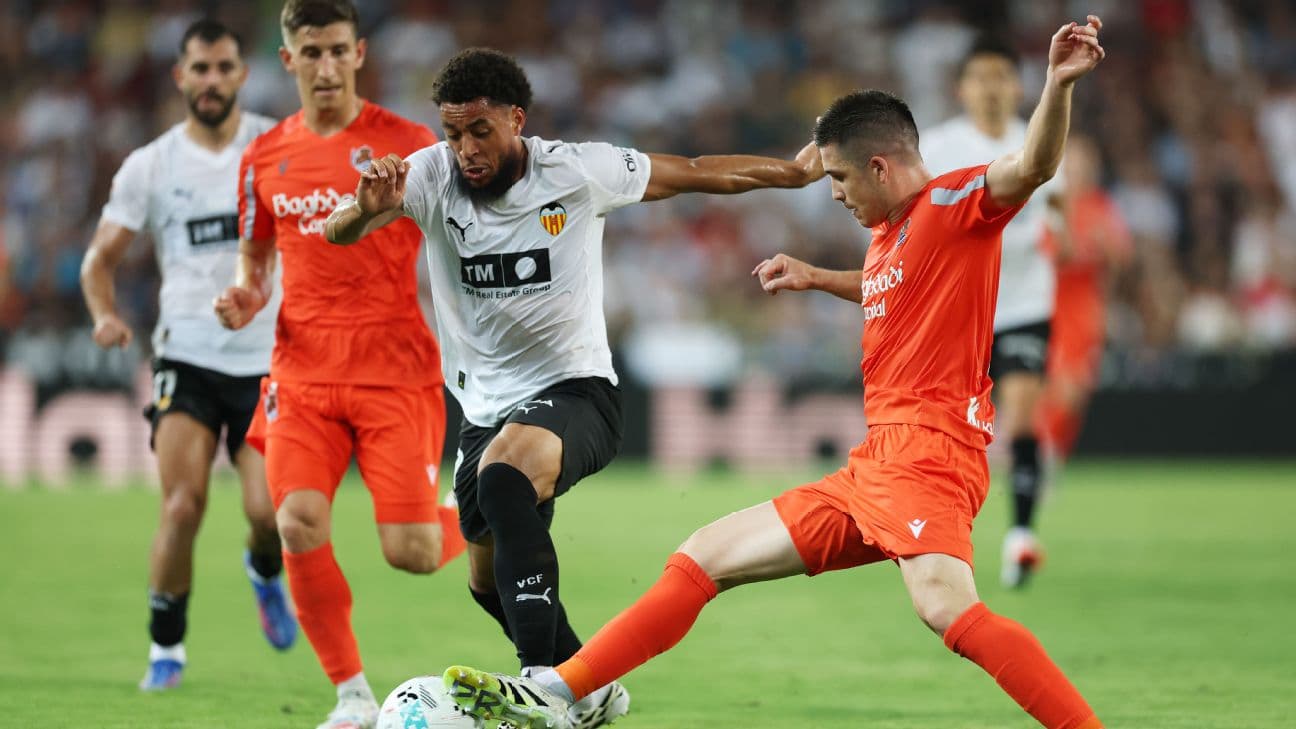
Real Sociedad and Valencia produced a chaotic, high-variance 3-4 at Reale Arena that hinged less on sustained control and more on moments, execution in both boxes and late-game resilience. Real Sociedad had the territorial edge and the ball (55% possession, 491 passes, 410 accurate, 84%), but Valencia’s directness and ruthlessness in transition cut through repeatedly, particularly in the final minutes against an increasingly stretched home side.
Tactically, Pellegrino Matarazzo’s 4-2-3-1 was built to dominate the central corridor and overload wide zones via the full-backs. Aihen Munoz at left-back and Aritz Elustondo on the right pushed high, effectively turning the structure into a 2-3-5 in settled possession, with Igor Zubeldia and Jon Martin left to manage rest defence. Beñat Turrientes and Carlos Soler formed the double pivot, tasked with both circulating under pressure and counter-pressing immediately after loss.
That aggressive posture paid off early. Munoz’s 3rd-minute opener, assisted by Elustondo, encapsulated the plan: both full-backs high, interior midfielders drawing Valencia’s line narrow, then a late arrival from deep exploiting the half-space. Real Sociedad’s 7 of 8 shots coming from inside the box underline how well they reached dangerous zones, but the total shot volume remained modest, suggesting long spells of sterile dominance.
Carlos Corberan’s Valencia responded from a compact 4-4-2 that morphed into a 4-2-4 in transition. Hugo Duro and Javi Guerra worked as split forwards, pulling onto the outside shoulders of Zubeldia and Martin to open central lanes for runners from midfield. The equaliser on 8 minutes, Guerra finishing from Diego Lopez’s assist, came from exactly that pattern: quick vertical progression, midfield line-breaking, and Guerra arriving from a slightly withdrawn starting position.
Valencia’s second on 22 minutes, Duro converting from Eray Cömert’s assist, underlined their set-piece and direct threat. With only 45% possession and 412 passes (321 accurate, 78%), they prioritised verticality over circulation, yet still generated 13 shots (9 inside the box) and a higher xG (1.61 to Real Sociedad’s 1.14). That disparity between volume and quality of chances versus actual four-goal output points to Real Sociedad’s defensive fragility and goalkeeping underperformance: Alex Remiro made only 2 saves and posted goals prevented of -1.37, indicating Valencia scored significantly more than an average keeper would be expected to concede from those chances.
Out of possession, Real Sociedad’s high line and aggressive counter-press left them vulnerable whenever the first line was broken. The double pivot often pressed ahead of the ball, leaving Zubeldia and Martin exposed to direct balls into Guerra and Duro. Valencia’s wingers, Luis Rioja and F. Ugrinic, were disciplined without the ball, narrowing to protect the half-spaces and funneling Real Sociedad wide, but sprang wide and high immediately on regain, turning the game into repeated transitional races that suited the away side.
Matarazzo’s triple substitution on 57 minutes was a clear tactical reconfiguration. Brais Mendez (OUT) for Luka Sucic (IN), Arsen Zakharyan (OUT) for Mikel Oyarzabal (IN), and Munoz (OUT) for Santi Gomez (IN) shifted the attacking profile: more vertical running and final-third presence from Oyarzabal, fresher legs between the lines in Sucic, and a more aggressive, winger-like threat from Gomez on the flank. The immediate impact was visible in the 60th-minute own goal by Cristhian Tarrega under heavy pressure, and especially in the 63rd-minute strike by Orri Oskarsson, assisted by Oyarzabal, as Real Sociedad flooded the box with more direct, penalty-area-focused attacks.
Corberan’s side then had to rewire on the fly after Cömert’s 70th-minute red card for a “Professional foul last man”. Reduced to ten, Valencia dropped into a deeper 4-4-1, with distances between lines compressed and a clear focus on blocking central access. The sequence of changes from 73 to 83 minutes — Umar Sadiq (IN) for Duro (OUT), T. Rendall (IN) for Ugrinic (OUT), Pepelu (IN) for Lopez (OUT), Largie Ramazani (IN) for Rioja (OUT), and André Almeida (IN) for Unai Nunez (OUT) — progressively transformed Valencia into a low-block plus counter side, with fresh legs to chase long clearances and contest second balls.
Despite the man advantage, Real Sociedad’s structural control did not translate into a decisive territorial siege. Their 3 corner kicks to Valencia’s 2 and a 3-1 edge in shots on target are modest for a home side chasing a winner against ten men. The late yellow cards — Zakharyan on 25 minutes for “Foul”, Turrientes on 86 minutes for “Foul”, Martin on 88 minutes for “Foul”, and Zubeldia also on 88 minutes for “Foul” — reflect a side increasingly reactive, forced into recovery tackles as Valencia continued to find breaks even with a numerical deficit.
Valencia’s late goals — G. Rodriguez on 89 minutes from Almeida’s assist, and Guerra again on 90 minutes assisted by Rendall — were the product of that imbalance. With Real Sociedad throwing numbers forward and their rest defence fraying, Valencia’s counters became more dangerous, not less, despite being down to ten. The away side’s goalkeeper, Stole Dimitrievski, faced only 3 shots on goal and made 1 save, yet also posted goals prevented of -1.37, indicating Real Sociedad’s finishing slightly overperformed the underlying shot quality.
Statistically, the match reads as an archetype of control versus punch. Real Sociedad’s higher possession, pass accuracy and territorial dominance align with a team structurally in charge, but their xG of 1.14 and 8 total shots suggest they struggled to turn that control into sustained high-quality chances. Valencia, with fewer passes and less of the ball, produced more shots, more from inside the box and a higher xG, then overperformed it with four goals.
Discipline tilted heavily towards Real Sociedad in yellows (4 to Valencia’s 0), while Valencia carried the more damaging single red. Yet the card profile — all four Real Sociedad yellows for “Foul” and Cömert’s dismissal for “Professional foul last man” — underlines a pattern: the home side repeatedly had to break up transitions, and the away side accepted a high-risk, high-reward defensive line that eventually cost them a man but not the result.
In sum, this was a tactical contest where Valencia’s overall form in transition and penalty-box efficiency decisively outstripped Real Sociedad’s superior structure and possession, exposing a soft defensive underbelly and an underperforming Defensive Index for the hosts.
Related News

Barcelona Dominates Sevilla in Tactical Showdown
Atletico Madrid vs Real Madrid: A Tactical Derby Analysis

La Liga Officials Admit Refereeing Mistake in Madrid Derby Over Lee Kang-in's Tackle on Federico Valverde
Elche vs Real Madrid: A Clash of Opposites in La Liga

Atletico Madrid Dominates Osasuna 4-0 in La Liga Showdown

Barcelona's Dominance: 7-2 Triumph Over Racing Santander