
Vancouver Whitecaps II Fall to Real Monarchs in MLS Next Pro Clash
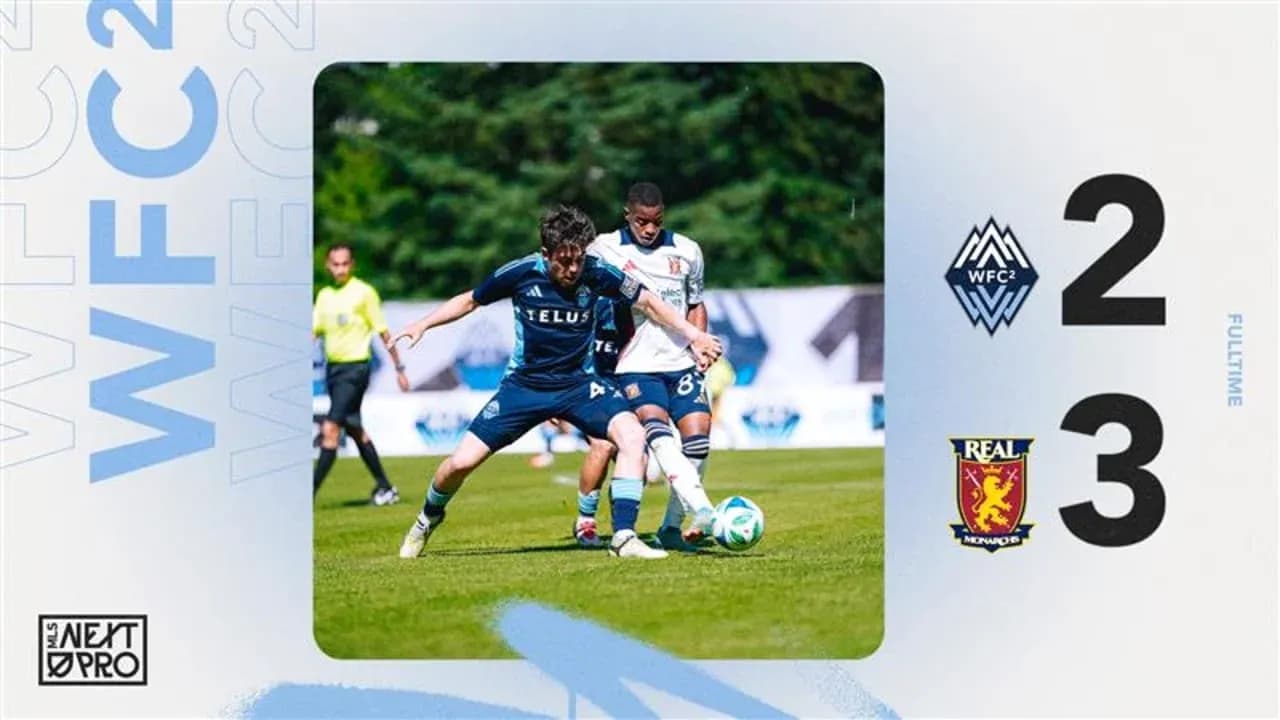
Swangard Stadium under the late-night lights hosted a harsh lesson for a young Vancouver Whitecaps II side. In a Group Stage clash of MLS Next Pro, the home team fell 1–3 to Real Monarchs, a result that underlined the gap between an erratic project and a more ruthless, if still imperfect, contender.
Heading into this game, the standings already framed the contrast. Vancouver sat 7th in the Pacific Division with 9 points from 12 matches, their overall goal difference at -13 from 16 goals for and 29 against. On their travels they had lost all 6, but at home they had at least turned Swangard into something of a proving ground: 3 wins and 3 defeats, with 8 goals scored and 11 conceded. Real Monarchs arrived in Burnaby as the more complete outfit: 5th in the Pacific Division, 18 points from 11 matches, and a positive overall goal difference of 2 (19 scored, 17 conceded). Their profile was that of a high-variance side: 7 wins, 4 losses, no draws, and an attacking rhythm that could overwhelm opponents in bursts.
The 90 minutes followed that script. Real Monarchs struck first and went into the break 1–0 up, exploiting Vancouver’s chronic vulnerability around the interval. The Whitecaps II had been conceding heavily between 46–60 minutes this season, with 10 goals allowed in that window, 32.26% of their total. On this night they again struggled to reset after the whistle, and the visitors’ confidence grew. The second half saw the Monarchs add two more, while Vancouver found only a solitary response, the 1–3 full-time scoreline a fair reflection of the visitors’ control and the hosts’ structural fragility.
Team Selection
Rich Fagan’s selection was youthful and experimental, lacking a defined formation in the data but clearly built around flexible roles. S. Rogers wore 60 and anchored the back line, with T. Wright (43) and P. Amponsah (54) among the defensive core. Wright, notably, has emerged in the league statistics as a key figure for Vancouver, listed both among the top scorers’ and top assists’ charts for the club despite not yet registering a goal or assist. His presence hints at how much responsibility is already being placed on his shoulders: a defender asked to step into build-up, lead the press, and help stabilize a side that has yet to keep a single clean sheet this season.
In midfield, Y. Tsuji (68), C. Bruletti (46) and S. Deo (66) were tasked with providing balance between a back line under siege and a forward unit needing service. Up front, C. Rassak (61), Y. Zuluaga (45) and K. Podgorni (51) offered mobility and pressing, but Vancouver’s season-long issues resurfaced: overall they average 1.4 goals per game, but concede 2.5, and their defensive numbers away (3.2 conceded on their travels) have bled into their overall identity. Even at home, they concede 1.8 on average, and Real Monarchs were always likely to test that threshold.
Real Monarchs' Approach
Mark Lowry’s Real Monarchs, meanwhile, arrived with a clear, aggressive DNA. Their overall goals for average stands at 2.0 per match, rising to 2.3 on their travels, with a pronounced surge just after half-time: 6 of their 22 goals have come between 46–60 minutes, a 30.00% share. That timing intersected almost perfectly with Vancouver’s softest period defensively, and the match duly tilted further in the visitors’ favour once the second half opened up.
The Monarchs’ starting group reflected a blend of physicality and technical control. R. Alphin (99) led the line, supported by wide threats like C. Cowell (44) and the creative presence of I. Amparo (61). In deeper zones, L. Moisa (34) and L. O’Gara (76) patrolled central spaces, while G. Villa (41) and V. Parker (33) provided outlets and overlap potential. At the back, K. Henry (3), G. Calderon (55) and R. Mesalles (77) formed a rugged defensive core in front of F. Ewald (47) in goal.
Disciplinary Aspects
The tactical voids in this contest were less about absences—no official missing list was reported—and more about structural habits. Vancouver’s season-long card profile shows a side that tends to pick up yellow cards late: 17.39% of their cautions arrive between 76–90 minutes, and another 17.39% in the 46–60 window. That often signals chasing games, arriving late into duels, and emotional defending. Real Monarchs, in contrast, have their own disciplinary edge: 28.57% of their yellow cards arrive between 76–90 minutes, and they have already seen a red card in the 31–45 minute window this season. This is a team that plays on the edge, pressing high and living with the risk.
In this match, that edge was channelled into controlled aggression. The Monarchs pressed Vancouver’s attempts to build from the back, targeting less experienced figures like M. Garnette (48) and J. Peace (58) when they received under pressure. With Vancouver’s midfield forced to turn toward their own goal, Real Monarchs repeatedly won second balls in advanced areas, converting territorial dominance into chances. Even without explicit xG numbers, the pattern was clear: the visitors’ attacking structure and timing aligned with the hosts’ defensive weaknesses.
Match Dynamics
The “Hunter vs Shield” dynamic was therefore heavily tilted. Vancouver’s “hunter” was more collective than individual, with no standout scorer in the data, and their best attacking phase statistically comes early and late: 21.43% of their goals arrive in the first 15 minutes, and another 21.43% between 76–90. But to reach those late surges, they must survive the middle third of the match, and that is precisely where Real Monarchs are most dangerous. The visitors’ late-game vulnerability—37.50% of their goals conceded come between 76–90 minutes—was the one potential opening, but Vancouver’s own defensive leaks meant they were already too far behind for a late rally to change the outcome.
In the “Engine Room” duel, Real Monarchs’ central axis of Moisa and O’Gara outmanoeuvred Tsuji and Deo. The visitors circulated the ball with more authority, especially after half-time, and their capacity to step onto second balls around the 46–60 minute mark turned the match from a narrow contest into a commanding away win.
Future Projections
Following this result, the statistical prognosis for both sides sharpens. Vancouver remain a volatile, high-scoring but porous outfit, with zero clean sheets and an alarming goals against average that will continue to undermine any attacking progress. Their penalty record—3 taken, all 3 scored—shows composure from the spot, but they rarely keep matches close enough for spot-kicks to matter.
Real Monarchs, by contrast, confirm their identity as a front-foot, punch-first side. Their overall defensive average of 1.5 goals conceded per match is manageable given their attacking output, and they have already shown they can produce statement wins away from home, with their biggest away victory this season a 5-goal performance. If they can tighten their late-game focus, especially in that 76–90 minute window, they have the statistical and tactical profile of a team that will remain in the upper half of the Pacific Division and threaten in any knockout scenario that follows the group phase.
Related News

MLS Winners and Losers: Cavan Sullivan’s USMNT Rise, St. Louis City SC’s Smart Moves, and Chicago Fire’s Hugo Cuypers Gap

MLS Winners and Losers: Portland Timbers' Historic Hat-Trick, Josh Sargent Shines, and Cavan Sullivan's Rising Star
Tacoma Defiance Injury List: Players Out and Return Dates vs Colorado Rapids II

Carolina Core injury list: Players out, potential return dates
Tacoma Defiance vs Colorado Rapids II Predicted Lineups and Team News

Orlando City II vs Huntsville City Predicted Lineups and Team News