
Villarreal vs Sevilla: A Tactical Showdown in La Liga
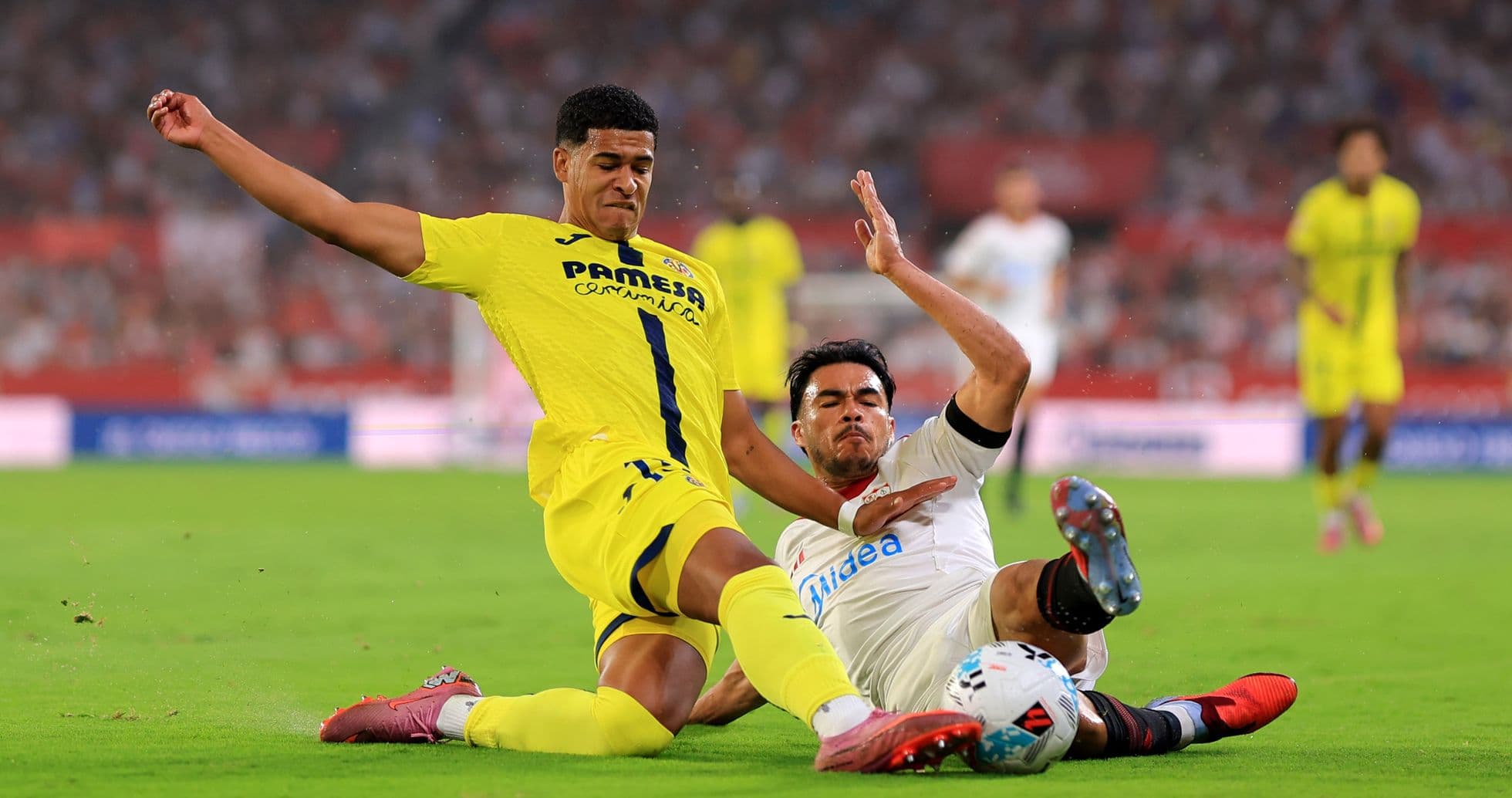
Under the early evening lights of Estadio de la Ceramica, a match that began as a showcase of Villarreal’s attacking authority ended as a lesson in Sevilla’s resilience and tactical pragmatism. Following this result, the league table tells one story – Villarreal still sitting 3rd on 69 points, Sevilla 12th on 43 – but the 3-2 away win reveals another: the margins between a Champions League contender and a mid-table survivor are thinner than the standings suggest.
I. The Big Picture – Structures and Seasonal DNA
Villarreal came in with the swagger of an elite home side. Heading into this game they had taken 14 wins from 18 at home, scoring 43 and conceding just 18. An average of 2.4 goals at home, 1.0 conceded: this is a team built to dominate in front of its own crowd. Marcelino stayed loyal to that identity with a 4-4-2, a formation he had used in 35 of 36 league matches.
The structure was clear: A. Tenas behind a back four of A. Pedraza, Renato Veiga, P. Navarro and A. Freeman; a midfield line with N. Pepe wide right, D. Parejo and P. Gueye inside, A. Moleiro drifting from the left; and a front two of G. Moreno and G. Mikautadze. On paper it was an XI that condensed Villarreal’s season-long strengths: creativity between the lines, volume of chances, and a front line that can hurt from multiple angles.
Sevilla arrived as a more chaotic proposition. Their season has been defined by tactical fluidity bordering on instability: nine different formations used, with 4-2-3-1 the most common, but only just. Here, Luis Garcia Plaza opted for a 5-3-2 – O. Vlachodimos in goal, a back five of Oso, G. Suazo, K. Salas, C. Azpilicueta and J. A. Carmona, a compact midfield trio of D. Sow, L. Agoume and R. Vargas, and the front pairing of A. Adams and N. Maupay.
The shape spoke to their reality. On their travels this season, Sevilla had conceded 34 goals in 18 games, an average of 1.9 per match, and lost 10 of those 18. The back five was less a statement of ambition and more an act of self-preservation.
II. Tactical Voids – Absences and Discipline
Both managers had to navigate notable absences. Villarreal were again without J. Foyth and P. Cabanes, removing a versatile defender and a squad option from Marcelino’s rotation. Sevilla’s defensive depth was thinned by the absence of Marcao and M. Bueno, while the suspension or injury-enforced loss of Isaac Romero stripped them of a direct, chaotic presence in the final third – and a player whose disciplinary record (one red card, a penalty missed) mirrors Sevilla’s high-risk, high-emotion edge.
Season-long card data underlines how combustible this fixture always threatened to be. Villarreal’s yellow cards skew heavily towards the closing stages: 25.64% of their cautions arrive between 76-90', with another 21.79% in the 61-75' window. Sevilla’s profile is even more dramatic: a late-game surge of 20.59% of their yellows between 91-105', and 18.63% between 76-90'. Both sides are at their most reckless when legs are heavy and the game is stretched.
Red cards tell a similar story. Villarreal’s Santi Comesaña and Renato Veiga both have one red each this season; Sevilla’s Isaac also sits on a straight red and a missed penalty. The match finished 11 vs 11, but it was played on a disciplinary fault line that could have tipped either way.
III. Key Matchups – Hunter vs Shield, Engine Room vs Enforcer
The headline duel was always going to be Villarreal’s attacking trident against Sevilla’s improvised shield.
G. Mikautadze, with 12 goals and 6 assists overall, is more than a finisher. His 26 key passes and 65 dribble attempts speak to a forward who drops off, links play and drives at defenders. Alongside him, G. Moreno’s movement and A. Moleiro’s 10-goal, 5-assist season from midfield form a triangle that has powered Villarreal to 67 league goals overall.
Facing them was a Sevilla unit that, away from home, had conceded 34 times and kept just 3 clean sheets. Yet in this match, the back five found ways to bend without breaking. C. Azpilicueta’s experience, K. Salas’ aggression and J. A. Carmona’s physicality – he has 63 tackles, 8 blocks and 36 interceptions this season – combined to disrupt Villarreal’s usual rhythm. The visitors accepted they would concede territory and chances; the plan was to survive long enough for their own hunters to strike.
At the other end, A. Adams embodied Sevilla’s threat. With 10 goals and 3 assists, and a perfect 3/3 record from the spot this season, he arrived as a forward who can turn scraps into points. His duel numbers – 228 contests, 85 won – show a striker comfortable wrestling centre-backs, a crucial trait against a Villarreal side that often defends high and leaves space behind.
In midfield, the “engine room” battle was as intriguing as it was brutal. D. Parejo’s role as Villarreal’s metronome contrasted with L. Agoume’s profile as Sevilla’s enforcer-playmaker hybrid. Agoume’s 66 tackles, 47 interceptions and 10 yellow cards make him the league’s archetypal disruptor; his 1,250 passes and 28 key passes reveal a player who can hurt with the ball once he has won it. Alongside him, R. Vargas – 6 assists and 25 key passes – offered the verticality and final-third delivery to connect Sevilla’s counter-attacks to Adams and Maupay.
IV. Statistical Prognosis – What This Result Really Says
Strip away the noise of a single 3-2 scoreline, and the season numbers still lean Villarreal’s way. Overall they have 21 wins from 36, with a goal difference of +24 (67 scored, 43 conceded). Sevilla sit on 12 wins, 17 defeats, and a goal difference of -12 (46 for, 58 against). Villarreal’s penalty record is spotless – 6 scored from 6 – while Sevilla are also at 100% from 5. Both sides are ruthless from the spot when the moment comes.
Yet this match suggested that in a single game state, Sevilla’s defensive volatility can be turned into a weapon. The 5-3-2 gave them layers: a back line deep enough to absorb Villarreal’s 2.4 home goals per game profile, and a midfield willing to foul, break rhythm and live on the disciplinary edge. With R. Vargas threading passes and A. Adams finishing, the visitors found efficiency where Villarreal found volume.
In xG terms – even without the raw figures – you can sketch the likely pattern. Villarreal, with their relentless home output and creative core of Mikautadze, Moleiro and N. Pepe (8 goals, 6 assists, 55 key passes overall), almost certainly generated the higher expected goals. Sevilla, whose away matches average 1.2 goals for and 1.9 against, probably over-performed their attacking xG here while clinging on defensively.
Following this result, the tactical verdict is nuanced. Villarreal remain a high-ceiling, high-possession side whose structure and numbers justify their top-three position, but their late-game disciplinary spikes and occasional defensive looseness leave the door ajar. Sevilla, for all their negative goal difference and away frailties, have found in this 5-3-2 a blueprint: compact, cynical when needed, and lethal enough through Adams and the service of Vargas to turn hostile venues into hunting grounds.
Related News

Barcelona Dominates Sevilla in Tactical Showdown

Atletico Madrid vs Real Madrid: A Tactical Derby Analysis

La Liga Officials Admit Refereeing Mistake in Madrid Derby Over Lee Kang-in's Tackle on Federico Valverde

Elche vs Real Madrid: A Clash of Opposites in La Liga

Atletico Madrid Dominates Osasuna 4-0 in La Liga Showdown

Barcelona's Dominance: 7-2 Triumph Over Racing Santander