
World Cup 2023: Barça's Influence on Global Football
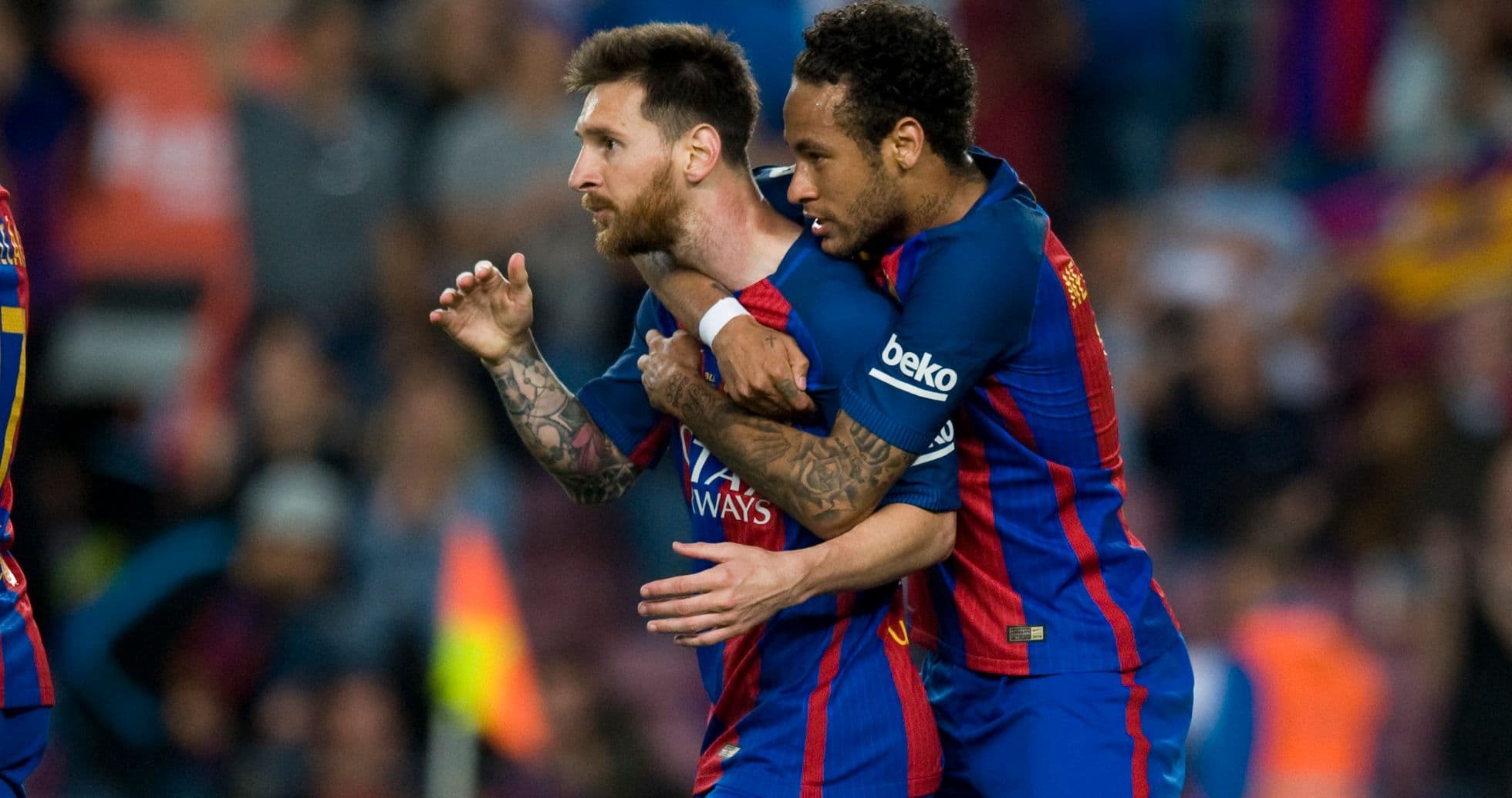
This World Cup is the biggest the game has ever seen – and it might also be the most Barça-soaked tournament in history.
Stadiums across the United States, Mexico and Canada will be draped in the colours of dozens of nations, but for culers the palette is unmistakable. Wherever you look, there is a trace of FC Barcelona: on the pitch, on the touchline, and deep in the roots of La Masía.
A squad scattered across the globe
The most obvious link is also the most striking. Sixteen current Barça players, spread across eight national teams, have made it to the World Cup. It means every matchday feels like a roll call from the Camp Nou dressing room.
But the story does not end with the present squad. Former Barça players are scattered across the tournament, turning this World Cup into a reunion of sorts. Familiar faces, new shirts, same technical DNA.
Messi, Neymar and the star power of the past
At the centre of it all stands Leo Messi. The Argentina captain arrives as the man defending the title he lifted in 2022, still the reference point in a side built around his genius. Every Argentina game doubles as a chapter in Barça’s extended history.
France, the runners-up last time out, lean on another ex-Blaugrana in Ousmane Dembélé, now the Ballon d’Or holder and one of the sharpest wide threats in the game. He is not alone. Lucas Digne adds experience on the flank, while Marcus Thuram – son of former Barça defender Lilian Thuram and once a youngster at the FCB Escola during his father’s spell at the club – carries the family line into another World Cup.
Portugal also arrive with a heavy Barcelona accent. João Félix, Francisco Trincão and Nélson Semedo all make the squad, each of them shaped in part by their time in Catalonia. Across the group, Colombia field former Barça centre-back Yerry Mina, still a towering presence at the back.
Franck Kessié anchors Côte d’Ivoire’s midfield with the same physical authority culers know well, while Sergiño Dest is set to start at right-back for the United States, one of the host nations and a team determined to make a statement on home soil.
And then there is Neymar. His return to the Brazil squad, two and a half years after his last call-up, is one of the tournament’s main storylines. Injury rules him out of the opening match, but the Santos forward remains one of the defining faces of this World Cup. Another former Barça attacker, Memphis Depay, now playing his club football in Brazil, leads the line for Ronald Koeman’s Netherlands, bringing flair and goals to a side that still carries his coach’s Barça imprint.
Blaugrana on the touchline
Koeman himself is back on the biggest stage, this time as national team coach. The hero of Wembley ’92 now commands the Netherlands from the dugout, one of three head coaches at this World Cup with Barça ties.
Julen Lopetegui takes charge of Qatar, while Thomas Christiansen leads Panama. They come from less traditional footballing nations, but both bring with them the tactical education and standards honed in Barcelona. The Barça influence is no longer confined to the pitch; it shapes game plans, substitutions, and tournament strategies.
La Masía’s fingerprints
The injury list even has a Barça feel. Ez Abde, one of Morocco’s most electric players, will also miss his team’s opening match, yet remains a key figure in their campaign. Alongside him, centre-back Chadi Riad – another La Masía product – is expected to feature prominently for a Moroccan side that has grown used to the big stage.
Riad is far from alone. La Masía’s reach is everywhere.
Spain’s left flank carries a double stamp of the academy, with Marc Cucurella and Alejandro Grimaldo both emerging from Barcelona’s youth system to become the national team’s two options at left-back. Young winger Víctor Muñoz, also a La Masía graduate, is currently recovering from injury but is still part of the conversation around Spain’s future.
Beyond Europe, the network stretches even further. Uruguay defender Santi Bueno learned his trade in Barcelona’s youth ranks. So did Japan’s creative winger Take Kubo, who has grown into one of Asia’s most exciting attacking talents.
Paraguay’s leading striker, Antonio Sanabria, is another who passed through La Masía, while South Korea midfielder Seung-Ho Paik once stood out as one of the brightest prospects in the Barça academy.
A World Cup painted in Blaugrana
From Messi’s Argentina to Neymar’s Brazil, from Koeman on the Dutch bench to La Masía graduates in Spain, Japan, Uruguay, Paraguay and South Korea, this World Cup is threaded with the same idea: Barcelona’s footballing culture travels.
For culers, it means one thing. No matter which match is on, there will be a reason to watch. And in a tournament of record scale and global noise, the question lingers: how far can this Barça generation, past and present, take their countries on the biggest stage of all?
Related News
UFC 332 Preview: Natalia Silva vs. Wang Cong Fight Card, Odds, Start Time, and Details
Andy Roddick Responds to Andre Agassi’s Comments on Alexander Zverev at the Laver Cup

Knicks Prepare for Flexible Roles in Title Defense
Rui Hachimura Swaps Lakers Fans to Clippers in Surprising Jersey Exchange
Who Will Be the NBA's Next First-Time All-Stars? Top Picks and Long Shots for 2027
How Strong Is Your Team at Home? Check Out the 2026 Brasileirão Home Standings