
2026 World Cup Aftermath: Power Rankings for 2030
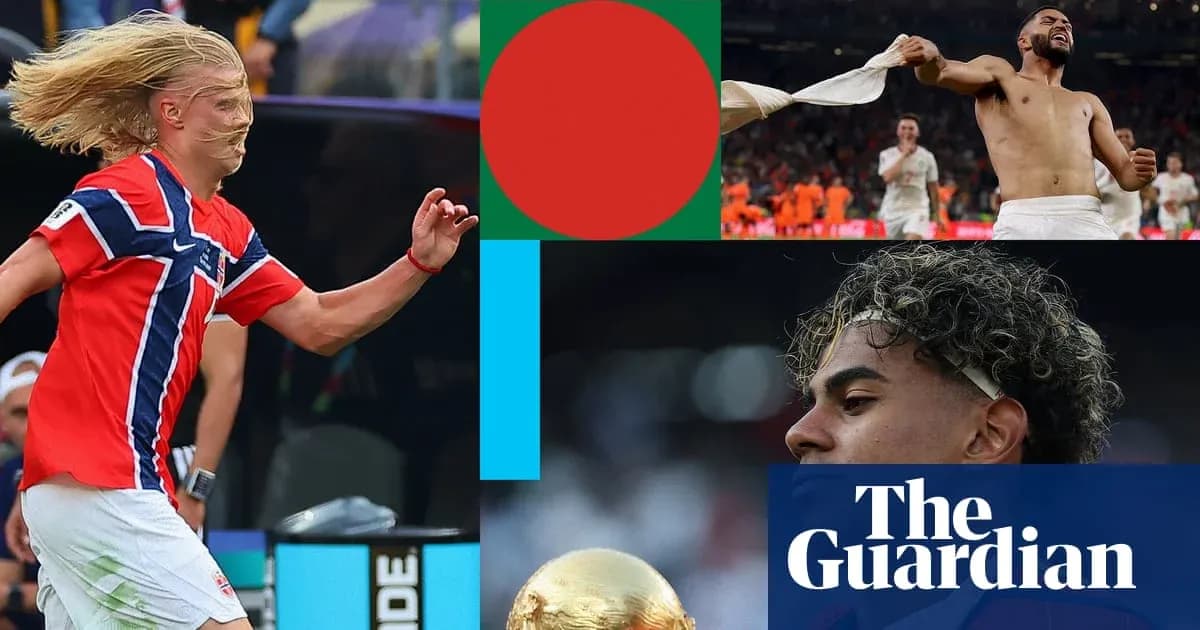
The 2026 World Cup felt like the last act of a generation. Lionel Messi, Cristiano Ronaldo, Luka Modric, Neymar, James Rodríguez, Guillermo Ochoa – giants of the game – all bowed out in varying shades of heartbreak, the tears as much about time as about defeat.
Now the calendar rolls towards 2030, and a different tension settles over the elite. Anyone 32 or older knows the margin for error has shrunk. Diets change. Training tweaks. Every minor muscle strain feels like a selection meeting.
These power rankings lean hard into security. Not romance, not nostalgia – certainty. Squads packed with players in their prime, or just approaching it, are better placed to ride the next four-year cycle than nations staring at the void left by an ageless talisman.
Here are the 10 teams with the strongest foundations and a credible shot at a quarter-final in 2030. Ages listed are as of 1 June 2030.
1) Spain – Champions with room to get scarier
The first defending World Cup winners to host the next edition will walk into 2030 as the team to beat. Spain already own the trophy and, ominously, they might not be anywhere near their ceiling.
Luis de la Fuente has built a side that knows exactly what it is. His players buy in, understand their roles and execute with a relentlessness that broke opponents in 2026. That collective clarity is the real star.
The spine barely needs touching. Unai Simón (32), Joan García (29) and David Raya (34) can easily reprise their goalkeeping rotation. In front of them, Marc Pubill (26), Eric García (29), Pedro Porro (30) and Pau Cubarsí (23) form a defensive core that blends experience with a frighteningly young centre-back prodigy.
Midfield remains their playground. Dani Olmo (32), Gavi (25) and Pedri (27) all project as central figures again, with Rodri (33) still the metronome at the base if his body holds. Out wide, Nico Williams (27) and Lamine Yamal (22) should only grow sharper, fitter and more ruthless after their key roles in the latter stages of 2026, while Ferran Torres (30) lurks as a familiar weapon off the bench.
The depth behind the champions is what really separates Spain. Dean Huijsen (25) and Cristhian Mosquera (25) offer succession plans for Aymeric Laporte (36). In midfield, Fermin López (27), Pablo Barrios (26), Javier Guerra (27), Marc Bernal (23) and Jesús Rodríguez (24) have already caught De la Fuente’s eye.
Up front lies the one nagging question. If Samu Aghehowa (26) or Gonzalo García (26) emerge as reliable No. 9 options, Spain’s possession machine could finally add a ruthless cutting edge. For the rest of the world, that’s the nightmare scenario.
2) France – Zidane inherits a powerhouse
A new voice arrives just as the old one runs out of road. Zinedine Zidane replaces Didier Deschamps after three World Cups that ended with diminishing returns and, most recently, a semi-final collapse against Spain that will sting for years.
Talent has never been France’s problem. Mike Maignan (34) should remain one of the world’s premier goalkeepers, guarded by Dayot Upamecano (31), Ibrahima Konaté (31) and William Saliba (29). That is a title-calibre defensive trio.
The midfield cupboard is overflowing. Manu Koné (29) and Aurélien Tchouaméni (30) already look like long-term anchors, while 2026 omissions Eduardo Camavinga (27) and Khéphren Thuram (29) offer fresh energy and tactical variety.
Up front, Kylian Mbappé (31) will chase every scoring record in sight, flanked by Michael Olise (28) and Désiré Doué (24), two attackers with the skill and swagger to stretch any defence.
The real question sits on the bench. Zidane, so revered for his man-management at Real Madrid, must prove he can outthink the likes of Spain over 90 minutes, not just out-talent them. The pieces are there. Whether he can fit them into a coherent, ruthless machine will define France’s decade.
3) England – A golden core, one giant question
England walked away from 2026 with a familiar cocktail of pride and regret. They showed steel in an instant classic against Mexico, then dug deep to rally past Norway into another semi-final. Then came Argentina. A 2-0 lead slipped, and with it, the sense that this might finally be their time.
Yet underneath the scar tissue lies a serious platform. Marc Guéhi (29) emerged as a top-tier centre-back, while Djed Spence (29) finished the tournament in the best form of his career.
Midfield options are rich and varied: Declan Rice (31), Elliot Anderson (27), Jude Bellingham (26) and Kobbie Mainoo (25) offer different blends of control, drive and creativity. Out wide, Bukayo Saka (28) and Anthony Gordon (29) proved they can carry responsibility in big moments.
Then comes the asterisk. Harry Kane will be 36. Can he still lead the line for 90 minutes at the highest level? England have yet to find a clear heir to their all-time top scorer, and that uncertainty hovers over the entire project.
Goalkeeper is another open contest, but the sheer depth of the outfield pool remains staggering. Lewis Hall (25), Cole Palmer (28), Adam Wharton (26), Alex Scott (26), Phil Foden (30), Rio Ngumoha (21) and Ayden Heaven (23) all missed out on Thomas Tuchel’s World Cup squad. That kind of surplus talent keeps England firmly in the conversation – provided someone steps up when Kane finally slows.
4) Morocco – Co-hosts with serious intent
Few nations carry as much momentum into 2030 as Morocco. Two straight World Cups reaching at least the quarter-finals, one of them ending in the semis. An Afcon 2025 crown. A new coach who injected attacking verve without tearing apart the defensive structure that made them so hard to beat.
The foundations are solid. Achraf Hakimi (31), Chadi Riad (26), Anass Salah-Eddine (28) and Noussair Mazraoui (32) give Morocco continuity and quality at the back. In midfield, Ayyoub Bouaddi (22) will return as a more polished version of the breakout talent who lit up 2026, alongside Azzedine Ounahi (30), whose blend of craft and industry suits tournament football.
Higher up, Ismael Saibari (29) looked a constant scoring threat before injury cut his World Cup short. Bilal El Khannouss (26), Gessime Yassine (24) and Brahim Díaz (30) add layers of creativity and unpredictability.
The pipeline is humming. Morocco’s U-20 World Cup win showcased forwards Othmane Maamma (24) and Yassir Zabiri (25), plus goalkeeper Ibrahim Gomis (25). If Yassine Bounou (39) somehow maintains his trademark big-tournament heroics, Morocco become a nightmare draw – especially on home soil.
5) Argentina – Life after Messi, but not a rebuild
Argentina’s run to the 2026 final underlined an uncomfortable truth: Lionel Messi wasn’t just their genius; he was their emotional compass. Every attack seemed to orbit him. Every teammate ran that little bit harder to protect him. You don’t replace that. You just learn to live differently.
The good news? Argentina are not starting from scratch. Julián Álvarez (30) has grown into a genuine leading man, with Lautaro Martínez (32) still one of the deadliest finishers in the game behind him.
In midfield, Enzo Fernández (33) will spend years making amends for his costly red card, but his talent and temperament suggest he can anchor the next cycle. At the back, Nahuel Molina (32), Cristian Romero (32) and Lisandro Martínez (32) form a battle-hardened defensive unit, while Emiliano Martínez (37) shows no sign of losing his edge between the posts.
The production line continues. Argentina’s runners-up finish at the most recent U-20 World Cup introduced midfielder Milton Delgado (24), left-back Julio Soler (25) and goalkeeper Santino Barbi (24). The names are different. The expectation is the same.
6) Portugal – A golden era that might have slipped by
Portugal leave 2026 with a nagging regret: what if they had trusted a more mobile, natural striker instead of leaning again on Cristiano Ronaldo? The legend has already confirmed he will not play in 2030 at 45, and the lingering suspicion is that Roberto Martínez may have overseen this generation’s best shot at a first World Cup.
The core remains strong. Diogo Costa (30) ranks among the world’s elite goalkeepers. In front of him, Gonçalo Inácio (28) and Nuno Mendes (27) provide a modern, athletic defensive platform. António Silva (26) will aim to reboot his promising career, apparently with Bournemouth, and still profiles as a long-term solution at the back.
In midfield, João Neves (25) and Vitinha (30) would walk into most national teams, combining technique with intelligence. The attack still boasts Gonçalo Ramos (28), João Félix (30) and Francisco Conceição (27), enough firepower to trouble anyone.
Time, though, is catching up with some of their pillars. Bruno Fernandes (35), Bernardo Silva (35) and Rúben Dias (33) may still contribute, but their peaks likely sit behind them. Portugal will travel to 2030 with quality and experience – and the uneasy feeling that the moment for immortality might already have passed.
7) Norway – Haaland’s window stays wide open
Norway arrived in 2026 as dark horses and left as one of the tournament’s most admired stories. The football impressed, but so did the atmosphere around the squad – a tight, hungry group that looked thrilled just to be on this stage together.
Most of them will be back. Most importantly, so will Erling Haaland (29). Few players seemed to enjoy the World Cup spotlight as much as he did, and there is no reason to think he won’t still be terrorising defences in four years.
His supporting cast is quietly maturing. Andreas Schjelderup (26), Antonio Nusa (25) and Oscar Bobb (26) give Norway pace, invention and finishing threat in the final third. Martin Ødegaard (31) will hope his body cooperates this time, because when fit he remains the creative heartbeat and emotional leader.
The rebuild comes deeper. Norway must refresh their defensive line and settle on a goalkeeper capable of holding up under knockout pressure. As long as Haaland leads the line, though, they walk into any World Cup with a puncher’s chance.
8) Côte d’Ivoire – The Elephants are no longer sleeping
Côte d’Ivoire navigated a tricky Group E with authority, beating Ecuador and Curaçao before bowing out to Norway in the last 32. It felt like a first step rather than a peak. If Emerse Faé stays in charge, he will have a thrilling pool of talent as the World Cup returns, in part, to African soil.
Yahia Fofana (29) offers stability in goal, protected by a defensive trio with real upside: Ousmane Diomande (26), Odilon Kossounou (29) and Wilfried Singo (29). Their collective defending gives the side a strong backbone.
Up front, the selection headaches are of the champagne variety. Amad Diallo (27), Oumar Diakité (26), Elye Wahi (27), Yan Diomandé (23), Simon Adingra (28) and Ange-Yoan Bonny (26) all bring different tools – pace, dribbling, movement, goals. It’s a manager’s dream and a rival’s problem.
Midfield is the one area that feels light. If Franck Kessié (33) fades from starting contention, Côte d’Ivoire must find new leaders in the centre of the pitch. On paper, though, and buoyed by an Afcon 2023 title and their first World Cup knockout win, the Elephants look ready to charge deeper into the bracket.
9) Germany – Klopp vs the clock
Germany’s recent World Cup history reads like a hangover from 2014: three straight tournaments of underachievement and soul-searching. Now comes Jürgen Klopp, with four years to reshape the culture and build a system that fits the modern game. For many German fans, it feels like a dream hire.
The question is whether the player pool can match the coach’s ambition. The late injury to Lennart Karl (22) on the eve of 2026 hurt, depriving them of a Bayern playmaker tailor-made for Klopp’s high-energy football. His return should change the dynamic.
Kai Havertz (30) will continue to pop up with crucial goals, while Florian Wirtz (27) and Jamal Musiala (27) will aim to reach 2030 in better form and fitness after a patchy 2026. Nathaniel Brown (26) looks like an ideal wing-back for the next generation, combining engine and end product.
Joshua Kimmich (35) has already brushed aside retirement talk, a relief given the looming turnover in defence and holding midfield. Germany have the coach, a clutch of elite technicians and a clear four-year runway. What they do with it will define whether 2014 remains a one-off or the start of a second act.
10) United States – A bruised step forward
The United States arrived in 2026 with genuine optimism and left with a complicated story. The Balogun Affair cast a shadow over what was, on the pitch, the most promising men’s World Cup performance in their history. Mauricio Pochettino’s future is up in the air, and the off-field noise refuses to die down.
On the field, though, the picture looks brighter. Their run to the last 16 showcased a cluster of players all hitting similar stages of their careers, a core that can grow together into 2030. The age profile is right, the experience banked.
If the federation settles the coaching situation and learns from the turbulence of 2026, this generation has the tools to turn a respectable World Cup into something far more ambitious on the next go-around.
Related News
UFC 332 Preview: Natalia Silva vs. Wang Cong Fight Card, Odds, Start Time, and Details
Andy Roddick Responds to Andre Agassi’s Comments on Alexander Zverev at the Laver Cup
Knicks Prepare for Flexible Roles in Title Defense
Rui Hachimura Swaps Lakers Fans to Clippers in Surprising Jersey Exchange

Who Will Be the NBA's Next First-Time All-Stars? Top Picks and Long Shots for 2027
How Strong Is Your Team at Home? Check Out the 2026 Brasileirão Home Standings