
2026 World Cup Preview: Giants, Legends, and a New Format
The 2026 World Cup kicks off in less than 12 hours and nobody is quite sure whether to brace themselves or savour it. What is clear is this: football has never attempted anything on this scale before.
Mexico against South Africa at 8pm opens the show, the first step in a marathon of 104 matches that will stretch the sport’s limits. Call it bold. Call it bloated. It’s both. And it’s here.
Giants circling, legends on the clock
Spain arrive as bookmakers’ favourites and reigning European champions, armed with a midfield that most nations can only envy from a distance. They look the most complete side in the field, even if their most electrifying talent, Lamine Yamal, carries a question mark. A hamstring problem clouds his availability for the group stage, but the format gives them time to ease him in.
France lurk just behind, heavy with talent and experience, twice in a row World Cup finalists and still stacked. Kylian Mbappé, Ousmane Dembélé, Michael Olise, Désiré Doué: wave after wave of attacking threat. This is Didier Deschamps’ last dance on the international stage and his players know exactly how close they came last time. Lose another final? That would sting for a generation.
England roll in with something unfamiliar: a degree of belief. Euro 2024 ended in defeat to Spain, 2-1 in the final, but it also ended the Gareth Southgate era. In his place, Thomas Tuchel, who has ripped up the old script. Out go some of the biggest names – Phil Foden, Cole Palmer, Trent Alexander-Arnold – sacrificed to system and intensity. It’s a ruthless call. If it works, he’ll be hailed as the man who cut through the noise. If it doesn’t, that squad list will be read back to him for years.
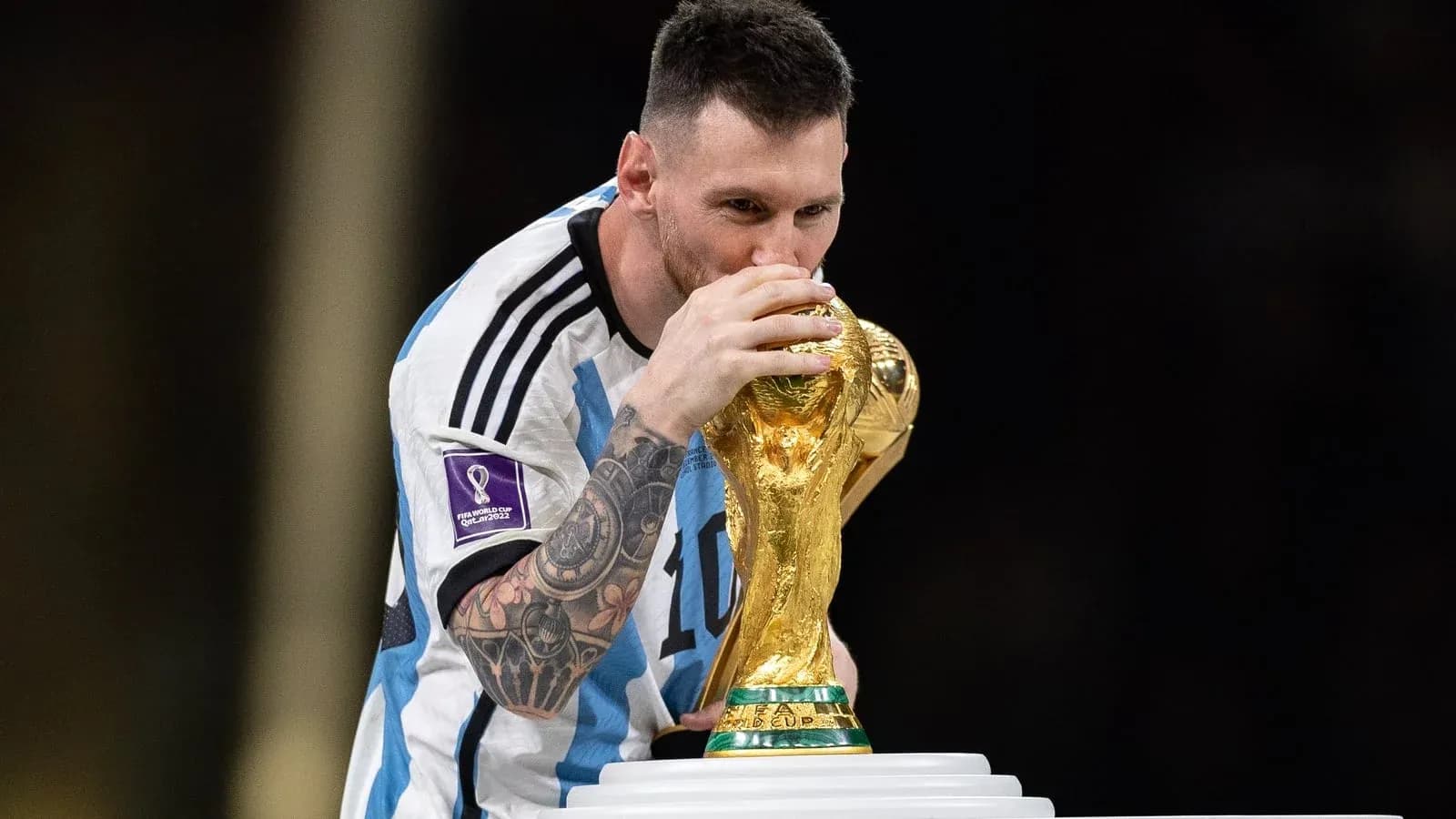
Then there is Argentina, the reigning champions, chasing history and fighting time. No team has defended the World Cup since Brazil in 1962. Lionel Messi, now 38, is still the heartbeat, still the reference point, still the man asked to stretch his prime just a little further. One more month. One more run. One more attempt to push himself beyond Diego Maradona’s shadow by lifting the trophy twice.
Brazil, under Carlo Ancelotti, bring their usual weight of expectation but also uncharacteristic doubt. The qualification campaign stuttered. The talent is real – Vinícius Júnior, Raphinha, Marquinhos – yet the midfield remains a puzzle and the aura is not what it was. They can win it. They can also fall short without anyone being truly shocked.
For Portugal and Cristiano Ronaldo, this is the last roll of the World Cup dice. The only major trophy missing from his collection is the biggest one of all. His presence guarantees attention. Whether it guarantees clarity for Portugal’s game plan is another matter entirely.
And in the background, the old warning still stands: never write off Germany. Under Julian Nagelsmann, they look sharper, more modern, more dangerous. Others will draw the headlines, but nobody will want to see them in a knockout bracket.
Colombia, Senegal, Morocco – all carry the look of teams ready to bloody a nose or two. In a tournament this long, those are the sides that can tilt a narrative in a single night.
A swollen format, a thinner edge of jeopardy
For all the star power, the structure of this World Cup looms over everything. Forty-eight teams. Twelve groups. A round of 32. It is football at industrial scale.
The early days will bring their share of mismatches. Germany against Curaçao on Sunday, Spain against Cape Verde on Monday – on paper, those fixtures look brutal. Qatar v Switzerland and Uzbekistan v Colombia are unlikely to have neutrals clearing their schedules. There will be stories in there, of course, but not all of them will feel like World Cup epics.
The biggest change is the erosion of risk. The top two teams in each group go through automatically. On top of that, eight of the best third-placed sides also reach the knockouts. Two-thirds of the field will make the last 32. A giant can lose twice and still limp through to the knockouts, damaged but alive.
That safety net strips away some of the tension that once defined the group stage. The final round of games used to be a knife-edge; now it can feel more like a sorting exercise. Ireland fans know all about sneaking through from low-scoring groups – Italia 90 remains a proud, if peculiar, memory – and that kind of route may no longer be an anomaly.
For many, the real World Cup will not start until the knockouts. That suits the big nations trying to nurse weary legs through the opening fortnight. The likes of Messi, Neymar, Yamal, Bukayo Saka and Nico Williams are unlikely to be flogged early on. Minutes will be rationed. Rotations will be heavy. The long view will rule.
Eight matches for the finalists. Eight. That’s an extra mini-season on the back of a gruelling club campaign. Fatigue, injuries, squad depth – these will decide as much as tactics.
Heat, hydration and home comforts
As if the schedule wasn’t demanding enough, the climate adds another layer. Miami, Houston, Guadalajara, Mexico City – these are cities where extreme heat in June and July is not a possibility but a habit.
FIFA has already stepped in. Hydration breaks at the 22nd and 67th minutes are mandatory in every match, whatever the conditions. Daytime fixtures have been steered towards air-conditioned stadiums. Even so, the heat will shape the football: slower tempo at times, more substitutions, more games decided in the last 20 minutes when legs and lungs start to fail.
On paper, that should favour Spain, Brazil, Argentina and Mexico – teams accustomed to playing in oppressive temperatures, teams that know how to manage a match when the air feels heavy.
For fans in certain corners of the world, the conditions are not just on the pitch. Irish viewers, for one, face a brutal timetable. Brazil v Morocco kicks off at 11pm on Saturday night, Argentina’s opener starts at 2am on a Wednesday. Alarm clocks, coffee, and frayed tempers at work the next morning will become part of the ritual.
A semi-final collision course
If the seeding holds, Spain and France are on course to collide in the semi-finals. That prospect alone could carry a tournament. The current European champions against the recent World Cup specialists, the most complete squad against the most explosive front line.
England, under Tuchel, will try to crash that party. They have already shown they can go deep in major tournaments; now they must show they can do it with a different face and a different voice on the touchline. The manager has made his choices. The country will live with them.
Brazil and Argentina, each with their doubts, still draw the eye. One chasing redemption, the other chasing immortality. One led by a new coach, the other still bound to the old genius.
All of it feeds into a single question that no format change, no expansion, no commercial plan can avoid: can the football justify the sprawl?
This World Cup is asking a lot – of players, of fans, of broadcasters, of patience. It stretches across time zones, climates and attention spans. It will not be tidy. It will not be short.
But if, on 19 July, a captain lifts the trophy after eight games of escalating drama, the heat, the late nights, the bloated group stage and the 104 fixtures will all be judged by one thing: did the football make it worth the wait?
Related News
UFC 332 Preview: Natalia Silva vs. Wang Cong Fight Card, Odds, Start Time, and Details
Andy Roddick Responds to Andre Agassi’s Comments on Alexander Zverev at the Laver Cup

Knicks Prepare for Flexible Roles in Title Defense
Rui Hachimura Swaps Lakers Fans to Clippers in Surprising Jersey Exchange

Who Will Be the NBA's Next First-Time All-Stars? Top Picks and Long Shots for 2027
How Strong Is Your Team at Home? Check Out the 2026 Brasileirão Home Standings