
Arsenal's Premier League Triumph: A Deeper Look at English Football's Future
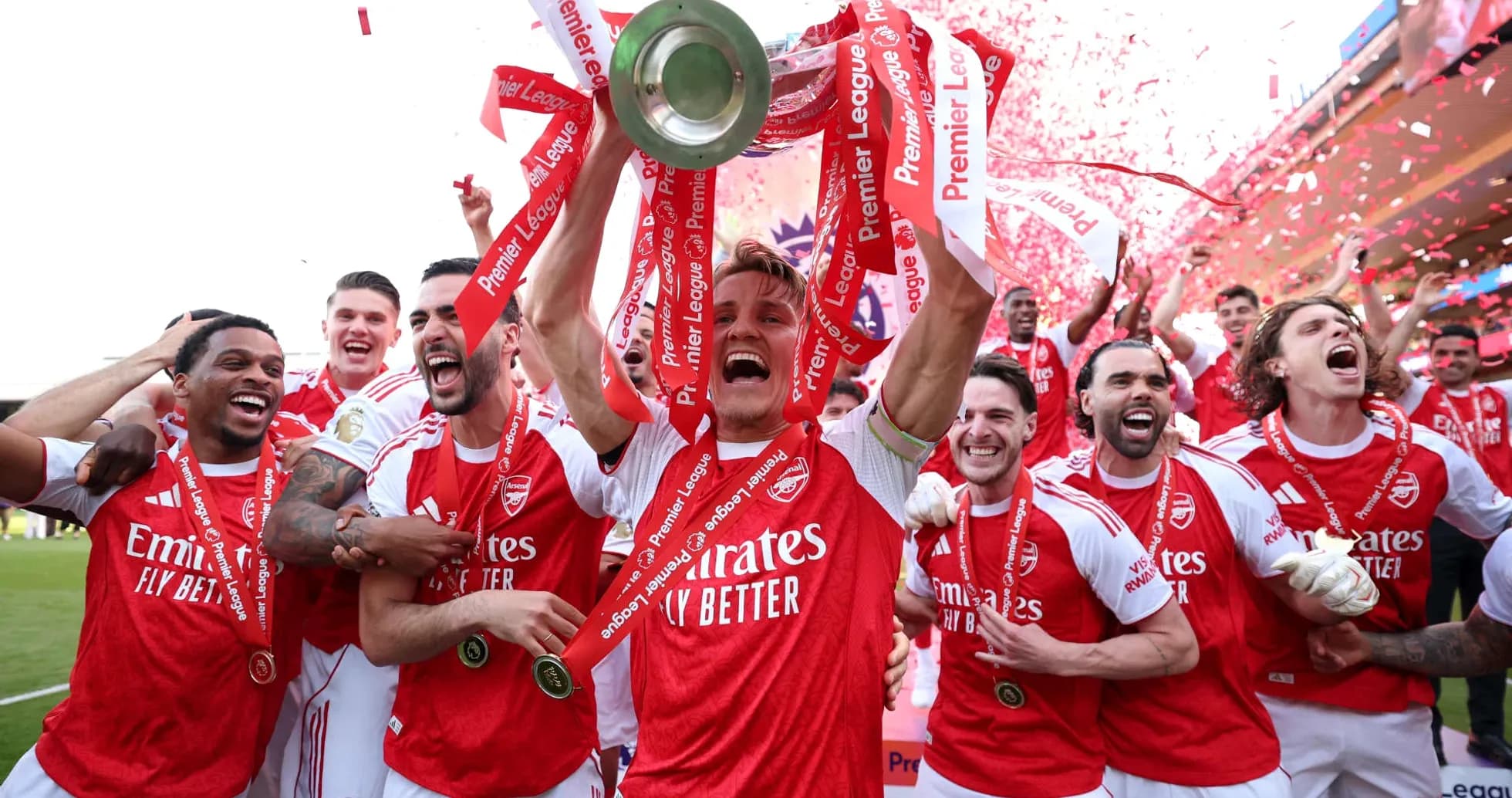
Martin Odegaard raised the Premier League trophy into the south London sky and, for a moment, English football looked invincible.
Arsenal, champions again after 22 long years, paraded their 14th league title around Selhurst Park on May 24. Three different winners in three seasons now — Manchester City in 2023-24, Liverpool in 2024-25, Arsenal in 2025-26. On the surface, it screams health, variety, competitive edge.
Scratch it, though, and the gloss starts to peel.
England, the outlier in Europe’s super leagues
The Premier League sells itself as the land of jeopardy and drama, and the numbers back that up. While England has shared its last three titles between three clubs, the rest of Europe’s giants look stuck on repeat.
Spain, the next richest market, remains chained to its old order. Barcelona and Real Madrid have taken 20 of the last 22 La Liga titles. In Germany, Bayern Munich have collected 13 of the last 14 Bundesliga crowns. In France, Paris Saint-Germain have hoovered up eight of the last nine.
Only Italy’s Serie A offers anything like England’s churn at the top, with Juventus, Inter Milan, AC Milan and Napoli all taking turns with the Scudetto over the past seven years. It is a short list, but at least it changes.
On the European stage, English clubs have gone from noisy neighbours to dominant landlords. Only a penalty shootout defeat for Arsenal against PSG in last weekend’s Champions League final stopped a full English sweep. Aston Villa and Crystal Palace had already banked the Europa League and Europa Conference League. Chelsea still hold FIFA’s Club World Cup.
The financial muscle is obvious. The Premier League’s domestic and international broadcast deals dwarf every other competition. Deloitte’s latest revenue table is half-filled by English clubs, with even AFC Bournemouth, Brentford and Brighton & Hove Albion muscling their way into the world’s top 30.
From the outside, the empire looks unshakeable.
Inside, the foundations are shifting.
Talent flowing out, not in
The Premier League used to fear only one thing: that its best players might leave for Spain. Now that trickle is turning into something more serious.
Harry Kane, the England captain and once the face of the league, is among those now earning his living abroad. After Newcastle United sold Anthony Gordon to Barcelona last week, six members of England’s World Cup squad ply their trade outside the country.
Martin Samuel, writing in The Times, captured the unease. Once, an English star moving to Real Madrid or AC Milan was a badge of honour for the domestic game. Now, with almost a quarter of the national squad overseas, it feels different. It looks like a drain, not a compliment — especially when the traffic the other way lacks the same calibre.
The Premier League still attracts elite foreign talent, but the balance is changing. The league’s status as the unquestioned final destination is no longer guaranteed.
Rich league, poor clubs
The contradictions run deeper than the transfer market.
Despite record-breaking revenues, only four Premier League clubs — Newcastle, Aston Villa, Bournemouth and Liverpool — actually turned a profit in the most recent season with published accounts. Four. In the richest league in the world.
Outside the top flight, the picture darkens. Administration has become a grimly familiar word. Derby County, Sheffield Wednesday and others have all fallen into that abyss in recent years, proof that historic stature offers no protection from modern financial reality.
To stay on the right side of financial fair play rules, many clubs have resorted to creative accounting. Sale-and-leaseback deals on stadiums and training grounds keep the books tidy and the regulators at bay, but they underline how fragile the model can be. The rules are meant to curb the influence of sovereign wealth funds and billionaire backers driving up wages and transfer fees. The side-effect is a system where some clubs cling on by re-mortgaging their own bricks and mortar.
The game that looks so powerful on television is, in many places, living month to month.
Relegation bites the owners
The Premier League has long sold its jeopardy as part of the spectacle. For investors, that jeopardy now looks less like theatre and more like a threat.
Tottenham Hotspur, one of the six clubs that flirted with the European Super League breakaway in 2021 before fan fury killed it, only just avoided relegation this season. West Ham United, the league’s eighth-longest serving club and 20th in Deloitte’s Money League, were not so lucky. They went down.
For American owners raised on closed leagues and guaranteed fixtures, that is a chilling prospect. You can buy into global broadcast deals, booming sponsorships, worldwide fanbases — and still watch your asset tumble into the Championship.
Samuel pointed out that Liverpool, Manchester United, Crystal Palace, Chelsea and Newcastle are, “in one way or another, all for sale.” Any potential buyer looking at that list will also see West Ham’s fall and Tottenham’s brush with the drop. They will see risk, not just opportunity. As Samuel put it, they will “shiver.”
So will the executives at Premier League headquarters, who know that the league’s financial supremacy depends on a steady stream of deep-pocketed believers.
Arsenal’s trophy lift at Selhurst Park felt like confirmation of English football’s dominance. In reality, it may prove to be something else entirely: the high point before the questions start to outnumber the answers.
Related News

Wilfred Ndidi’s Marriage Reportedly Ends as He Enters New Relationship

Cristiano Ronaldo's Top 5 Most Valuable Cars in His Extraordinary Collection

Ben Whittaker’s Challenge to Prove Eddie Hearn’s Bold British Boxing Bet

Peter Handscomb on the Challenge of Facing Indian Bowlers

How to Watch UFC 332: Silva vs. Wang Live on CBS and Paramount+ This Saturday

Raul Rosas Jr. Shares His Thoughts on the Shocking UFC Vegas 121 Finish Against Raoni Barcelos