
Aston Villa's Loan Strategy: Garnacho and Financial Implications
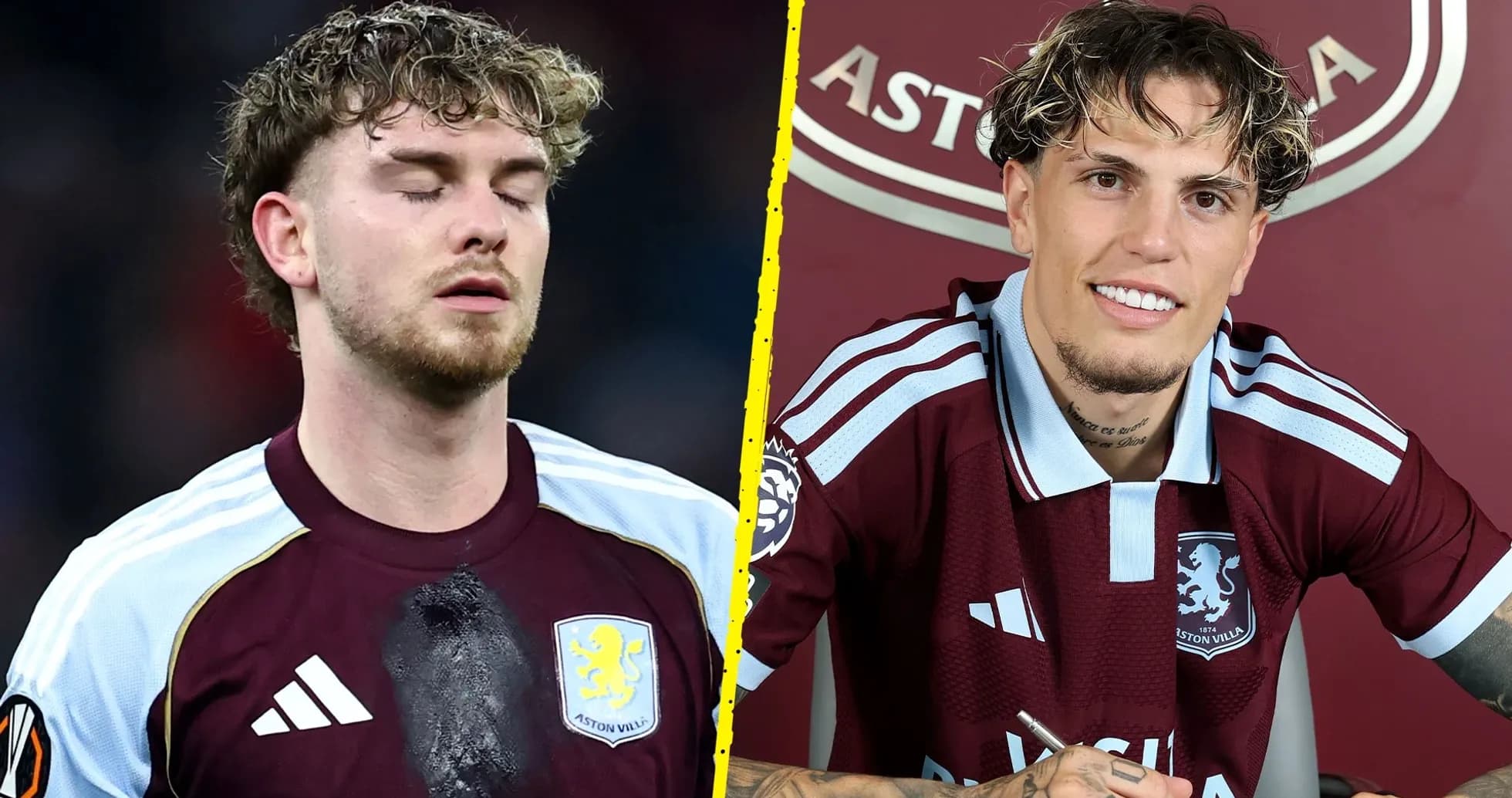
Aston Villa know this script all too well.
Deadline day. A highly rated youngster. A loan with strings attached. On paper, a clever way to strengthen the squad and outmanoeuvre the balance sheet. In reality, the Harvey Elliott saga still hangs in the air over Villa Park.
Last summer, Villa moved late to bring in Elliott from Liverpool on a season-long loan, with a conditional obligation to buy. The numbers looked shrewd enough: player of the tournament at the Euro Under-21s, a glowing reputation, and a squad in desperate need of depth. Then came the catch.
If Elliott made 10 appearances, the deal would turn permanent for £35million.
Unai Emery never truly bought in. Elliott’s minutes were rationed, his involvement reduced to cameos and dead rubbers. By the end of the campaign, he had played just 278 minutes in all competitions. The obligation never triggered. The move suited nobody: not Villa, not Elliott, not Liverpool. A promising young midfielder stalled, a club carried a passenger, and a deal designed to be smart ended up looking cynical.
So when Villa announced another season-long loan with a conditional obligation to buy, this time for Chelsea winger Alejandro Garnacho, the sense of déjà vu was impossible to ignore.
Garnacho in, Rogers out – and the numbers that matter
The headline is simple enough: Garnacho joins Villa on loan. Underneath, the structure is anything but.
The obligation to buy is appearance-based and, by all accounts, easily achievable. The total package, including the loan and the conditional obligation, is worth around £43m. This is not a speculative punt. It is a deal built to become permanent.
What makes it truly intriguing is the timing.
Just two days before Garnacho’s move was confirmed, Morgan Rogers travelled the other way, swapping Villa Park for Stamford Bridge in a transfer worth £117m. That fee made Rogers the most expensive British player in history and handed Villa an extraordinary profit on a footballer they signed from Middlesbrough for just £8m in January 2024.
From a pure business perspective, it was a masterstroke. A huge capital gain dropped straight into the accounts, a major boost in their attempts to stay on the right side of UEFA’s financial regulations.
But when two clubs do major business with each other within days, the alarm bells start to ring in Nyon.
Walking the UEFA tightrope
UEFA’s transfer rules are clear on one point: multiple deals between the same clubs within a 45-day period can be treated as a swap. If that happens, the accounting picture changes dramatically.
In a swap scenario, Villa would not be able to book the full £117m as profit on Rogers. They would have to reduce that figure to the difference between the Rogers fee and what they are paying for Garnacho. The clean, headline-making windfall would vanish into the grey area of net spend.
Villa’s answer has been to use structure and timing as weapons.
By taking Garnacho initially on loan, with the obligation to buy expected to be triggered outside UEFA’s 45-day window, Villa can, in theory, fully book the Rogers profit now and worry about the Garnacho cost later. The permanent fee, once activated, would land in a different accounting period.
On talkSPORT’s Transfer Insiders, reporter Ben Jacobs laid out how this approach brushes up against a gap in UEFA’s framework. He described it as a form of “financially creative” thinking under the new FFP rules, where clubs try to avoid their mirrored deals being treated as swaps that neutralise the benefits on the balance sheet.
UEFA’s recent stance has been to clamp down on these mutually beneficial arrangements. If two clubs conduct separate but connected transfers within 45 days, they want the net effect to be recognised, not hidden behind clever sequencing. The idea is to stop both sides from declaring big sales in one column and slowly amortised purchases in another, making the short-term picture look far rosier than it really is.
But a loan with a conditional obligation? That sits in a different category.
If the obligation is triggered after the 45-day window, and if the deal can be recorded initially as a loan rather than a permanent transfer, the clubs can sidestep the swap classification. The Rogers sale stands alone as a pure profit event. Garnacho’s cost arrives later, spread over the length of his contract.
It is here that the so-called “loophole” emerges.
When a loan isn’t really a loan
There is a crucial caveat in UEFA’s rules, and it keeps this story alive.
If the conditions needed to trigger the obligation are “considered to be virtually certain,” UEFA expects both clubs to book the deal as a permanent transfer from day one. In other words, if everyone knows this is effectively a sale dressed up as a loan, the accounts must reflect that reality.
For Villa, that distinction is massive. If UEFA judge that Garnacho’s obligation is virtually guaranteed, they may insist the deal is treated as permanent immediately. That would drag the Garnacho cost into the same accounting orbit as the Rogers profit and potentially strip away the financial advantage Villa are trying to protect.
The only way for the deal to be recognised as a genuine loan at the outset is if “the fulfilment of a condition cannot be assessed with sufficient certainty” when the agreement is signed. That wording gives clubs room to argue. It also gives UEFA room to intervene.
Villa, Chelsea and Garnacho all understand what this structure really represents: a permanent transfer wrapped in a loan with conditions. The question is whether UEFA choose to accept the wrapping or tear it off.
Jackson on ice?
The knock-on effect reaches beyond Garnacho.
With the 45-day window in play, Villa’s interest in Chelsea striker Nicolas Jackson suddenly looks complicated. Jackson has been offered to Villa and is admired by Emery, who knows him well from their time together at Villarreal.
Under normal circumstances, a club that has just banked £117m and lined up a £43m winger might simply press ahead. But another deal with Chelsea inside the same UEFA timeframe risks dragging everything back into swap territory, undermining the clean profit from Rogers.
Unless Villa can generate another major sale this window to soften the blow of losing that accounting advantage, their pursuit of Jackson may have to wait until January. The market might be open, the player might be keen, the manager might be convinced — but the rulebook could slam the door shut.
Villa have been here before with conditional deals and fine margins. This time, the stakes are higher, the sums are bigger, and UEFA are watching more closely.
The question now is not just whether Garnacho can light up Villa Park, but whether the numbers behind his arrival survive the scrutiny that is surely coming.
Related News
UFC 332 Preview: Natalia Silva vs. Wang Cong Fight Card, Odds, Start Time, and Details
Andy Roddick Responds to Andre Agassi’s Comments on Alexander Zverev at the Laver Cup

Knicks Prepare for Flexible Roles in Title Defense
Rui Hachimura Swaps Lakers Fans to Clippers in Surprising Jersey Exchange

Who Will Be the NBA's Next First-Time All-Stars? Top Picks and Long Shots for 2027

How Strong Is Your Team at Home? Check Out the 2026 Brasileirão Home Standings