
Brooklyn Dominates Portland Hearts of Pine in USL League One Clash
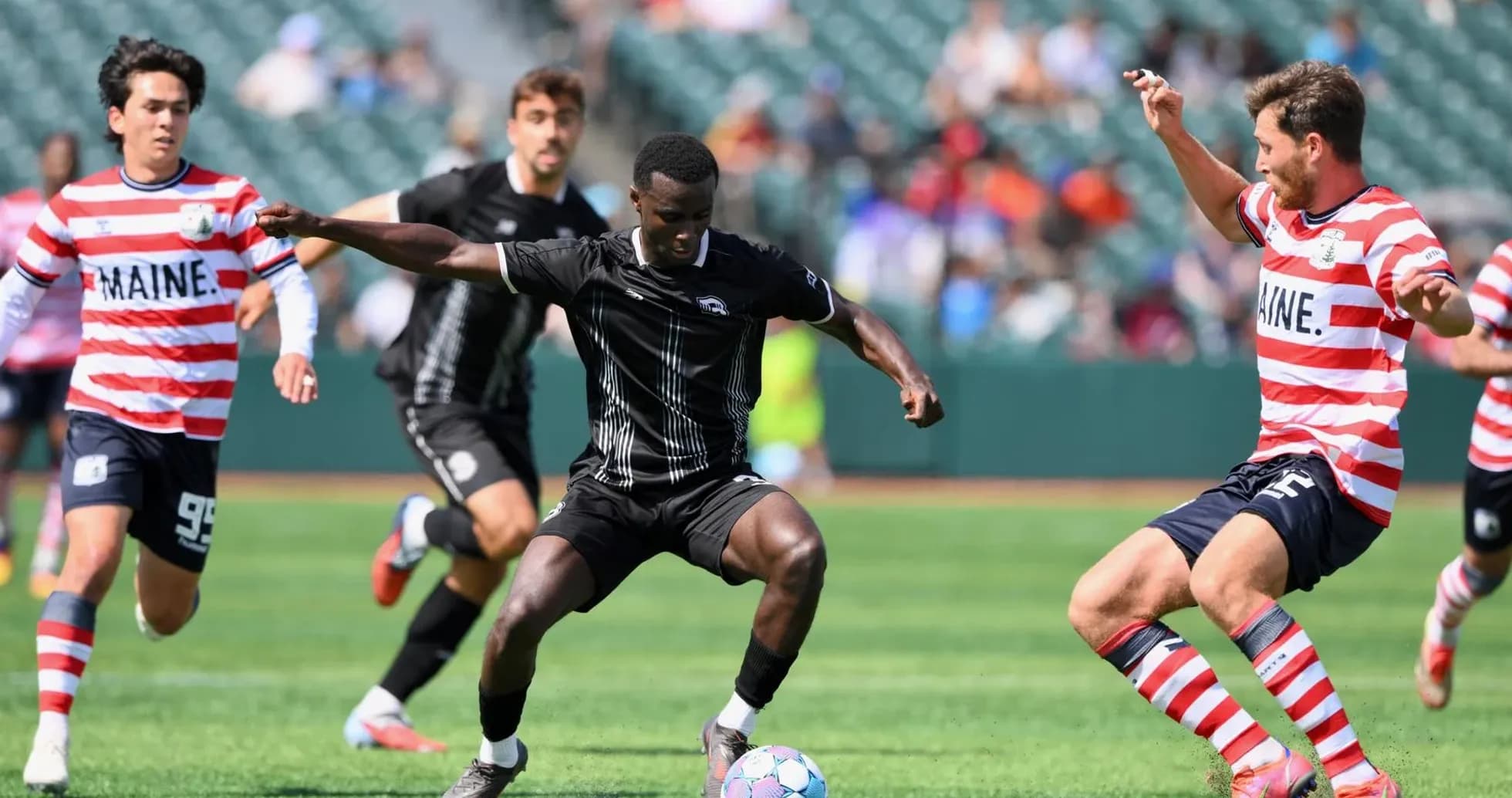
Maimonides Park under the Brooklyn lights felt less like a group-stage date and more like a statement of intent. In a USL League One Cup Group 5 clash that would harden identities at both ends of the table, Brooklyn dismantled Portland Hearts of Pine 5–1, a scoreline that crystallised the season’s underlying numbers into one brutal, 90‑minute truth.
Heading into this game, Brooklyn’s campaign profile already hinted at a side built on front‑foot aggression. Overall they had scored 8 goals in 3 matches, an average of 2.7 per game, with 5 of those at home at an average of 2.5. Defensively, they were conceding 1.0 goals per match overall, 1.5 at home. Portland arrived as something far more volatile: 5 goals scored in total at an average of 1.7, but leaking 9 overall at a rate of 3.0 per game. On their travels, that defensive frailty turned into a full‑blown liability: 8 goals conceded in 2 away matches, an average of 4.0, and a heaviest away defeat of 5–1 already on the books. Brooklyn just repeated the dose.
I. The Big Picture – Brooklyn’s emerging DNA
Following this result, the numbers and the narrative align around Brooklyn as a ruthless, if occasionally vulnerable, attacking machine. Their biggest home win in the competition is now 5–1, perfectly matching the full‑time score here, while their only home defeat, 0–2, serves as a reminder that they can be punished if they lose control of tempo.
The XI that took the field for Brooklyn was built around a strong spine and technical width. L. Burns in goal provided the platform, shielded by a back line anchored by T. Vancaeyezeele, C. Frogson, V. Latinovich and Gabriel Alves. Ahead of them, the double presence of M. Pinto and T. McNamara suggested a blend of ball circulation and second‑ball aggression, with S. Stojanovic and P. Mangione linking into the half‑spaces. C. Olney JR and M. Anderson gave Brooklyn a dual‑threat in the final third: one more creative and mobile, the other a reference point to pin Portland’s back line.
Portland’s structure, by contrast, looked more improvisational than engineered. With no listed formation, the starting group of K. Oladapo, M. Mohamed, K. Green, B. Evans and J. Drack had to improvise their defensive relationships against a side that thrives on positional rotations. In midfield, D. Barbosa, M. Kidd and W. Varela were tasked with stemming Brooklyn’s flow, while the attacking trio of L. Kunga, O. Wright and A. Camara were left to chase transitions in a game that quickly became stretched.
II. Tactical Voids – Discipline and defensive control
The season’s card data painted a warning for both managers. Brooklyn’s yellows are spread across the match, but with a clear late‑second‑half spike: 40.00% of their cautions come between 61–75 minutes, with another 20.00% from 76–90. Portland’s discipline profile is even more alarming: 50.00% of their yellows arrive between 61–75 minutes, 25.00% between 46–60, and they have already seen a red card in the 46–60 window.
This match fit those patterns. As Brooklyn raced into a 3–1 half‑time lead, Portland’s need to chase the game clashed with their tendency to lose emotional control after the break. Brooklyn, who have yet to keep a clean sheet at home but do boast one overall thanks to their single away outing, were content to absorb sporadic pressure and then attack into the spaces left by a Portland side whose away defensive average of 4.0 goals conceded per game is simply unsustainable at this level.
III. Key Matchups – Hunter vs Shield, Engine Room
The decisive battleground was less about one marquee duel and more about Brooklyn’s collective “Hunter” unit against Portland’s fragile “Shield”.
Brooklyn’s attacking ensemble – with Olney JR drifting between the lines, Mangione operating as a connector, and Anderson as the penalty‑box presence – pressed relentlessly against a back line that, on their travels, had already conceded 5 in a single outing. Portland’s away goalsAgainst total of 8 in 2 matches meant that, structurally, they were always one vertical pass away from collapse. Brooklyn exploited this ruthlessly, repeatedly finding Anderson and the onrushing midfielders between loose Portland lines.
In the engine room, the contrast was stark. Pinto and McNamara controlled tempo, recycling possession and dictating when Brooklyn accelerated or slowed the game. Their work was crucial in preventing Portland’s transition threats – Kunga’s pace, Wright’s creativity, Camara’s runs – from turning into sustained waves. With Portland having failed to keep a single clean sheet all campaign, the midfield duel was always going to be about how long they could delay the inevitable. The answer, in this match, was “not very long”.
Portland’s own “Engine Room” of Barbosa, Kidd and Varela never quite found the balance between pressing and protecting. When they stepped high, Brooklyn played around them; when they sat off, Mangione and Stojanovic had time to pick passes. The lack of a clearly defined holding presence left the back line exposed to late runners, a theme that grew more pronounced as fatigue and frustration set in.
IV. Statistical Prognosis – What this result really says
Strip away the noise and the 5–1 scoreline feels like a logical extension of the season’s metrics. Brooklyn, with 8 goals scored overall at an average of 2.7 and a biggest home win of 5–1, look like a side whose underlying attacking xG is comfortably above the league’s median. Their overall goalsAgainst average of 1.0 suggests that, while they are not a pure defensive juggernaut, their structure is solid enough to let their forwards decide matches.
Portland’s numbers, by contrast, point to a team whose attacking xG might be respectable – 5 goals overall at 1.7 per match, plus a 100.00% penalty conversion from 1 attempt – but whose defensive xG against is spiralling. Conceding 9 in 3, and 8 in 2 away, is the statistical footprint of a side that cannot protect its box or manage game states on their travels.
Following this result, the tactical verdict is clear: Brooklyn’s squad, from Burns’ composure in goal to the intelligent aggression of Pinto, McNamara and Olney JR, is built to punish exactly the kind of structural and emotional flaws that define Portland’s away form. Unless Portland can re‑engineer their Shield – tightening distances between lines, controlling their disciplinary spikes in the 46–75 minute window, and adding more protection in front of the back four – every road trip in this competition will feel like a repeat of Maimonides Park: a long night under someone else’s lights.
Related News
Louisville City Edges Detroit City in Penalty Shootout
Lexington vs Indy Eleven: USL League One Cup Showdown
Detroit City vs Louisville City: USL League One Cup Showdown
Lexington vs Indy Eleven: USL League One Cup Group Stage Preview

Lexington vs Indy Eleven: USL League One Cup Clash Insights
Louisville City vs Detroit City: USL League One Cup Clash