
Cavalry FC Dominates Pacific FC in 3–0 Victory
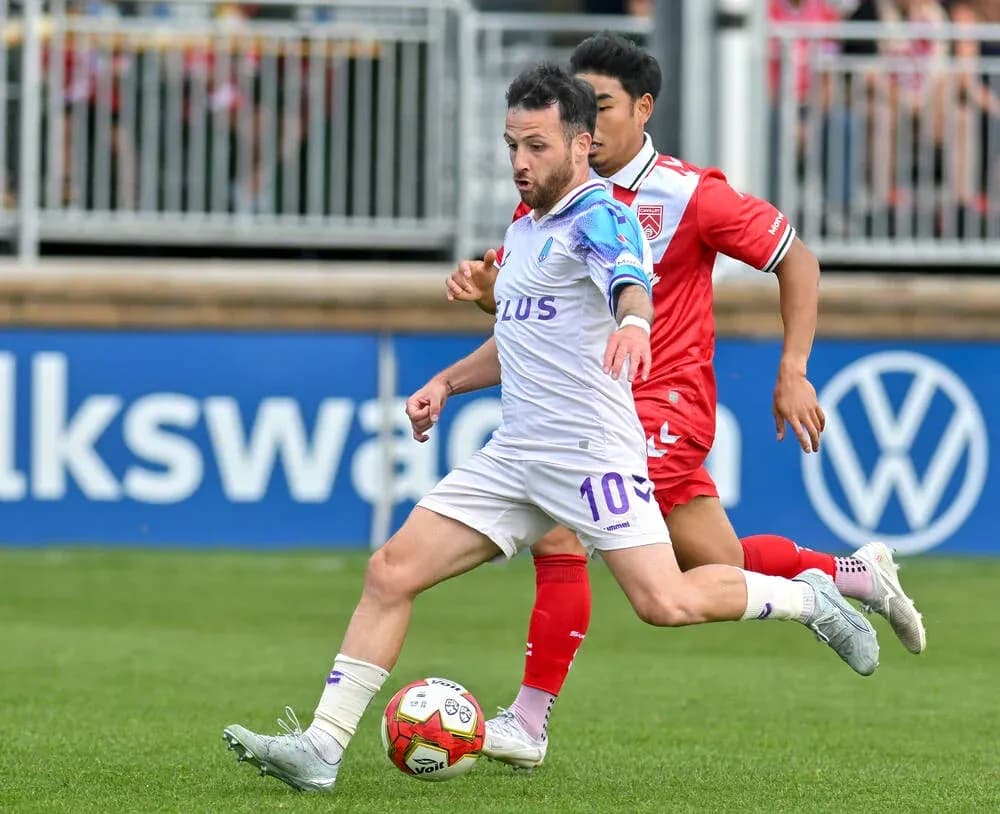
The lights at ATCO Field had barely cooled when the table told the story with brutal clarity. Following this result, Cavalry FC sit top of the Canadian Premier League standings on 17 points from 7 matches, unbeaten with 5 wins and 2 draws, and a commanding overall goal difference of +9 (12 scored, 3 conceded). Pacific FC, by contrast, remain anchored in 8th with just 1 point from 7 games, their overall goal difference at -9 (6 scored, 15 conceded) emblematic of a side still searching for structure and belief.
This 3–0 home win was less an upset and more a crystallisation of seasonal trends. At home, Cavalry have been ruthless: 3 matches, 2 wins, 1 draw, 7 goals for and only 2 against. That is an average of 2.3 goals scored at home against 0.7 conceded. Pacific’s away record, by contrast, is fragile – on their travels they have played 2, drawn 1, lost 1, scoring 2 and conceding 5, for an away average of 1.0 goal scored and 2.5 conceded. The gap between the sides was written into the numbers long before the opening whistle.
Tactical Voids and Structural Choices
Neither side’s formation is logged for this specific match, but season data sketches their tactical DNA. Cavalry have leaned primarily on a 4-2-3-1 (3 matches) with occasional shifts into 4-4-2. That framework explains the balance we saw: a double pivot to protect the back line, three creative and mobile attacking midfielders, and a central striker as focal point.
The spine was unmistakable. In defence, Daan Klomp and Amer Didic formed the core of a back line that has conceded only 3 goals overall this campaign, with Levi Laing offering athletic cover and Adam Pearlman adding bite. Pearlman, already on 3 yellow cards this season, is a defender who lives on the edge of duels; his 11 tackles and 1 blocked shot speak to a centre-back comfortable stepping into midfield lines to break play. That aggression is mirrored in Cavalry’s card distribution: 26.67% of their yellow cards arrive between 61–75 minutes and 20.00% between 76–90, a clear sign that as games stretch, their intensity does not drop.
Ahead of them, the creative triangle of Sergio Camargo, Goteh Ntignee and Tobias Warschewski once again defined Cavalry’s attacking personality. Warschewski, with 2 goals this season and 12 shots (7 on target), is the headline hunter; Ntignee, with 1 assist and 21 dribble attempts (10 successful), is the chaos agent who destabilises defensive blocks; Camargo knits phases together with 129 passes at 81% accuracy. Even when the final pass is not his, his presence between the lines shapes the tempo.
Pacific’s structure is more fragile. They too favour a 4-2-3-1 on paper, but the reality is a team still learning how to occupy space without the ball. Their overall defensive record – 15 goals conceded in 7 matches, an average of 2.1 per game – underlines a unit that collapses under sustained pressure. The back four of Kadin Chung, Diego Konincks, Joshua Belluz and Christian Greco-Taylor is individually talented but collectively stretched. Konincks, a standout with a 7.27 rating, 173 passes at 90% accuracy and 1 goal plus 1 assist, often looks more composed than the system around him.
Discipline is a recurring void for Pacific. Their season card profile is alarming: 42.86% of their yellow cards arrive between 91–105 minutes, and they have accumulated red cards through figures like Josh Heard and the yellow-red combination for Belluz. This is a team that tends to unravel late, precisely when Cavalry’s pressure usually peaks.
Key Matchups: Hunter vs Shield, Engine Room vs Enforcer
The “Hunter vs Shield” duel was embodied by Warschewski against Pacific’s central defensive pairing. Heading into this game, Cavalry were scoring an overall average of 1.7 goals per match, while Pacific were conceding 2.1. The question was whether Konincks and Belluz could impose enough structure to blunt Cavalry’s varied threats.
Konincks’ individual numbers – 26 duels, 18 won, 4 tackles, 1 blocked shot – suggest a defender who rarely loses his personal battle. But the shield around him is thin. On their travels Pacific concede 2.5 goals per game; the 3–0 scoreline here simply aligned with that away profile. Warschewski’s movement, supported by wide runs from Ntignee and the underlaps of Laing and Pearlman, constantly forced Pacific’s back line into emergency defending rather than proactive control.
In the “Engine Room” matchup, Harrison Paton was pivotal for Cavalry. With 1 goal, 126 passes at 85% accuracy, 10 tackles and 40 duels (20 won), Paton is both metronome and enforcer. His duels with Pacific’s midfielders – notably the industrious but overworked Tete Gomulka and the combustible presence of players like R. Juhmi – tilted the centre of the pitch decisively toward the hosts. When Cavalry needed to reset, Paton dropped alongside Kobza to form a temporary three, allowing full-backs to push and pin Pacific deep.
Pacific’s own attempts at creativity were sporadic. Alejandro Díaz, with 1 goal this season and limited shot volume, relies on service that rarely arrives in high-quality zones. Wide players like Josh Heard and Reon Kratt were often forced to receive under pressure, with their full-backs unable to advance in sync due to Cavalry’s press.
Statistical Prognosis and xG Lens
We do not have explicit xG values, but the shot and goal profiles allow a reasoned projection. Cavalry’s home average of 2.3 goals scored, combined with Pacific’s away concession rate of 2.5, points toward a pre-match expectation of roughly 2–3 goals for the hosts. The clean sheet is consistent with Cavalry’s defensive record: only 3 goals conceded overall, with 4 clean sheets in 7 matches.
Cavalry’s penalty record – 2 penalties this season, 2 scored, 0 missed – adds another dimension: when they force chaotic defending in the box, they tend to convert. Pacific, with 0 penalties taken and none missed, simply do not reach those high-leverage attacking situations often enough.
From a probability standpoint, the tactical and statistical vectors all pointed in the same direction. A Cavalry side that rarely fails to score (only 1 match overall without a goal) and that concedes an overall average of just 0.4 goals per game faced a Pacific team that has already failed to score 3 times and has yet to keep a clean sheet. The 3–0 outcome, then, is not an outlier but a confirmation: Cavalry are built on structure, balance and disciplined aggression; Pacific are still a collection of promising pieces in search of a coherent, resilient whole.
Related News
Vancouver FC vs Forge: Canadian Premier League Clash
HFX Wanderers FC vs Atlético Ottawa: Canadian Premier League Clash
Vancouver FC vs Forge Prediction: Key Stats and Betting Tips
HFX Wanderers FC vs Atlético Ottawa Prediction: Key Stats and Betting Tips
Cavalry FC vs Supra du Quebec: Canadian Premier League Clash
Cavalry FC vs Supra du Quebec Prediction: Key Stats and Betting Tips