
Charleston Battery Triumphs in Penalty Shootout Against Pittsburgh Riverhounds
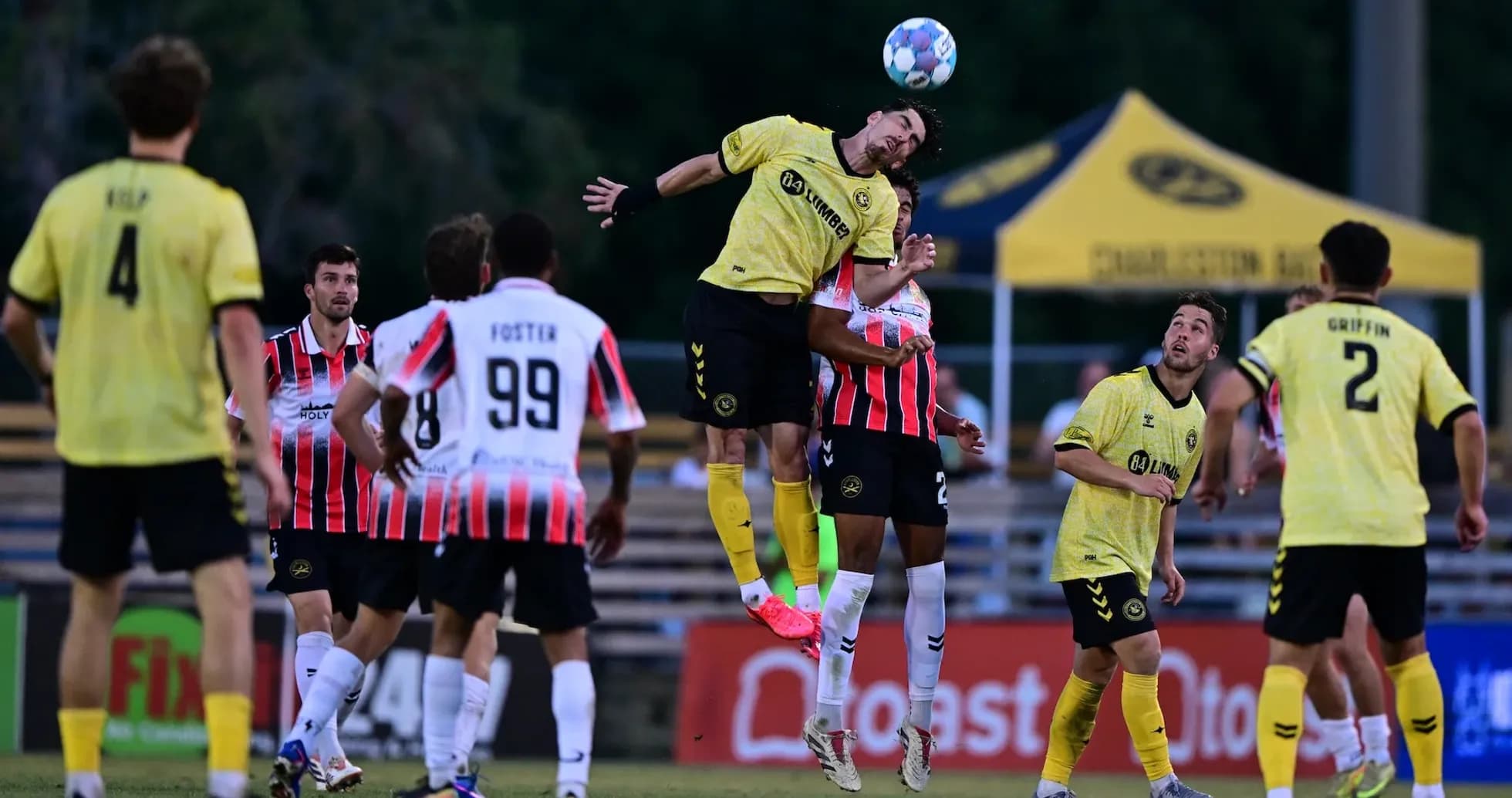
Under the humid night lights at Patriots Point Soccer Complex, Charleston Battery and Pittsburgh Riverhounds dragged each other through 120 minutes of stalemate before the group-stage narrative of the USL League One Cup twisted into the drama of penalties. Following this result, Charleston’s 4-2 shootout triumph felt less like a lottery and more like the logical conclusion of a side whose seasonal DNA is built on control, defensive parsimony, and ruthless moments in both boxes.
I. The Big Picture – Group kings who refuse to blink
In the broader frame of the USL Cup 2026, Group 6 already belonged to Charleston heading into this game. The standings snapshot is emphatic: Charleston sit 1st with 8 points and a goal difference of 7, forged from an overall record of 3 wins, 1 draw, and 0 defeats. Across the group phase they have scored 10 and conceded 3 overall, a profile of dominance under Ben Pirmann.
The underlying season statistics reinforce that image. Overall, Charleston average 2.3 goals for per game and just 0.3 goals against. At home they have been minimalist but efficient: 1 goal for and 0 against, with an average of 1.0 scored and 0.0 conceded. On their travels, they have been devastating, with 6 goals for and 1 against, averaging 3.0 scored and 0.5 conceded away. Two clean sheets overall in three fixtures, and no match in which they have failed to score, tell you this is a side that controls tempo and margins.
Pittsburgh, by contrast, arrive as the group’s chasers. They sit 3rd with 5 points and a goal difference of -1, their overall record a more chaotic 1 win, 2 draws, and 2 defeats, with 8 goals for and 9 against overall. The seasonal metrics underline a split personality: at home, they have scored 3 and conceded 0, averaging 3.0 goals for and 0.0 against. Away, they have scored just 1 and conceded 3, averaging 0.5 for and 1.5 against on their travels. Rob Vincent’s side is still searching for an away identity that matches their home swagger.
II. Tactical Voids and Disciplinary Undercurrents
There are no formal absences recorded, so both coaches could lean fully into their preferred cores. Pirmann anchored Charleston with J. Berner between the posts, a back line featuring D. Martinez, G. Smith, J. Akpunonu, and N. Messer, and a spine that blended steel and guile through K. Pakhomov, S. Suber, and the creative E. Ycaza. Up front, the power pairing of M. Foster and M. Berry, flanked by the energy of L. Blackstock, framed a side built to press, combine, and then suffocate space when out of possession.
Vincent’s Pittsburgh mirrored that with a compact, industrious XI: M. Sheridan in goal, a defensive line of P. Barnes, V. Souza, O. Mikoy, and L. Kelp, and a midfield unit of E. Goldthorp, R. Mertz, D. Griffin, and C. Ahl. Ahead of them, S. Bassett and T. Amann offered running lanes and counter-punch potential. The bench options—A. Dikwa, M. Viera, B. Larsen, J. Walti, J. Garcia, A. Flowers-Gamboa, W. Agostoni—gave Vincent tools to adjust height of the press and add late attacking thrust.
The discipline trends across the competition hinted at a feisty middle third. Charleston’s yellow-card timing is revealing: 50.00% of their cautions arrive between 46-60 minutes, with additional spikes at 0-15 (16.67%), 16-30 (16.67%), and 76-90 (16.67%). They tackle hardest just after half-time, when pressing triggers are clearly ramped up.
Pittsburgh’s pattern is similar but more volatile. Overall, 42.86% of their yellows come between 46-60 minutes, with further bookings scattered at 0-15 (14.29%), 31-45 (14.29%), 61-75 (14.29%), and 76-90 (14.29%). Crucially, every red card they have seen overall has landed between 76-90 minutes, a late-game flashpoint that suggests fatigue and frustration can boil over as matches tighten.
III. Key Matchups – Hunter vs Shield, and the battle for the engine room
Without explicit individual scoring charts, the “Hunter vs Shield” duel becomes a clash of collective profiles. Charleston’s attack, averaging 2.3 goals overall and 3.0 on their travels, is built on layered threats. Foster and Berry provide vertical runs and penalty-box presence, while Blackstock and Ycaza operate between the lines, dragging markers and opening passing lanes. The shield they face is a Pittsburgh defense that, overall, concedes 1.0 goals per game, but that comfort evaporates away from home, where they allow 1.5 per match.
The key, then, is whether Souza, Mikoy, and Kelp can compress the central channels quickly enough to deny Ycaza time to receive and turn. If they are forced to defend facing their own goal, Sheridan will be exposed to cut-backs and second-phase shots from the edge of the area.
In the “Engine Room”, Pakhomov and Suber square off against Mertz, Griffin, and Ahl. Charleston’s entire structure hinges on this double pivot: they must both screen transitions and feed early passes into Berry and Foster. Pittsburgh’s trio, meanwhile, thrive on breaking lines with carries and quick combinations. If Mertz and Ahl can pull Pakhomov into wide areas, Griffin’s late surges can become the hidden weapon, especially as Charleston’s card pattern suggests aggressive challenges immediately after half-time.
IV. Statistical Prognosis – Why penalties suited Charleston’s profile
Neither side has taken or missed a penalty in the group phase; both show 0 total penalties, 0 scored, and 0 missed overall. That made the shootout at Patriots Point a step into the unknown. Yet the broader numbers hinted that Charleston were better equipped to handle the margins.
Their defensive record—just 1 goal conceded overall in three matches, with 2 clean sheets—speaks to a team comfortable in tight, low-scoring scenarios. They have never failed to score overall, meaning they almost always give themselves a platform. Pittsburgh, by contrast, have already failed to score once overall and have conceded 3 overall, with their away numbers (0.5 scored, 1.5 conceded) underlining a fragility when taken out of their home environment.
Following this result, the narrative crystallises: Charleston are the group’s cold-blooded operators, a side that can grind through 120 minutes without blinking and then execute from the spot. Pittsburgh showed resilience and structure, but their away frailties and late-game disciplinary volatility remain unresolved questions. In a tournament defined by fine margins, Charleston’s blend of defensive solidity, measured aggression, and psychological composure in the shootout marks them out as a side built for knockout football, even when the scoreboard reads 0-0 after 120 minutes.
Related News
Louisville City Edges Detroit City in Penalty Shootout
Lexington vs Indy Eleven: USL League One Cup Showdown
Detroit City vs Louisville City: USL League One Cup Showdown
Lexington vs Indy Eleven: USL League One Cup Group Stage Preview
Detroit City vs Louisville City Match Preview
Lexington vs Indy Eleven: USL League One Cup Clash Insights