
Chelsea W vs Manchester United W: Tactical Analysis and Match Insights
Under grey London skies at Stamford Bridge, Chelsea W edged Manchester United W 1–0, a result that crystallised the fine margins between third and fourth in the FA WSL table. Following this result, Chelsea’s campaign profile looks exactly as the numbers promised: a side built on control, defensive parsimony and just enough incision to decide elite contests.
Across the season in total, Chelsea scored 44 and conceded 20 in 22 league matches, a goal difference of 24 that underpins their 49-point haul and third-place finish. At home they have been particularly hard to shift: 9 wins from 11, with 20 goals for and only 8 against. United, for their part, arrived as the league’s fourth force, on 40 points with a total goal difference of 16 (38 scored, 22 conceded), and a strong away record – 6 wins, 3 draws and only 2 defeats on their travels, with 20 goals for and 9 conceded.
This was not a cup tie or a knockout 1/8 final, but it carried that kind of weight. The league’s narrative framed it as a Champions League-adjacent duel: Chelsea defending their place in Europe’s slipstream, United trying to close the gap with a late surge.
Tactical Voids and Discipline
With no official list of absentees, both Sonia Bompastor and Marc Skinner went with near full-strength options, but the tactical “voids” were structural rather than personnel-based.
Chelsea’s season-long reliance on flexible back-four and back-three structures hinted at what we saw here. The presence of Kadeisha Buchanan and V. Buurman in the starting XI, flanked by E. Carpenter and N. Charles, suggested a back four that could morph into a three when Charles pushed high. Ahead of them, E. Cuthbert, K. Walsh and S. Nusken formed a robust central triangle, freeing A. Thompson and L. James to support S. Kerr.
United’s selection spoke of balance and risk. Jayde Riviere and G. George provided the defensive spine out wide and centrally, with A. Sandberg completing the back line in front of P. Tullis-Joyce. The midfield of J. Zigiotti Olme, H. Miyazawa and E. Toone offered control and vertical passing, while M. Malard, F. Rolfo and E. Wangerheim rotated across the attacking band.
Disciplinary trends mattered. Heading into this game, Chelsea’s yellow-card distribution showed a pronounced spike between 31–45 minutes (35.00%), and a secondary surge from 61–75 minutes (20.00%) and 91–105 minutes (20.00%). United, conversely, tended to collect cautions in waves between 16–30 (20.83%), 46–60 (20.83%) and 91–105 minutes (20.83%). The underlying message: both sides often walk the disciplinary tightrope in transition-heavy phases, just before and just after half-time.
On the red-card front, United’s season carried a clear warning: a single red in the 61–75 window, and J. Riviere appearing in both the top yellow and red card charts. Her 4 yellows and 1 yellow-red underline how aggressively she defends wide spaces. Chelsea, by contrast, had no red cards in their seasonal profile, reflecting a controlled aggression that suited a match where one lapse could be decisive.
Key Matchups – Hunter vs Shield, Engine Room
The “Hunter vs Shield” duel was embodied by Chelsea’s forward line against United’s disciplined away defence. On their travels, United conceded only 9 goals in 11 games, an average of 0.8 per match, while Chelsea at home scored 20 in 11, an average of 1.8. Something had to give.
The focal point was A. Thompson. With 6 goals and 3 assists in total this campaign, plus 23 shots (13 on target) and 21 key passes, she arrived as Chelsea’s most rounded attacking threat. Her ability to both run beyond and create between the lines forced United’s back line into constant recalibration. Every time she drifted into the right half-space, Riviere’s decision-making became a tactical hinge: step tight and risk being turned, or hold the line and allow Thompson to receive and combine with James or Kerr.
United’s shield was collective rather than individual. Away from home they averaged only 0.8 goals against, supported by 7 clean sheets in total, 5 of those on their travels. Riviere’s 26 tackles and 5 blocked shots, combined with J. Zigiotti Olme’s 20 tackles, 4 blocks and 24 interceptions, gave Skinner a combative right-sided axis to deal with Chelsea’s left-leaning creativity through James and Charles.
In the “Engine Room” matchup, the contrast was equally stark. For Chelsea, Cuthbert and Walsh provided the metronome and the bite, allowing Nusken to shuttle into advanced areas. For United, the creative and controlling burden fell heavily on J. Park (from the bench here) and Toone across the season. Park’s 4 goals, 3 assists, 17 key passes and 83% passing accuracy made her the archetypal link player, while Toone’s 3 assists from 553 minutes underscored her ability to unlock compact blocks.
Yet, in this particular contest, Chelsea’s structure strangled United’s rhythm. Without sustained progression from Miyazawa and Zigiotti Olme under pressure, United’s front three were often isolated, forced into low-percentage shots or hopeful crosses.
Statistical Prognosis and Verdict
If we project from the season’s numbers, a narrow Chelsea win always felt the likeliest outcome. Overall, Chelsea averaged 2.0 goals for and 0.9 against per match, United 1.7 for and 1.0 against. At Stamford Bridge, the expected balance tilted further towards the hosts: Chelsea’s home attacking average of 1.8 against United’s away defensive average of 0.8 hinted at a game where Chelsea might generate the better xG but meet stiff resistance.
The 1–0 scoreline fits that statistical arc: Chelsea doing just enough in the final third, United defending stoutly but struggling to turn their own 1.8 away goals-per-game average into clear chances against one of the division’s most organised back lines.
Following this result, the tactical story of the season holds. Chelsea remain a Champions League-calibre unit, defined by control, discipline and a front line led by the dual-threat of Thompson and James. United stay on the cusp: structurally sound, especially away, but still searching for that extra layer of attacking cohesion in the biggest games, where the hunter too often finds the shield just a fraction too thick to pierce.
Related News
Charlton Athletic W vs Leicester City WFC: FA WSL Final Round Preview

Leicester City WFC's Crucial FA WSL Final Match Against Charlton Athletic W
Charlton Athletic W vs Leicester City WFC Prediction: Key Insights and Betting Tips
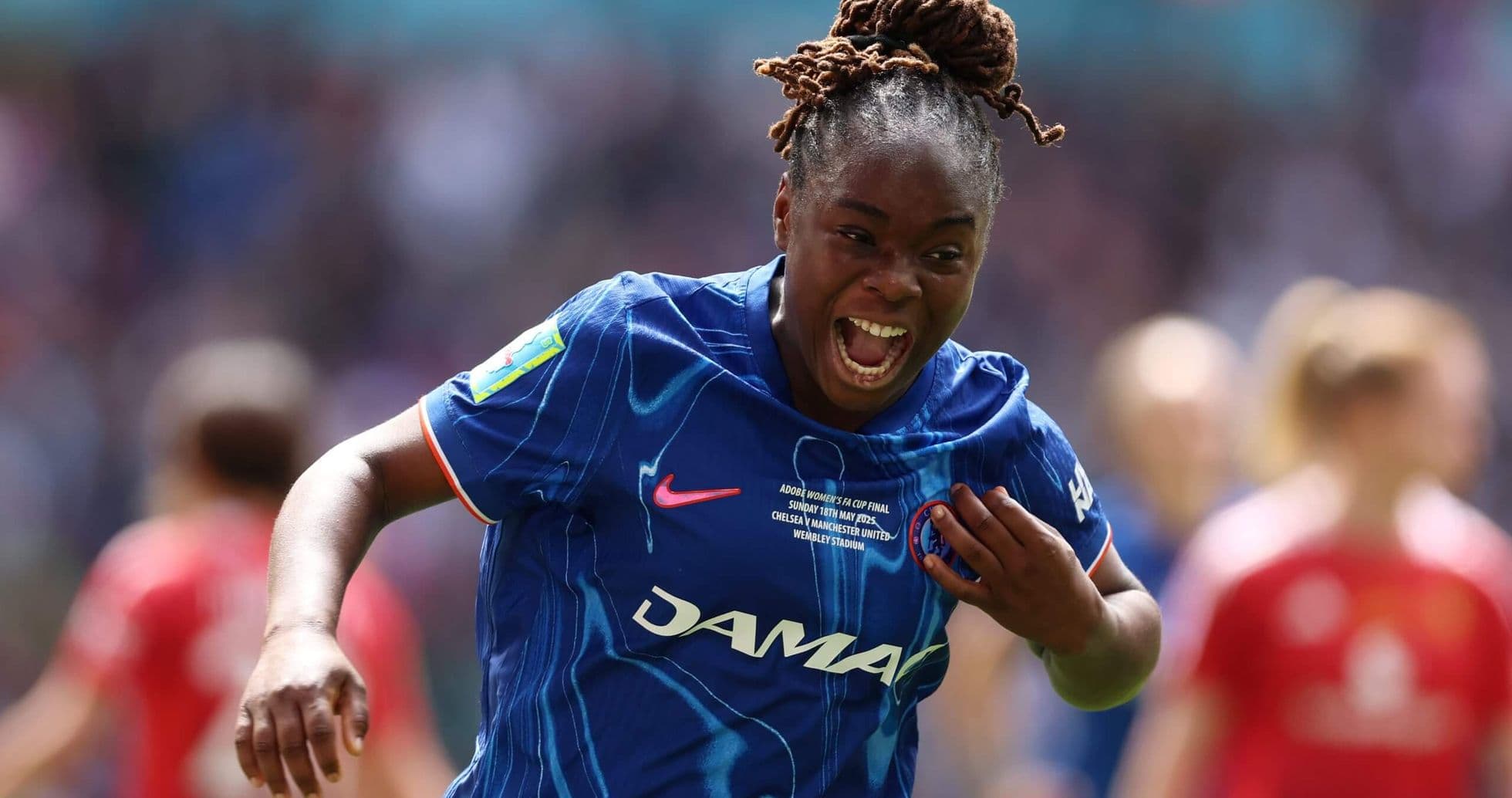
Chelsea W vs Manchester United W: Tactical Analysis and Match Insights
Arsenal Dominates Liverpool in FA WSL Clash

London City Lionesses Secure Comeback Victory Over Aston Villa W