
Colorado Rapids II vs Sporting KC II: A Clash of Contrasting Trajectories
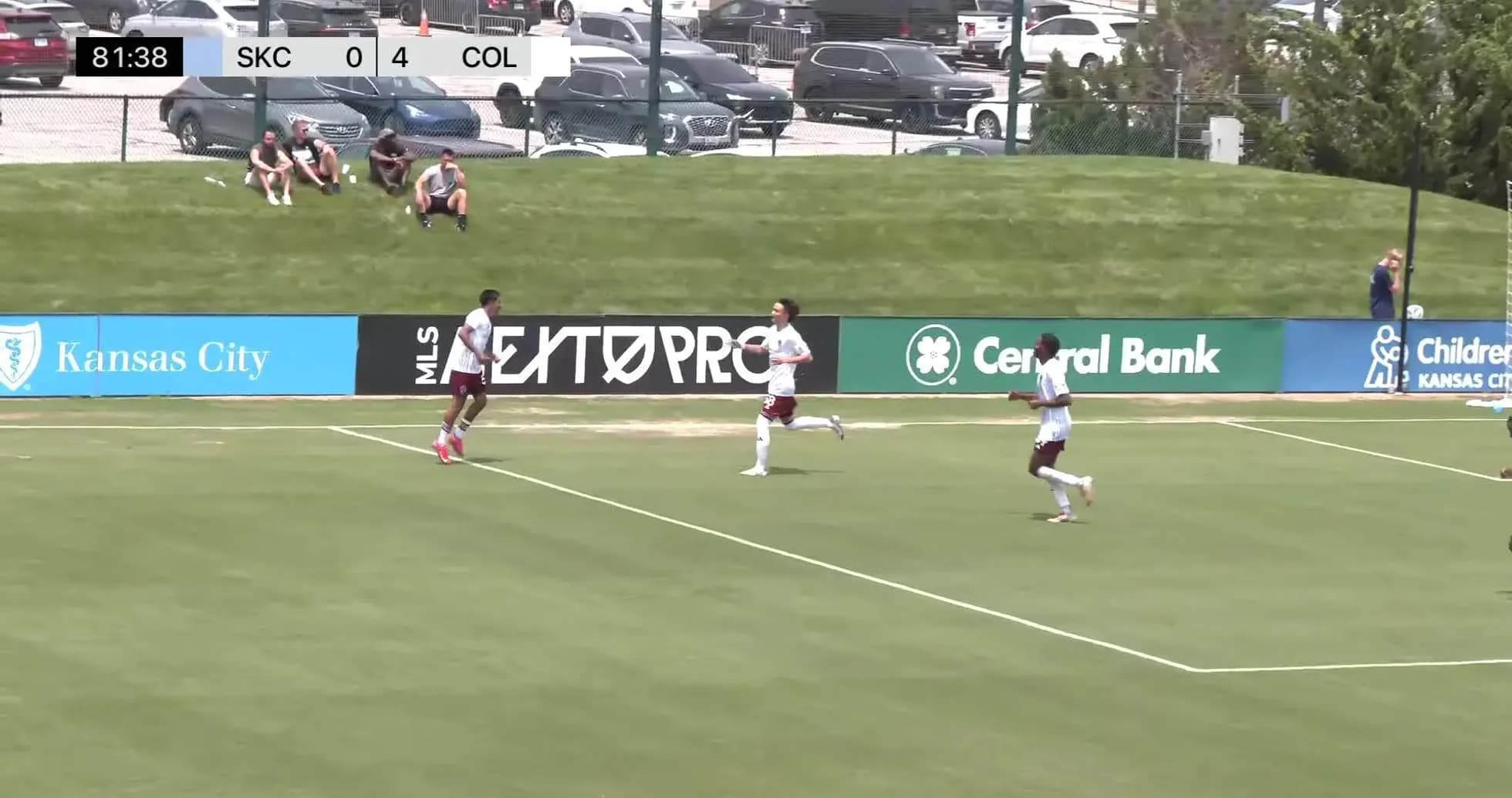
Under the lights at CIBER Field, Colorado Rapids II and Sporting KC II met in a Group Stage clash that felt less like a mid-season checkpoint and more like a referendum on identity. By the final whistle, the 3–1 away win for Sporting KC II had not only settled the night’s argument but also underlined the broader trajectories of two teams heading in opposite emotional directions.
I. The Big Picture – contrasting trajectories in the same league
Following this result in MLS Next Pro’s 2026 season, the storylines were sharply defined. Colorado Rapids II came into the match with a bleak statistical profile: nine defeats from nine in total, no wins, no draws, and a goal difference of -12 in the Frontier Division table (10 scored, 22 conceded overall before this game). At home, they had played 5, lost 5, scoring 6 and conceding 14, an attacking average of 1.2 goals at home against 3.0 conceded. Their form line – “LLLLLLLLL” in total – framed this fixture as a search for a first foothold rather than a push up the table.
Sporting KC II, meanwhile, were hardly a juggernaut but carried a different kind of energy. In total this campaign they had played 12, winning 3 and losing 9, with 14 goals for and 29 against in the Frontier Division standings, for a goal difference of -15 (GF 14 – GA 29). The form string “LLWLLLLWLLLW” told a story of volatility, but crucially also of resilience: three wins carved out of chaos, including two victories on their travels (2 away wins, 2 away defeats, 7 goals scored and 9 conceded away heading into this game). On the road they averaged 2.0 goals for and 2.5 against, a profile of a team that accepts risk and leans into open games.
On the night, the scoreline mirrored those season-long patterns. Sporting KC II’s 3–1 lead at half-time held to full-time, a ruthless first-half burst that Colorado’s fragile defensive structure simply could not absorb.
II. Tactical Voids – fragility and discipline
Both sides entered without any listed absentees in the data, so the voids were not about who was missing, but about what was missing in their collective structures.
For Colorado Rapids II, the statistical gap was defensive stability. In total this campaign they had conceded 25 goals in 9 matches, an overall average of 2.8 per game, with 3.0 conceded at home. Clean sheets stood at zero both home and away. That lack of a defensive base framed the night for goalkeeper Z. Campagnolo and the back line anchored by G. Gilmore and K. Sawadogo: every mistake risked becoming decisive.
Discipline has also been a recurring fault line. Colorado’s yellow-card distribution shows a clear spike between 31–45 minutes, where 33.33% of their cautions have arrived, and another significant cluster between 61–75 minutes at 23.81%. Red cards have been spread evenly across 16–30, 31–45, 46–60, and 61–75 minutes (each 25.00%), suggesting a team that can lose control at any stage of the middle hour. In a match where they fell 3–1 behind by half-time, that disciplinary profile hinted at how easily frustration could have tipped into self-destruction.
Sporting KC II, by contrast, are chaotic but more controlled in their aggression. Their yellow cards are more evenly distributed, with 20.00% each in the 16–30 and 31–45 windows, and another 20.00% between 76–90 minutes. They have no red cards recorded in any time range. That allowed coach Istvan Urbanyi to maintain structure around the core of P. Lurot, N. Young, and Z. Wantland without the constant fear of going a man down.
III. Key Matchups – Hunter vs Shield, Engine Room vs Enforcer
Without explicit top-scorer data, the “Hunter vs Shield” narrative in this match was more collective than individual. Sporting KC II’s attack, built around the mobility and interchanges of M. Rodriguez, K. Hines, and S. Donovan ahead of a fluid midfield unit featuring G. Quintero and Z. Loyo Reynaga, carried the statistical edge. On their travels they averaged 2.0 goals per game heading into this fixture, and they hit that benchmark by half-time alone, pushing to three before the interval.
The “Shield” on Colorado’s side was, in truth, more conceptual than real. With 15 goals conceded at home in total, and the biggest home defeat listed as 1–4, the back line of J. De Coteau, Gilmore, Sawadogo, and J. Cameron, protected by midfielders like K. Stewart-Baynes and L. Strohmeyer, was always going to be under siege. Campagnolo’s role extended beyond shot-stopping; he had to marshal a group that statistically conceded in volume and rarely reset emotionally after setbacks.
In the engine room, A. Fadal and Strohmeyer were tasked with both screening and starting transitions for Colorado. They faced a Sporting KC II midfield that, while not dominant in the standings, has shown it can tilt games with tempo and verticality. G. Quintero’s presence between the lines and Z. Loyo Reynaga’s work in linking play provided the away side with passing angles that repeatedly pulled Colorado’s shape out of alignment.
On the benches, Colorado’s options – such as the energy of S. Wathuta, the direct running of B. Jamison, and the fresh legs of N. Tchoumba or S. Siegler – offered theoretical ways to chase the game. For Sporting, the likes of T. Ikoba, J. Ortiz, and D. Russo gave Urbanyi the capacity to either stretch the field or lock it down. The fact that the 3–1 half-time scoreline held to full-time suggests both coaches eventually prioritized game management over further risk.
IV. Statistical Prognosis – what this result says about both squads
Following this result, the numbers deepen the existing narratives rather than rewrite them. Colorado Rapids II remain a side searching for a first win, with structural defensive issues that no tactical tweak has yet solved. Their overall averages – 1.1 goals scored in total per match against 2.8 conceded – define them as a team that must be almost perfect in attack just to stay competitive.
Sporting KC II, despite their negative goal difference of -15 (14 scored, 29 conceded before this match), continue to embody volatility with upside. They still have no clean sheets in total, but their willingness to embrace open games, supported by a 100.00% penalty conversion rate from their single spot-kick this season, makes them a dangerous opponent for any side that defends as loosely as Colorado.
From a tactical lens, this 3–1 away win reinforces a simple truth: in MLS Next Pro’s unforgiving rhythm, the teams that can impose their attacking identity, even with flaws, will keep finding moments of daylight. Sporting KC II did that at CIBER Field. Colorado Rapids II, for now, remain trapped in the shadows of their own defensive numbers, searching for a way out.
Related News

MLS Winners and Losers: Cavan Sullivan’s USMNT Rise, St. Louis City SC’s Smart Moves, and Chicago Fire’s Hugo Cuypers Gap

MLS Winners and Losers: Portland Timbers' Historic Hat-Trick, Josh Sargent Shines, and Cavan Sullivan's Rising Star
Tacoma Defiance Injury List: Players Out and Return Dates vs Colorado Rapids II
Carolina Core injury list: Players out, potential return dates
Tacoma Defiance vs Colorado Rapids II Predicted Lineups and Team News
Orlando City II vs Huntsville City Predicted Lineups and Team News