
Colorado Springs vs El Paso Locomotive: A Tactical Showdown in USL Cup 2026
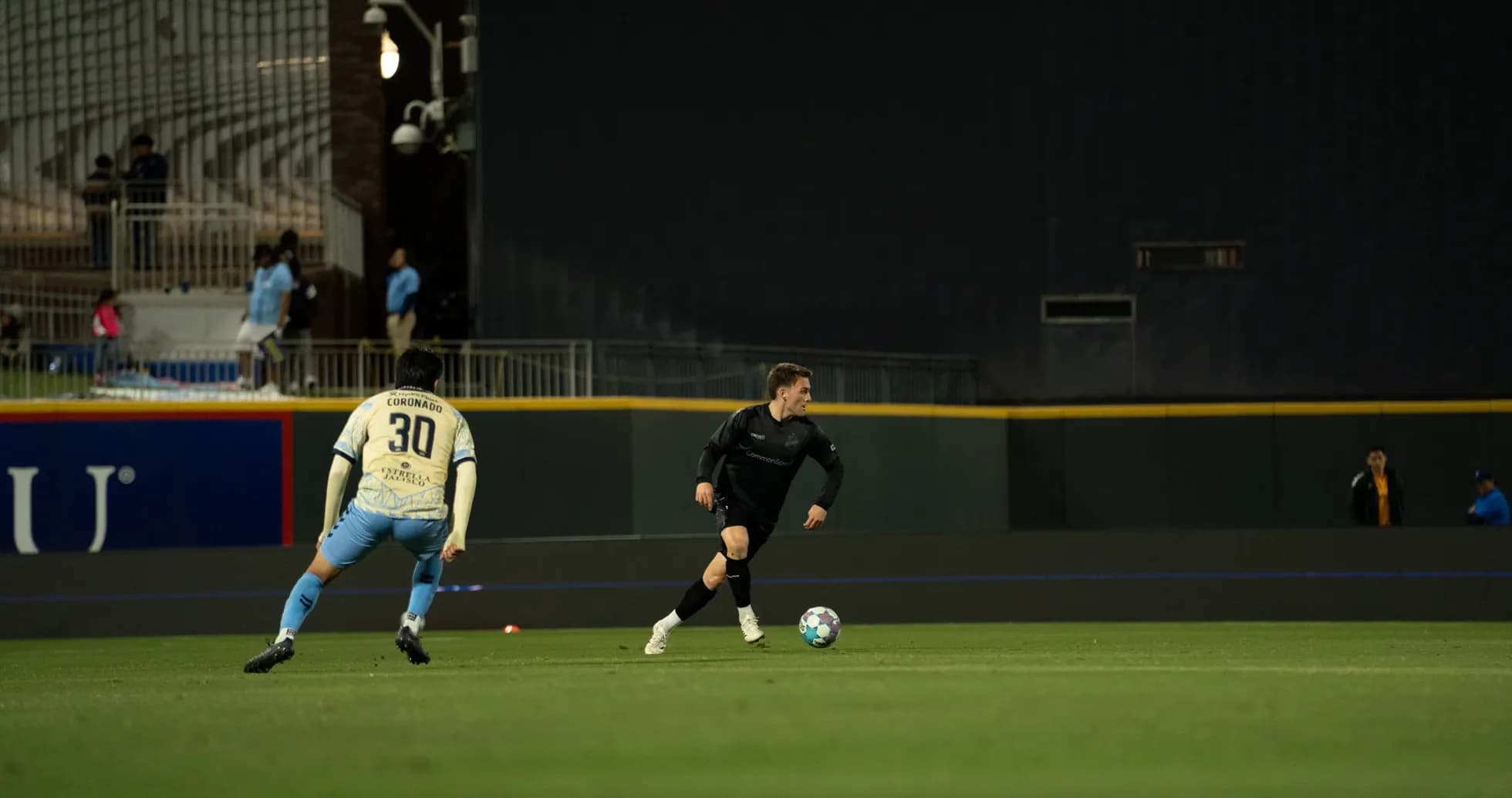
Under the night lights at Weidner Field, Colorado Springs and El Paso Locomotive met in a Group Stage clash that felt every bit like a knockout tie. Heading into this game, the table framed it as a duel for control of USL Cup 2026, Group 2: Colorado Springs top with 9 points and a goal difference of 6, El Paso chasing on 6 points with a goal difference of 2. The margins were fine, the stakes clear, and the 2–1 home win only deepened the tactical storylines around both squads.
I. The Big Picture – Two Identities Colliding
Colorado Springs arrived with a perfect record: 3 wins from 3, 7 goals for and just 1 against overall. At home they had been ruthless, with 6 goals scored and only 1 conceded across 2 matches, an attacking average of 3.0 goals at home and a defensive average of 0.5. Their seasonal DNA in this cup is simple: front-foot football, high output, and a defense that bends rarely and breaks almost never.
El Paso’s profile was more balanced but still dangerous. Overall they had 2 wins and 1 loss from 3 matches, with 5 goals for and 3 against. On their travels they had split results – 1 away win and 1 away defeat – scoring 3 and conceding 3, an away attacking average of 1.5 and an away defensive average of 1.5. They are less dominant but more elastic: capable of absorbing pressure, then striking with precision.
The match itself mirrored those trends. Colorado Springs again found a way to win, extending their streak to 3 straight victories in the group and reinforcing their status as the group’s standard-setters. El Paso, beaten but not broken, showed enough structure and individual quality to suggest they remain a serious threat in any knockout scenario.
II. Tactical Voids and Discipline – Edges in the Margins
There were no listed absentees, so both coaches, Alan McCann for Colorado Springs and Junior Gonzalez for El Paso, had close to full decks. That made the game a pure test of tactical execution and in-game management rather than patchwork lineups.
Season-long disciplinary patterns, however, hinted at where cracks might appear. Colorado Springs have a clear late-game yellow-card spike: 22.22% of their yellows between 61–75 minutes, another 22.22% between 76–90, and a striking 33.33% between 91–105. This suggests a side that plays on the edge as legs tire and the tempo stays high. Yet crucially, they have no reds in any time band, so their aggression has been controlled.
El Paso’s card map is more volatile. Half of their yellow cards come between 31–45 minutes, with 16.67% between 61–75 and 33.33% between 91–105. More telling is the red-card profile: a 100.00% concentration in the 16–30 minute window. That early-game flashpoint risk underlines a squad that can be emotionally hot in the opening phase. In a tight cup setting, that edge can either rattle opponents or implode a game plan.
III. Key Matchups – Hunter vs Shield, Engine vs Engine
Without explicit top-scorer data, the “Hunter vs Shield” narrative in this fixture is more collective than individual. Colorado Springs’ attack has been distributed but deadly: 7 goals overall at an average of 2.3 per match, with their biggest home win a 4–0 statement. El Paso’s defensive record overall – 3 conceded in 3, an average of 1.0 – is respectable, but on their travels they allow 1.5 per match and have already experienced a 2–1 away defeat.
That made the duel between Colorado Springs’ forward line and El Paso’s back four the central storyline. The home side’s attacking trident of Y. Hanya, S. Masereka, and J. Tejada offers variety: movement between the lines, direct running, and penalty-area instincts. Behind them, the double axis of F. Daroma and T. Magee provides the platform – one to circulate, one to break lines.
El Paso’s shield is anchored by Tony Alfaro and K. Twumasi, with R. Ruiz and A. Quezada wide. Alfaro’s presence is crucial: a left-sided defender comfortable stepping into midfield, tasked with reading Hanya’s drifting runs and Tejada’s occupation of central spaces. In front, the pairing of E. Calvillo and D. Gomez must screen passing lanes into Colorado Springs’ front three while still connecting to the creative trio of Gabriel Torres, A. Mendez, and A. Moreno.
The “Engine Room” battle was therefore defined by contrasts. Daroma and Magee look to keep Colorado Springs’ tempo high and vertical; Calvillo and Gomez are more about control and transition, feeding R. Rubin as the reference point. When El Paso broke, the link between Torres and Rubin was key, asking questions of the central pairing of T. Maples and G. Metusala and the defensive instincts of S. Williams and A. Rocha in the wide channels.
IV. Statistical Prognosis – Why Colorado Springs Edge It
From a statistical and stylistic perspective, Colorado Springs’ 2–1 win aligns almost perfectly with the underlying numbers. Their overall attacking average of 2.3 goals and defensive average of 0.3 set a baseline of dominance; at home, the 3.0 goals-for average and 0.5 against suggest that any visitor must be near-perfect to escape with a result. El Paso’s away profile – 1.5 scored, 1.5 conceded – projects a more open game, but one in which they are unlikely to completely shut down a high-powered home attack.
With no penalties taken by either side this campaign (both teams show 0 penalties total, 0 scored, 0 missed), the outcome was always likely to be decided in open play and set pieces rather than from the spot. Colorado Springs’ superior clean-sheet record – 2 overall, including 1 at home and 1 away – and the fact they have never failed to score in this competition underlines their reliability on both sides of the ball.
Following this result, the tactical verdict is clear: Colorado Springs’ structure, depth, and relentless attacking rhythm give them a slight but consistent edge in Expected Goals terms over 90 minutes, especially at Weidner Field. El Paso remain a dangerous, well-organized challenger, but until they lower that away defensive average and iron out their disciplinary volatility, they are more likely to be the brave outsider than the inevitable favorite in this evolving USL League One Cup narrative.
Related News
Louisville City Edges Detroit City in Penalty Shootout
Lexington vs Indy Eleven: USL League One Cup Showdown
Detroit City vs Louisville City: USL League One Cup Showdown

Lexington vs Indy Eleven: USL League One Cup Group Stage Preview

Detroit City vs Louisville City Match Preview

Lexington vs Indy Eleven: USL League One Cup Clash Insights