
Cristiano Ronaldo: The Boy Who Kept Getting Up
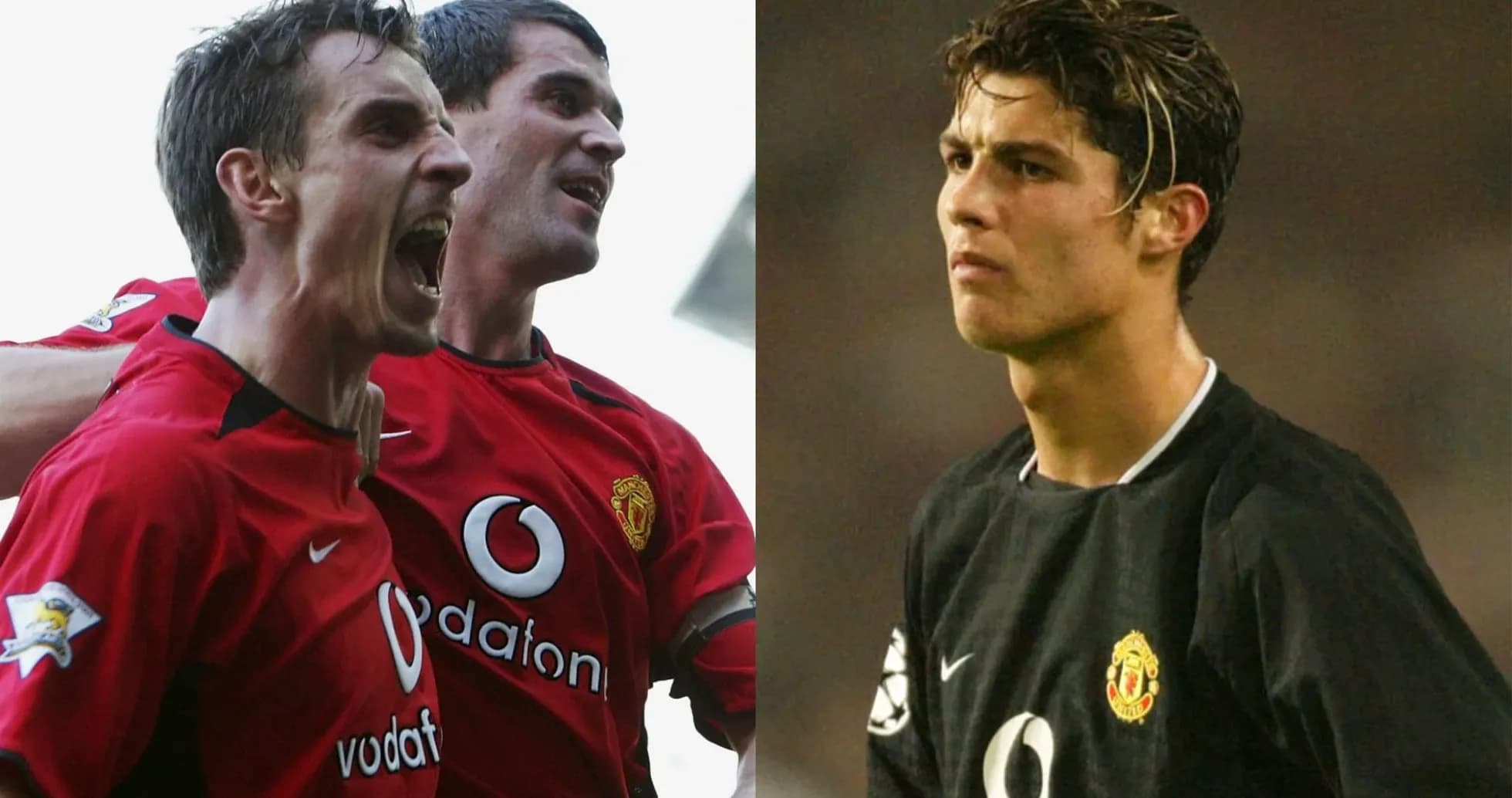
Cristiano Ronaldo was always supposed to be good. Nobody at Manchester United in 2003, though, could have drawn up this script.
A skinny winger from Sporting, all stepovers and sharp angles, has become a global institution. At 41, with Al-Nassr in the Saudi Pro League, he is still collecting league titles to stack alongside those from United, Real Madrid and Juventus, still bending the record books to his will, still refusing to slow down.
He is now chasing the kind of number that once belonged in playground boasts, not professional careers: 1,000 competitive goals. Along the way he has taken five Ballons d’Or, a cluster of Champions League crowns and an entire era of football and stamped his initials all over it.
And yet, for those who saw him at the start, none of this came easily.
The boy who kept getting up
Eric Djemba-Djemba remembers the noise first. The crunch of tackles at Carrington. The shouts. The tears.
The former United midfielder, speaking to GOAL courtesy of Betinia NJ, paints a picture of a teenager being hardened in real time.
“I remember the training, people they can tackle him every time – Gary Neville, Roy Keane, they were tackling him,” Djemba-Djemba said. “But he was there, he was crying, but he would wake up, continue running, and I'm happy for him, he deserved it.”
That is the core of the Ronaldo story stripped of glamour. Not the billboards, but the bruises. A young winger kicked, rattled, tested by senior pros who had seen everything, yet who quickly realised this kid would not go away.
“He wants to be there, he always wants to be first, he always wants to be there winning the game, winning the training,” Djemba-Djemba added. That obsession, that refusal to accept second place, became his trademark long before the goals and the trophies turned him into CR7.
A “robot” who refuses to age
The years have passed. The physique remains freakish. Ronaldo’s longevity, even by modern standards, borders on the surreal.
At 41, he is still leading the line, still preparing to captain Portugal at the 2026 World Cup, still driving himself through a schedule that would drain players ten years younger. Djemba-Djemba, who watched the foundations being laid, believes the end is nowhere near.
“I think he can go to 44, 45, Cristiano can do that, he has energy to do that,” he said. “He's amazing. I don't know how he does it, but he's a robot, he's amazing!”
The word “robot” has followed Ronaldo for years, a shorthand for his ruthless conditioning and mechanical consistency. Yet there is nothing cold about his ambition. The target of 1,000 goals is absurd, almost cartoonish, but with every season in Saudi Arabia, every penalty, every header, it inches closer to reality.
Djemba-Djemba does draw one line. Club and country together, deep into his forties? That, he admits, might be a stretch.
“I think Cristiano can go until 44,” he said, before adding that doing so both with his national team and his club would be another level of strain. The body can be sculpted and preserved. International football, with its emotional weight and compressed tournaments, is another test entirely.
The World Cup that will not let go
Yet the World Cup will not leave this story alone.
Ronaldo has already played in five editions of FIFA’s flagship event. A seventh would be unprecedented territory. On paper, it sounds fanciful. In practice, the football calendar has thrown him one last temptation.
In 2030, the tournament will come to Portugal, shared with Spain and Morocco. A World Cup on home soil – or close enough to feel like it – at the very moment Djemba-Djemba believes Ronaldo could still be lacing his boots.
“I think if Cristiano goes to 44, and in four years the World Cup is in Portugal, if Cristiano is still playing, I think it will be a good last competition for him to finish his career in Portugal with the World Cup,” he said.
The idea is simple, and powerful. One final dance in front of his people. One last tournament, even if not as the star, then as the symbol.
“I'm sure in Portugal they will say yes for the manager to bring him to be there in the squad,” Djemba-Djemba insisted. “I would do that for him, bring him in the squad, to say to him thank you for everything he did for his country.”
That, in the end, may be the most fitting curtain call: not another record, not another medal, but a place in the squad, a farewell in Portuguese colours, and a country saying thank you to the boy who kept getting up when Roy Keane and Gary Neville kept putting him on the floor.
Related News

Wilfred Ndidi’s Marriage Reportedly Ends as He Enters New Relationship
Cristiano Ronaldo's Top 5 Most Valuable Cars in His Extraordinary Collection
Ben Whittaker’s Challenge to Prove Eddie Hearn’s Bold British Boxing Bet
Peter Handscomb on the Challenge of Facing Indian Bowlers
How to Watch UFC 332: Silva vs. Wang Live on CBS and Paramount+ This Saturday
Raul Rosas Jr. Shares His Thoughts on the Shocking UFC Vegas 121 Finish Against Raoni Barcelos