
Cristiano Ronaldo's World Cup Journey: A Two-Decade Pursuit
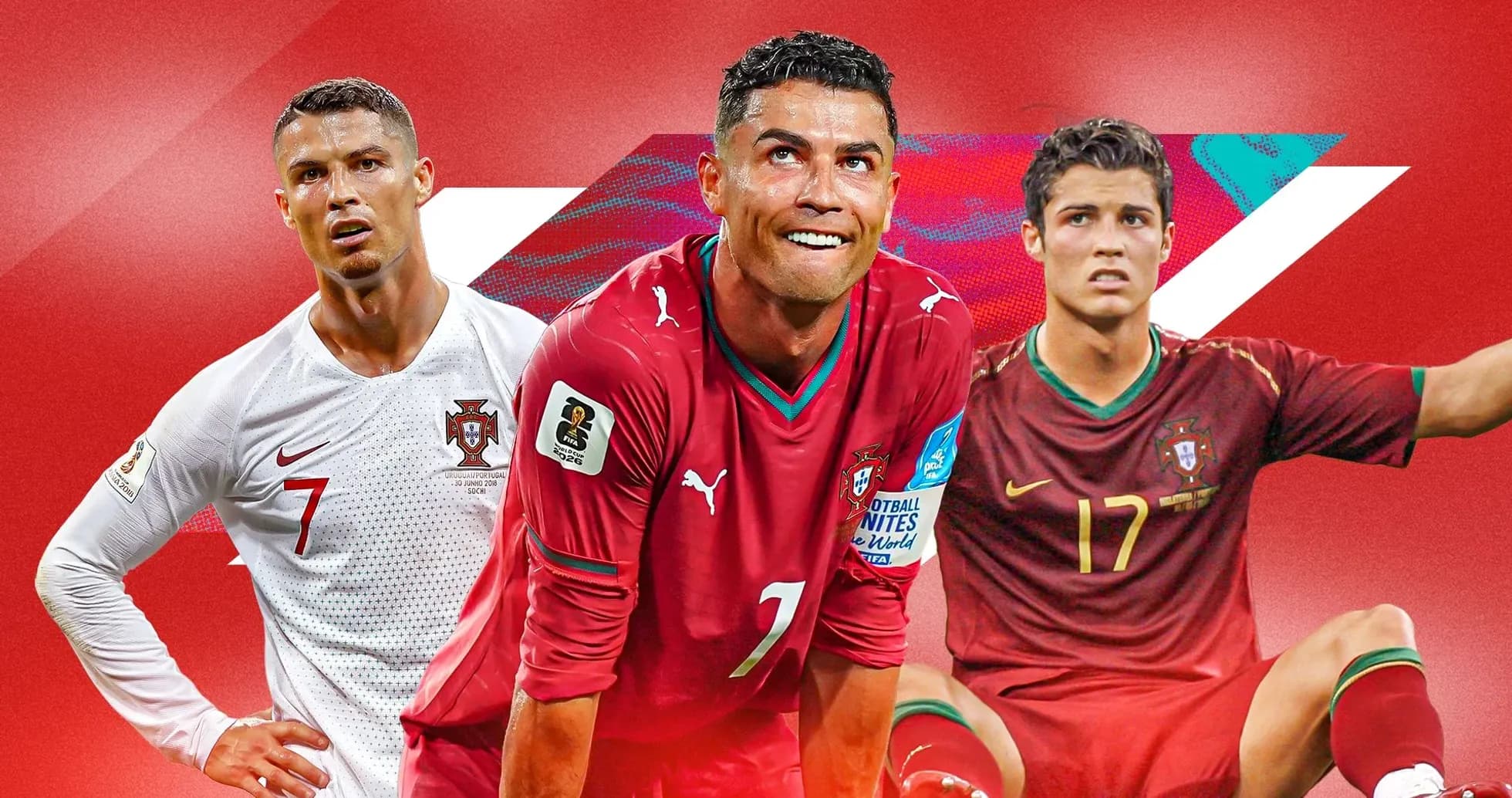
Cristiano Ronaldo has spent two decades chasing the World Cup moment that never quite arrives.
From the start, the stage seemed built for him. In 2006, a 21-year-old winger with too much pace and too much swagger became Portugal’s youngest-ever World Cup scorer, rolling in a late penalty against Iran in a 2-0 win. It was a neat milestone, a headline for the scrapbook. It was also his only goal of the tournament.
Back then, he was not yet the penalty-box predator who would devour club records. Portugal reached the semi-finals and finished fourth, and his failure to score in four knockout games barely registered. What did echo around Germany was something else entirely: his character.
Every touch in the semi-final against France drew a chorus of boos. The crowd had chosen their villain. Ronaldo was accused of helping to get his Manchester United team-mate Wayne Rooney sent off in the quarter-final against England, racing towards the referee after Rooney’s tangle with Ricardo Carvalho. The image that burned into English minds came moments later: Ronaldo’s wink towards the Portugal bench.
Steven Gerrard did not hold back. “I saw him going over to the referee and giving him the card and I think he was bang out of order,” he said. “If he were one of my team-mates, I would be absolutely disgusted with him. After Wayne was sent off, [Ronaldo] winked at his bench and his team-mates and that just about sums him up as a person."
Frank Lampard followed. "He's supposed to be a team-mate of Wayne's at Manchester United and he does something like that. It's not nice, is it? We were told that anyone who tried to get someone else a yellow or red card would get a yellow but it just hasn't happened."
Ronaldo, who buried the decisive penalty in the shootout against England, insisted he had done nothing wrong. FIFA’s technical study group saw it differently. In the name of sportsmanship, they gave the young player of the tournament award to Lukas Podolski instead.
"We want to have decent behaviour and I admit we were critical of this," said the group’s head, Holger Osieck. "Players should be role models and fair play is a consideration."
The message was clear: Ronaldo could electrify a stadium, but not everyone liked the way he did it.
Captaincy, criticism and a heavy shirt
By 2010, Ronaldo was no longer just the prodigy. He wore the armband. He was Portugal’s captain, its face, its lightning rod.
The World Cup in South Africa cut deep. Portugal exited with a whimper in the last 16, beaten 1-0 by eventual champions Spain. Ronaldo scored only once, the sixth in a 7-0 demolition of North Korea, his first international goal in 16 months. For a player of his stature, that drought felt suffocating.
"I feel completely disconsolate, frustrated and an unimaginable sadness," he admitted after the defeat to Spain.
The fallout at home turned ugly. Cameras caught him after the loss, asked to explain the defeat. His response — "How can I explain [this defeat]? Ask that question of Carlos Queiroz." — sounded, to many ears, like a captain throwing his coach under the bus.
Ronaldo pushed back. "When I said, ‘Put the question to the coach’, it was just because Carlos Queiroz was holding a press conference," he explained. "I am a human being, and like any human being I suffer and I have the right to suffer alone. I know that I am the captain, and I have always assumed and will assume my responsibilities."
Queiroz’s reply was pointed. He would not tolerate “anyone placing himself above the best interests of the national side.”
"Portugal needs Ronaldo, and Ronaldo needs the national side," he told AFP. "But if this shirt unnerves some players, they have no grounds to be there."
The shirt weighed more heavily with every tournament.
Brazil 2014: qualifying hero, finals shadow
To reach the 2014 World Cup, Ronaldo dragged Portugal there almost single-handedly. Across two ferocious play-off legs against Sweden, he scored all four of Portugal’s goals. It felt like a statement: when the stakes rose, so did he.
He arrived in Brazil insisting he was “100 percent fit” despite nagging knee and thigh issues. The pitch told another story. The Real Madrid superstar looked dulled, a reduced version of himself.
Germany tore Portugal apart 4-0 on matchday one. Ronaldo drifted through the game, powerless. He later supplied a late cross for Silvestre Varela’s equaliser in a 2-2 draw with the United States and scored an 80th-minute winner against Ghana, but the damage was done. Portugal finished third in Group G and went home early.
The criticism was inevitable. He had missed chances he usually buried. But coach Paulo Bento refused to turn it into a referendum on one man.
"I don’t think it’s fair to make things individual," Bento said. "We made a set of mistakes throughout the tournament during three different matches and that’s what penalised us. I shall never hold any individual responsible for this. The responsibility for failing to reach our goal is mine. The players tried to play the roles they had been assigned.
"Cristiano is usually really effective, but suddenly he couldn’t do it. But I’m not going to deem one player responsible."
For the first time at a World Cup, Ronaldo looked mortal.
Russia 2018: a blistering start, a familiar end
Then came Russia. If Brazil showed a fading force, the opening night in Sochi suggested the opposite.
Ronaldo ripped into Spain with a hat-trick in a wild 3-3 draw, including his first-ever free-kick goal at a major international tournament. It was one of those nights when he seemed to bend the entire sport to his will.
"I'm very happy, it is a personal best, one more in my career but the most important thing is to highlight what the team has done," he said. "We have played one of the favourite teams to win the World Cup, we have been winning twice and drew, and I think it was a fair result. The team is doing very well and we are going to do well for sure."
They didn’t. Portugal reached the last 16, but the old World Cup pattern reasserted itself. In the knockout game against Uruguay in Sochi, Ronaldo could not find a goal or an assist. Portugal lost 2-1. Another campaign ended with him walking off the pitch, shoulders heavy, tournament incomplete.
At 33, the whispers grew louder. Was this his last World Cup? Ronaldo refused to be drawn.
"I reckon it is not the right time to talk about it," he told FIFA. "But I am sure that our national team will continue to be one of the best in the world, with awesome players, a fantastic group, and young as well. It’s a group that has a big ambition to triumph and that is why I am happy about everything."
He would be back. The World Cup still refused to give him the ending he wanted.
Qatar 2022: the fracture
Qatar was supposed to be the last dance, the crowning act. Ronaldo arrived with something to prove after the chaotic collapse of his second spell at Manchester United. He talked, moved and carried himself like a man intent on silencing everyone.
Instead, it unravelled.
He scored from the penalty spot in Portugal’s opening win over Ghana, but the rest of his tournament was defined by frustration and flashpoints. He reacted furiously when substituted in the shock group-stage defeat to South Korea. Then came the decision that shook the camp: Fernando Santos dropped him for the last-16 clash with Switzerland.
Portugal responded with their best performance of the tournament. Goncalo Ramos, Ronaldo’s replacement, hit a hat-trick in a 6-1 win. Reports surfaced that Ronaldo had threatened to leave the camp. Publicly, he denied any such betrayal.
"I just want everybody to know that a lot has been said, a lot has been written, a lot has been speculated about, but my dedication to Portugal has never wavered for an instant," he wrote in a social media post after the quarter-final loss to Morocco. "I was always just one more player fighting for everyone's goal and I would never turn my back on my team-mates and my country."
"For now," he added, "there's not much more to say. Thank you, Portugal. Thank you, Qatar... Now, we have to let time be a good adviser and allow everyone to draw their own conclusions."
The images were stark. Against Morocco, he came off the bench, chased shadows, and when the final whistle went, he walked straight down the tunnel in tears. No goal. No rescue act. Just the end of another World Cup, this time at 37, with his only strike coming from the spot.
On Instagram, he poured out what sounded like a farewell to the dream.
"To win a World Cup for Portugal was the biggest and most ambitious dream of my career," he wrote. "In my five appearances at World Cups over 16 years, always playing alongside great players and supported by millions of Portuguese, I have given my all. I left everything I had on the pitch. I'll never shrink from a battle and I have never given up on that dream. Unfortunately, that dream ended yesterday."
For many, that was the full stop. The consensus hardened: at the very highest level, Ronaldo was finished.
One more run, one more demand
But Ronaldo has never been a man who listens closely to consensus.
Just seconds after the final whistle in Portugal’s 5-0 win over Uzbekistan, he spun to a nearby camera and yelled: "I'm back! I'm back!" It was classic Ronaldo theatre, a declaration as much to himself as to the watching world.
The context, though, was impossible to ignore. He had struggled in Portugal’s opening-round draw with DR Congo. His two goals against Uzbekistan came against a side ranked 60th in the world. The temptation was to dismiss it as noise, not signal. That caution proved wise.
When the level rose again, the old questions resurfaced. Against Colombia, who calmly held Roberto Martinez’s side to a 0-0 draw in Miami to top Group K, Ronaldo laboured. Portugal’s attack misfired. The group slipped away.
Now the path is harder. Portugal must face a Croatia side led by Luka Modric, a team that may be past its peak but still knows how to survive on the big stage.
The same description fits Ronaldo. At 41, he has already shown he can still score at a World Cup. The numbers are there. The aura still flickers. Yet one statistic hangs over everything: in all these years, in all these tournaments, he has never scored in a World Cup knockout match.
That is the gap in a career otherwise crammed with records. That is the challenge that remains, perhaps the last one that truly matters to him on this stage.
Croatia await. So does that missing goal.
Over to you, Cristiano.
Related News
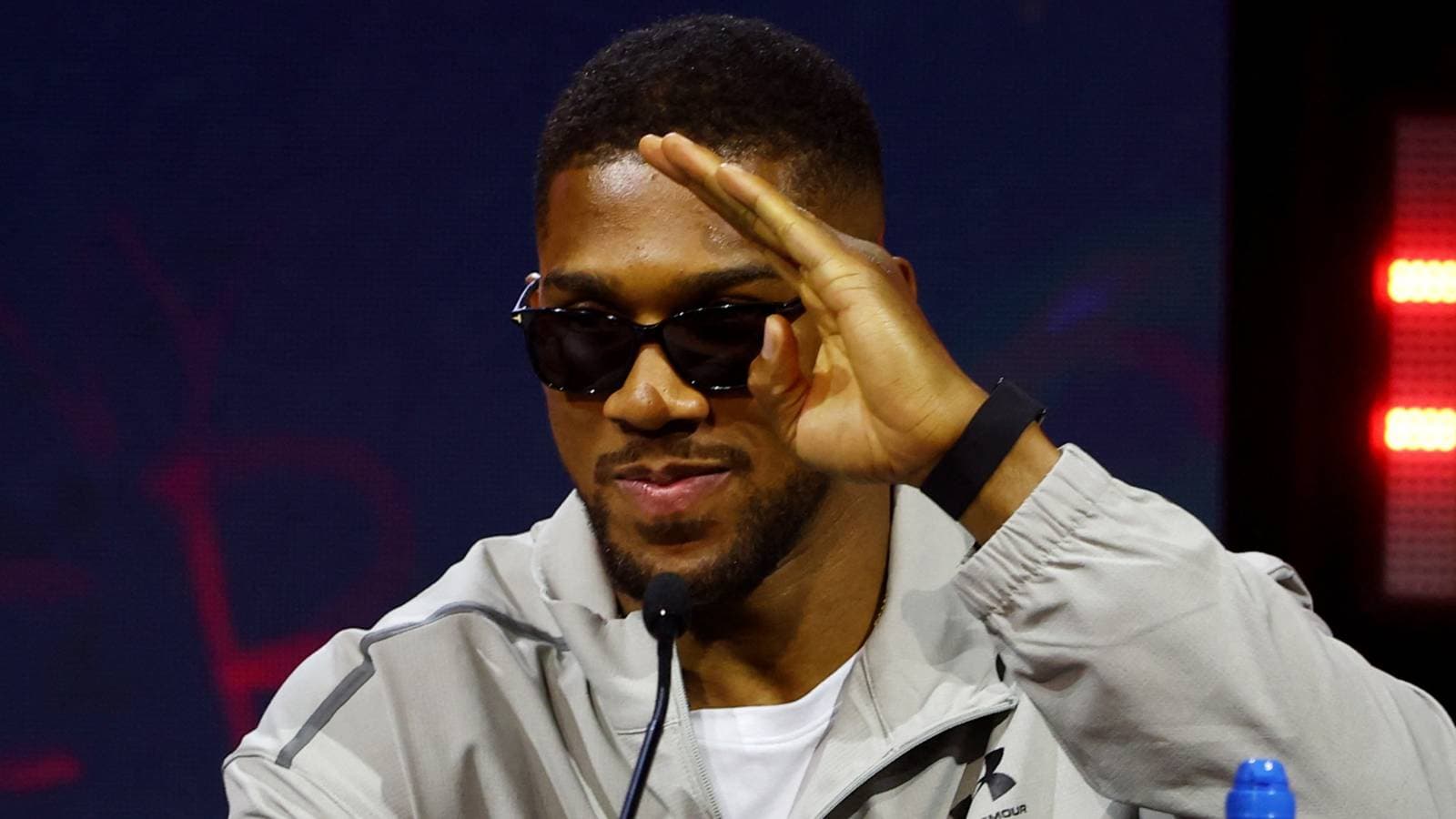
Anthony Joshua Names Murat Gassiev as Next Opponent if He Defeats Tyson Fury
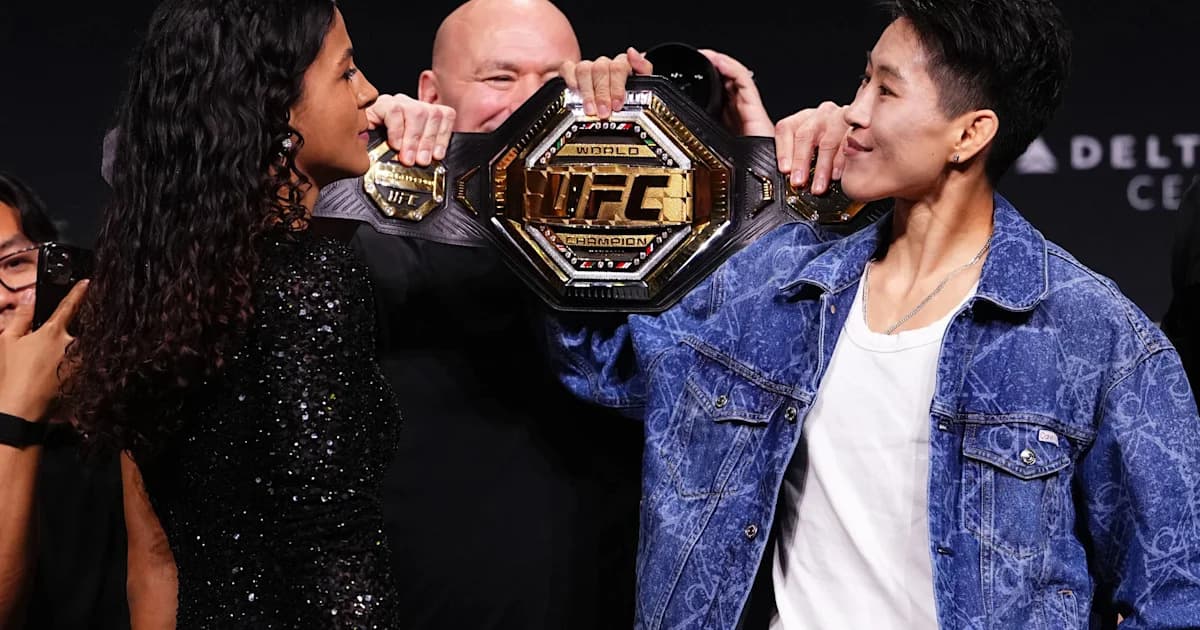
UFC 332: Start Time and Fight Highlights for Natalia Silva vs. Wang Cong
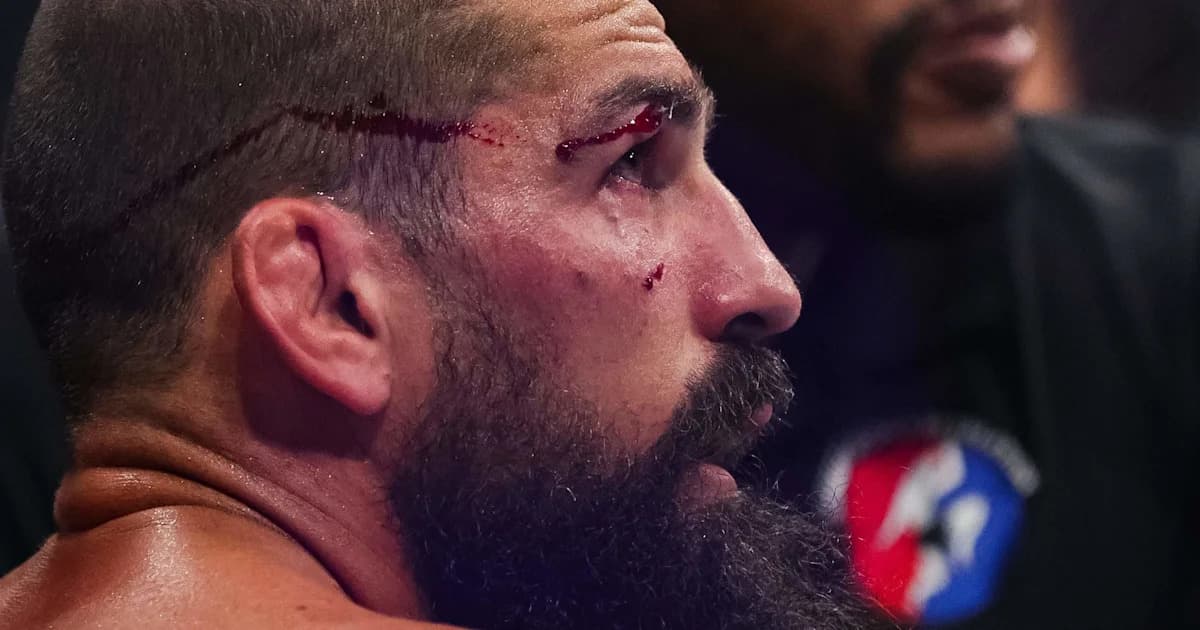
Court McGee Opens Up About Choosing UFC 332 as His Final MMA Fight
WBC Orders Lightweight Title Unification: William Zepeda vs Jadier Herrera
BCCI Pension List: Monthly Payments to Retired Indian Cricketers in 2025
Why Fury vs Joshua Is Set for Cardiff, and Dua Lipa’s Unexpected Role