
Diego Maradona's Final Days: Court Testimony Reveals Neglect
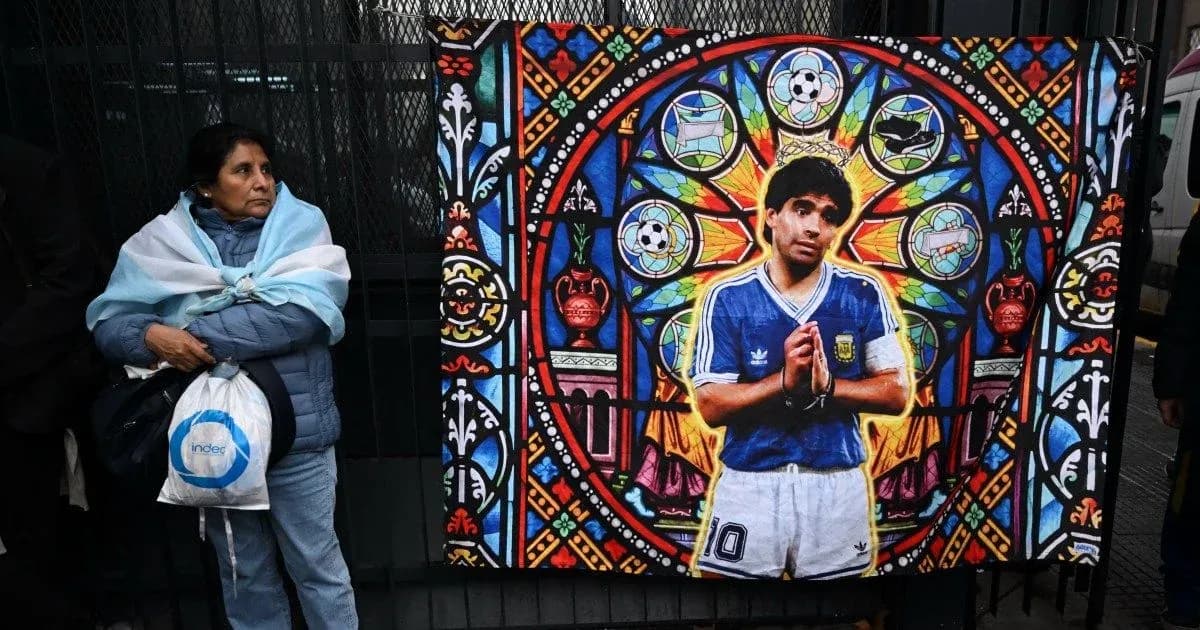
In his final days, Diego Maradona lay in bed, swollen, silent and seemingly surrendered to the inevitable. That was the stark picture painted in court by Nicolas Taffarel, the Argentina great’s long-time masseur, as the trial into the circumstances of Maradona’s 2020 death continued in Argentina.
Taffarel’s testimony cut through the legal language and medical reports. It went straight to the bedside.
“He wouldn’t get out of bed, he didn’t want to eat, he didn’t want to wash, he didn’t want to look after his personal hygiene,” he told the court on Thursday, describing a man who once dragged a nation to World Cup glory now barely willing to move.
Seven healthcare professionals are on trial, accused of potential negligence that may have contributed to the 60-year-old’s death from heart failure and acute pulmonary oedema – fluid in the lungs – two weeks after brain surgery. They face possible sentences of up to 25 years in prison and deny any wrongdoing.
A warning that went unanswered
Taffarel said he had grown increasingly alarmed as he watched Maradona deteriorate. He testified that he urged the medical team responsible for the 1986 World Cup winner to increase their presence and see him “every day”, a plea captured in an audio message played in court.
“I reported the issues I observed with him, but I saw no concrete action or swift resolution,” he said, his voice breaking as he relived those days.
The details he gave were grim. “He was bloated, his legs were swollen,” Taffarel recounted. The masseur said doctors tried to soothe his concerns, telling him to calm down and assuring him the symptoms would pass.
“You put your trust in them; you tell yourself it will pass, that everything will sort itself out,” he told the court. “But it didn’t pass.”
The contrast could hardly be sharper: the man who once danced through defences now barely able to summon the will to sip a drink.
“Nothing, that’s it”
On November 24, the day before Maradona died, Taffarel made one last attempt to rouse him. He tried to get him out of bed, to share a mate, the herbal drink woven into daily life in Argentina and into countless stories from Maradona’s playing days.
The answer he received still haunts him.
“He said to me: ‘I don’t want anything, Taffita, that’s it.’ I asked him: ‘What do you mean, that’s it?’ and he replied: ‘Nothing, that’s it’,” Taffarel said.
Those final words – “ya está” – hang over the case. In Spanish, they can mean “it’s all right” or “it’s over”. In that room, on that day, they sounded like a man closing the door.
Maradona died alone in his bed on November 25, 2020.
Specialists under scrutiny
The defendants, whose names and specific roles sit at the heart of the legal battle, have built their defence on the limits of their responsibility. They argue that their specialisms and their involvement did not directly touch the clinical causes of death, and that they cannot be held criminally liable for the outcome.
Prosecutors see it differently, alleging a chain of failures around a patient who needed tighter monitoring and more decisive intervention.
The trial, which began in mid-April, has already reopened raw wounds in a country where Maradona’s image still looks down from murals and billboards, and where his every triumph and failing has long felt like a national story.
Now, in a courtroom rather than a stadium, the fight over his legacy has shifted. Not over goals or trophies, but over responsibility, duty of care and what really happened in those final, quiet hours when football’s most combustible genius slipped away. The hearings are expected to stretch beyond this month, and with every witness, the question only grows sharper: who, if anyone, will be made to answer for the way Diego Maradona died?
Related News
Carlos Alcaraz Urges an End to Matches Ending in the Early Hours
Carlos Alcaraz Criticizes Late US Open Finish After 3:30 a.m. Match
Jannik Sinner Set for ATP 500 Return in Beijing with Novak Djokovic Also Competing
Meet Iva Jovic: The American Tennis Prospect Making Waves
Till vs Romero: Fight Details, Undercard, and Viewing Info for This Weekend
Joshua vs Fury Set for December Clash in Cardiff