
Vancouver FC and York United: A Tactical 3–3 Draw
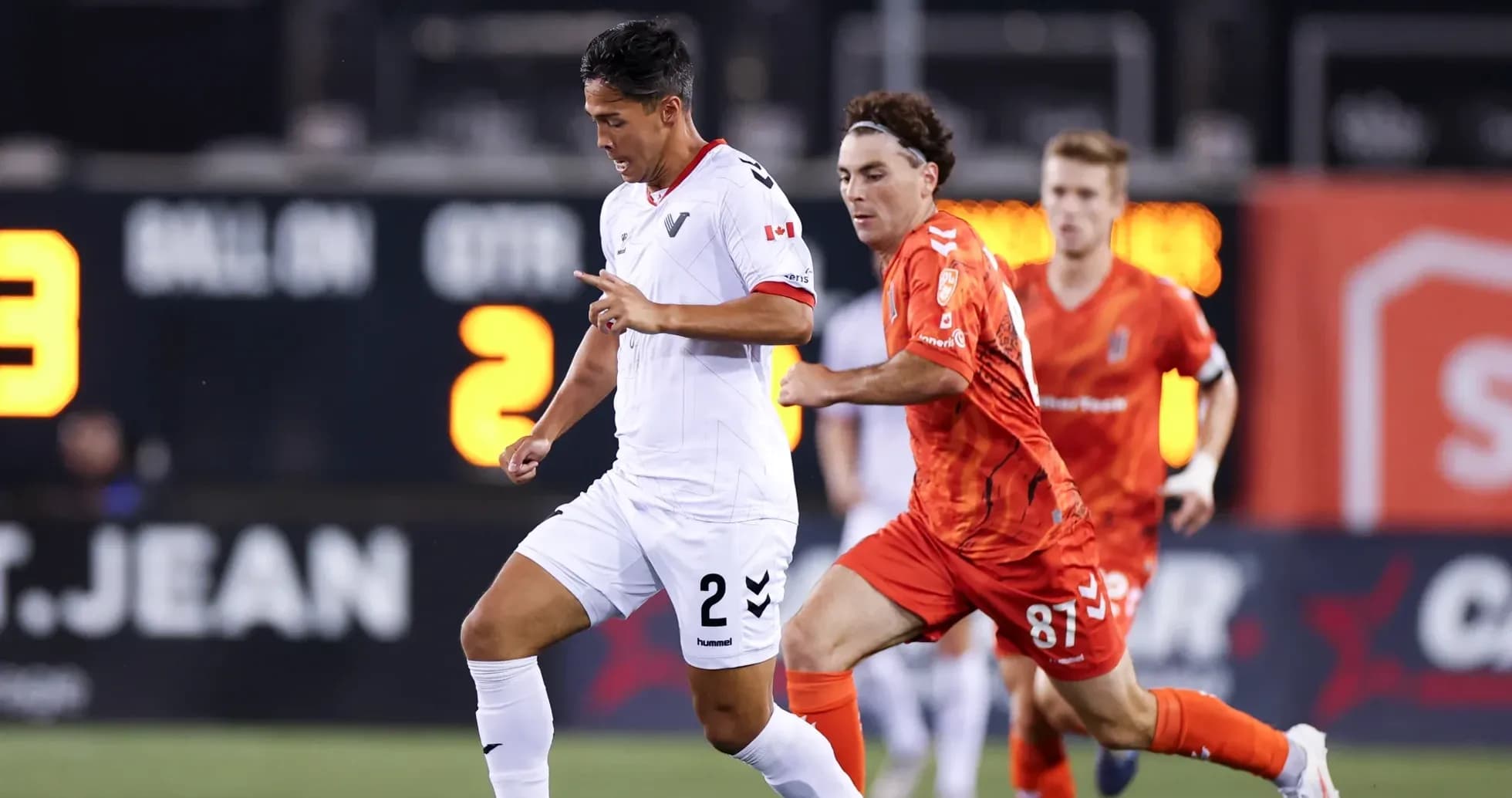
Under the lights at Willoughby Community Park, Vancouver FC and York United produced a 3–3 draw that felt less like a group-stage formality and more like a tactical stress test for two flawed but ambitious Canadian Premier League sides. The scoreline mirrored their seasonal identities: Vancouver, fourth in the table with 32 points and a narrow overall goal difference of +2 (34 scored, 32 conceded), leaning into controlled aggression; York, seventh with 24 points and a stark overall goal difference of -16 (33 scored, 49 conceded), a team that always seems to live on the edge of chaos.
I. The Big Picture – Structures and Season DNA
Vancouver lined up in their preferred 4-2-3-1, a shape they have used in 9 league matches, and it showed in the clarity of their roles. C. Irving anchored the side in goal, behind a back four of K. Proctor, Thomas Geoffrey Field, M. Campagna and M. Doner. In front of them, the double pivot of D. Pecile and M. Polisi offered a familiar axis, with a fluid line of three – P. Gee, A. Traore and the lively T. Bah – supporting lone striker L. Mousset.
This structure fits Vancouver’s season profile. Heading into this game, they had been strong at home: 6 wins from 12, scoring 20 and conceding 14. That works out to 1.7 goals scored at home on average, and 1.2 conceded – numbers that describe a side comfortable imposing itself at Willoughby, even if the overall campaign has been streaky. They had already posted a 4–0 home win and a 1–5 away statement victory, underlining their capacity to blow teams away when the press and transitions click.
York, meanwhile, arrived with a 4-3-3 that felt like a deliberate attempt to stabilise a team whose season has been defined by volatility. Campos Ralston Kai Antonio started in goal, with a back four of K. Kibato, L. Singh, R. López and M. Ferrari. Ahead of them, a midfield trio of S. Yeates, J. Córdova and O. Bassett sought to give structure and ball progression, while the front three of L. Accettola, T. Skublak and J. Almagro promised movement and goals.
The choice of 4-3-3 is interesting for a side that has most often used a 3-4-3 this season (7 matches), but it speaks to York’s dilemma. Heading into this game, they had conceded 49 overall – an average of 2.2 goals per match – with 26 of those shipped on their travels at 2.2 per away game. Their away record of 1 win, 6 draws and 5 defeats underlined a team that rarely collapses completely but almost always gives opponents chances.
II. Tactical Voids – Discipline and Margins
Neither side came into the fixture carrying listed suspensions or injuries, but the season-long disciplinary data framed how this game could tilt.
Vancouver’s yellow-card distribution is heavily back-loaded: 23.08% of their cautions arrive between 76–90 minutes, and another 15.38% between 91–105. That late-game aggression – or fatigue – often turns tight contests into firefights. York’s profile is similar but even more combustible: 23.44% of their yellows fall between 61–75 minutes, with a further 14.06% from 76–90. They have also seen a red card in the 61–75 window this season, a reminder that their defensive line can lose control just as matches enter the decisive phase.
On the penalty front, Vancouver are perfect so far: 2 penalties taken, 2 scored, none missed. York are the opposite story – 1 penalty awarded, 1 missed, 0 scored. That single failure underscores a broader theme: York generate enough attacking moments to earn big chances, but their execution in high-pressure moments has been unreliable.
III. Key Matchups – Hunter vs Shield, and the Engine Room
The headline duel came down the centre: York’s talismanic forward T. Skublak against a Vancouver defensive unit that, at home, had conceded just 14 in 12 matches.
Skublak’s season numbers are elite in this league context. Heading into this fixture, he had 6 goals and 2 assists from 20 appearances, with 24 shots and 13 on target. He had also drawn 11 fouls and committed 19, picking up 8 yellow cards – a striker who lives in constant contact, always on the edge. His 121 duels with 62 won show a player who can pin centre-backs, contest long balls and still threaten in behind.
Against him, Vancouver’s back four had to blend physicality and positioning. Field, ever-present with 23 starts and 1027 minutes, brings composure and distribution (585 passes at 85% accuracy) from the left side, plus defensive bite – 13 tackles, 2 blocked shots and 17 interceptions. His ability to step out and intercept vertical passes into Skublak was crucial. Inside him, M. Campagna and the right-sided Doner–Proctor pairing had to manage York’s rotations, especially as L. Accettola and Almagro drifted infield.
In midfield, the engine-room duel was decisive. For Vancouver, Polisi and Pecile were tasked with screening and starting attacks. Polisi’s season numbers – 488 passes at 85% accuracy, 20 tackles, 3 blocked shots and 9 interceptions – paint him as the metronome and first line of resistance. He had to track the runs of Yeates and Córdova, while also feeding Bah and Traore between the lines.
York’s counter was built around Yeates. With 534 passes at 88% accuracy, 22 tackles and 6 interceptions, he is both their organiser and their enforcer. His duel with Bah – Vancouver’s most dynamic carrier, with 26 dribble attempts and 12 successful, plus 28 fouls drawn – was a fascinating contrast of styles: Yeates seeking to control tempo and close spaces, Bah determined to break them.
Out wide, York’s creative edge came from depth. B. Badibanga, even starting on the bench, loomed as a game-changing substitute. His 4 assists, 15 key passes and 81% pass accuracy in just 355 minutes make him one of the league’s most efficient creators. Whenever he entered, he would naturally look to combine with Skublak and Almagro in the right half-space, testing Vancouver’s full-backs and the recovery speed of their pivots.
For Vancouver, the bench threat was Terran Campbell. With 4 goals from 594 minutes and 15 shots, he offers penalty-box presence and direct running late in games. His introduction would allow Vancouver to flip from a structured 4-2-3-1 into a more aggressive two-striker look, especially if they chased the match.
IV. Statistical Prognosis – Chaos Baked In
The 3–3 final scoreline felt almost inevitable when mapped against the underlying numbers. Vancouver’s home attack, averaging 1.7 goals scored and 1.2 conceded, met a York side that scores 1.0 away but concedes 2.2. The intersection of Vancouver’s late-game card surge and York’s mid-to-late second-half disciplinary spikes created exactly the kind of stretched, transitional game where both forward lines thrive.
Even without explicit xG values, the season trends point to a matchup where defensive solidity was always going to be fragile. Vancouver, with only 3 clean sheets overall and 8 matches where they failed to score, are rarely dull. York, with just 2 clean sheets and a missed penalty on their seasonal ledger, oscillate wildly between incisive and vulnerable.
In the end, this 3–3 draw underlined who these teams are. Vancouver remain a dangerous, if inconsistent, contender whose home form and attacking depth keep them in the upper reaches of the table. York continue to be the league’s great volatility engine: capable of troubling any defence through Skublak, Yeates and their creative unit, but undermined by a porous back line and fragile game management. For both coaches, the tape from Willoughby will be rich – not in control, but in lessons about how thin the margins are when your identity is built on chaos.
Related News

Vancouver FC and York United: A Tactical 3–3 Draw

Vancouver FC vs Forge: Predicted Lineups and Team News

HFX Wanderers FC vs Atlético Ottawa Predicted Lineups: Team News
Vancouver FC vs Forge: Canadian Premier League Clash

HFX Wanderers FC vs Atlético Ottawa: Canadian Premier League Clash
Vancouver FC vs Forge Prediction: Key Stats and Betting Tips