
York United Shocks Cavalry FC with 3-1 Victory
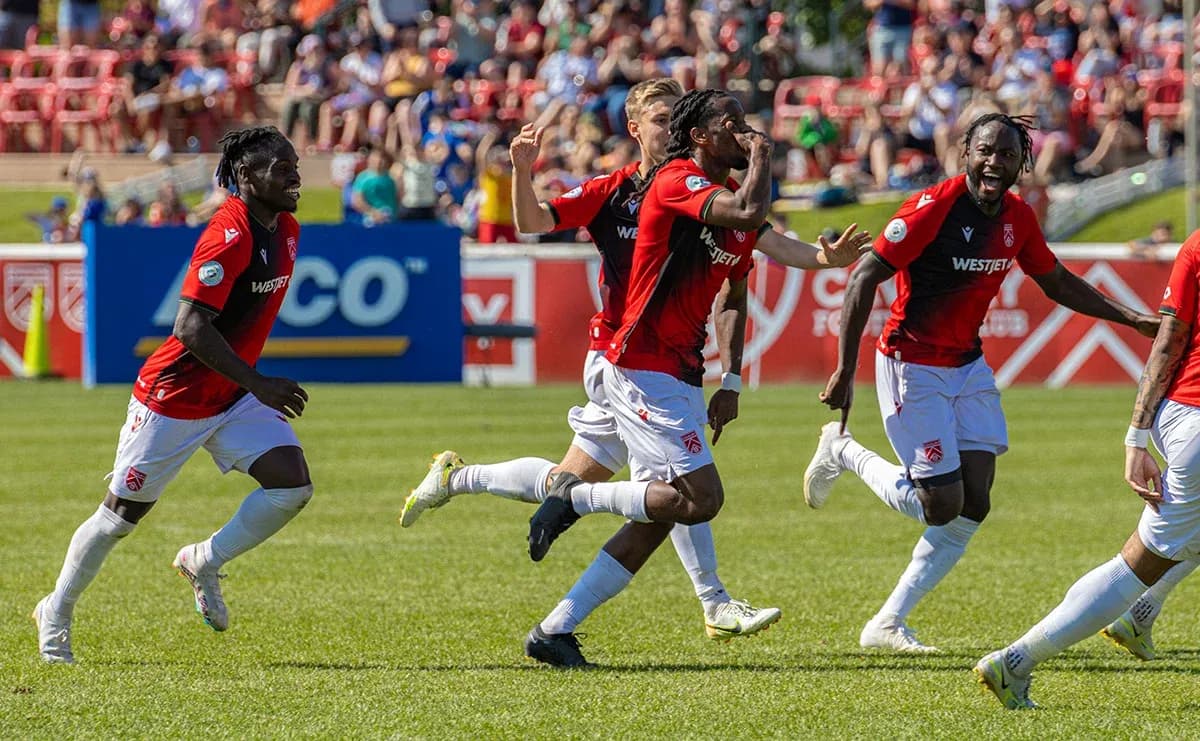
Under the cold October light at York Lions Stadium, this felt, on paper, like a mismatch: league leaders Cavalry FC, ruthless and balanced, arriving with a total goal difference of +32 (51 scored, 19 conceded), against a York United side marooned in mid-table with a total goal difference of -15 (39 scored, 54 conceded). Yet the 3-1 full-time scoreline in favour of York told a different story: of a squad that leaned into its chaotic strengths, and a favourite that was finally made to feel uncomfortable.
Heading into this game, York’s season had been defined by volatility. Overall they were averaging 1.6 goals for and 2.3 against per match, with their home record a wild 2.3 scored and 2.3 conceded. Mauro Eustaquio’s choice to double down on a 3-4-3 was less a gamble and more an acceptance of what his team is: aggressive, front-foot, and willing to trade blows.
Opposite him, Tommy Wheeldon’s Cavalry arrived top of the Canadian Premier League with 53 points from 25 matches, powered by a total average of 2.0 goals scored and only 0.8 conceded per game. On their travels they had been more human, though: 21 goals for and 12 against across 13 away fixtures, an average of 1.6 scored and 0.9 conceded. The structure remained familiar: a 4-2-3-1 built on control, with a secure spine and enough creative firepower to overwhelm most opponents.
I. The Big Picture – Systems Colliding
York’s 3-4-3 was clear in the starting grid. A. Campos anchored the back, shielded by a trio of defenders: L. Singh to the left, F. Sturing central, and R. Lopez on the right. Ahead of them, the four-man band of C. Guzman, O. Bassett, J. Cordova and M. Ferrari stretched the width and tempo of the game, while the front three of S. Yeates, S. Gonzales and A. Almagro gave York vertical threat and interchanging movement.
Cavalry’s 4-2-3-1 looked, at first glance, textbook. N. Ingham in goal, protected by a back four of Fewo, A. Didic, D. Klomp and J. McGlinchey. In front, the double pivot of E. Kobza and N. Myroniuk was designed to control transitions. Ahead of them, a line of three – N. Edwards left, T. Warschewski central, A. Musse right – supported lone forward O. Graham-Roache.
The first half belonged to York. They went into the break 2-0 up, a reflection of how well the 3-4-3 pinned Cavalry’s full-backs and denied clean build-up lanes into Kobza and Myroniuk. With Cavalry used to suffocating opponents early, the narrative flipped: the leaders were the ones chasing shadows.
II. Tactical Voids – Discipline and Risk
Neither side came in burdened by confirmed absences, but their disciplinary histories shaped the emotional temperature of the match.
York are one of the league’s more combustible sides. Their yellow-card distribution shows a clear spike between 61-75 minutes, where 23.29% of their cautions arrive, and another heavy band between 46-60 minutes at 20.55%. They have also seen two red cards this season, split early (0-15) and around the 61-75 window. That volatility is embodied by figures like L. Singh and S. Yeates, both frequent visitors to the referee’s notebook, and by forwards such as S. Gonzales, who already has a red to his name this campaign. It makes York dangerous but always one moment away from self-sabotage.
Cavalry, by contrast, are usually the masters of controlled aggression. Their yellow cards peak between 46-60 minutes at 23.73%, but they spread their cautions more evenly across the match. The red-card story is more pointed: three reds this season, clustered in the 31-45, 76-90 and 91-105 ranges. Players like E. Kobza and G. Ntignee embody that edge, racking up high yellow counts, while T. Warschewski carries both creative burden and disciplinary risk with a red of his own.
York’s penalty record hinted at another tactical void. With 2 penalties awarded this season, they had scored only 1 and missed 1, a 50.00% conversion rate. That miss underlined that they could not rely on spot-kicks to bail them out. Cavalry, conversely, had converted all 4 of their penalties, a perfect 100.00% so far, reflecting a clinical streak in high-pressure moments.
III. Key Matchups – Hunter vs Shield, Engine Room vs Enforcer
The headline duel was always going to be “Hunter vs Shield”: Cavalry’s leading scorer and creator, T. Warschewski, against York’s fragile defensive unit.
Warschewski came into this fixture with 7 goals and 3 assists in 23 league appearances, supported by 44 shots (21 on target) and 40 key passes. He is not just a finisher; he is Cavalry’s attacking metronome, dropping between the lines, threading passes, and winning duels – 201 contested, 89 won. In theory, York’s back three of Singh, Sturing and Lopez should have been stretched by his movement, especially with Musse and Edwards attacking the half-spaces.
Yet the 3-4-3 gave York density where they needed it most. With Bassett and Cordova narrowing off the ball, Warschewski’s pockets were crowded. Sturing’s positioning, combined with Singh’s willingness to step into midfield, helped compress the central lane, forcing Cavalry to work wider and slower than they prefer.
Further back, Cavalry’s “shield” of Didic and Klomp was tested in ways their season stats rarely are. Both centre-backs are usually dominant: Klomp, for example, has 4 goals, 1 assist, 8 blocked shots and 17 interceptions this season, while Didic adds 3 goals, 3 assists and 6 blocked shots. But York’s front three did not give them static targets. Yeates, who has 5 goals and 2 assists this season and passes at 88% accuracy, drifted intelligently into midfield, dragging Kobza and Myroniuk out of shape. Almagro, with 5 assists and 2 goals, attacked the channels, while Gonzales offered a more direct, physical presence on the last line.
In the “Engine Room” battle, York’s central pairing of Bassett and Cordova faced Cavalry’s Kobza and Myroniuk. On paper, Cavalry’s double pivot should dominate: Kobza alone has 575 completed passes at 85% accuracy, 23 tackles and 16 interceptions this season, while also sitting near the top of the league for yellow cards and defensive duels. But York’s plan was not to out-pass Cavalry; it was to out-run them. The wing-backs Guzman and Ferrari pushed high, forcing Musse and Edwards backwards and leaving Kobza with too much ground to cover laterally.
IV. Statistical Prognosis – A Result Against the Grain
Following this result, the numbers still paint Cavalry as the superior long-term side. Overall they continue to average 2.0 goals scored and only 0.8 conceded, with 10 clean sheets split evenly between home and away. York, meanwhile, remain a paradox: only 2 clean sheets all season, but a home attack that now looks even more dangerous than their 2.3-goals-per-game average suggests.
From an analytical standpoint, if we project this fixture into a neutral simulation based on season data alone, Cavalry would still emerge as favourites. Their defensive solidity, away average of 0.9 goals conceded, and perfect penalty record would normally tilt the probabilities heavily in their favour. York’s leaky defence and volatile discipline would usually drag their expected value down.
But football is not played in spreadsheets. This match showed what happens when York’s 3-4-3 fires in sync: Yeates knitting play, Almagro supplying incision, Gonzales occupying centre-backs, and the midfield four outrunning a more technically secure opponent. Against a Cavalry side that thrives on control, York introduced chaos – and for one afternoon at York Lions Stadium, chaos won.
Related News

Forge vs Pacific FC Stats: Head-to-head Record Before October 2026 Match
Cavalry FC vs Atlético Ottawa: Clash of Canadian Premier League Leaders
Forge vs HFX Wanderers FC: Canadian Premier League Showdown

York United vs Cavalry FC: A Battle for Survival
Forge vs HFX Wanderers FC Predicted Lineups and Team News

York United vs Cavalry FC Predicted Lineups and Team News