
England's Heartbreak: Another Semifinal Defeat for Kane
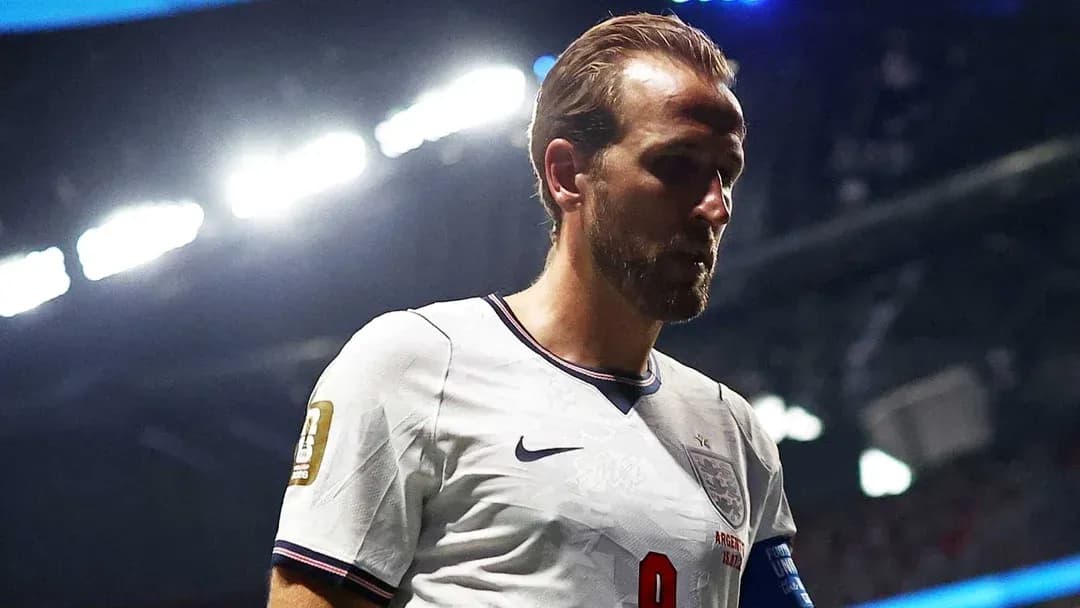
Harry Kane stared at the screen and typed what he could not dress up or dilute: “There are no words big enough right now to overcome this feeling of emptiness in the stomach.”
Empty. That was the word he chose after England’s 2-1 defeat to Argentina in the 2026 World Cup semifinal. Empty after another lead surrendered, another route to a final blocked, another chapter in a long, painful relationship between this team and the last four of a World Cup.
Another semifinal, another scar
England’s history at this stage is turning into a grim pattern. Since lifting the trophy in 1966, the Three Lions have now fallen in three straight World Cup semifinals: 1990, 2018, and 2026. Each time, the hope has felt bigger, the fall steeper.
This one carried a particular cruelty. England struck first, controlled the narrative early, and looked, for a while, like a side ready to step into a new era under Thomas Tuchel. Then the game turned. Enzo Fernández dragged Argentina level, Lautaro Martínez completed the comeback, and the Albiceleste walked towards the grand final while England were left staring at the familiar wreckage of a broken night.
The numbers twist the knife. In the entire 21st century, only twice has a team scored first in a World Cup semifinal and still failed to reach the final. Both times, it was England. First against Croatia in 2018. Now against Argentina in 2026.
Kane’s quiet night
For Kane, this was not just another defeat. It was one of those nights that live with a centre-forward.
The Bayern Munich striker, England’s captain and emotional reference point, endured a strangely muted performance. He did not register a single touch in the opposition penalty area – a statistical void that has occurred for him only twice before in major international tournaments. For a player whose game is built around presence, timing, and penalty-box menace, it was a stark reflection of how effectively Argentina had cut off his supply line and crowded his space.
When the final whistle went, Kane did not rant or lash out. He went online instead. On his X account, he let the rawness show: “There are no words big enough right now to overcome this feeling of emptiness in the stomach.” No excuses. No blame. Just the weight of another missed opportunity.
The message carried more than pain. Between the lines, there was the familiar hint of resolve from a player who has worn disappointment as often as he has worn an armband.
Tuchel’s England at a crossroads
This defeat does not just sit on Kane’s shoulders. It lands on a squad still learning how to turn promise into trophies and on a manager in Thomas Tuchel who has been brought in precisely to bridge that gap.
England had broken the psychological barrier of past generations by reaching semifinals consistently. Now the accusation is different: they cannot get beyond them. The pattern is no longer about failure to compete; it is about failure to finish.
Tuchel will know the narrative forming around his team. Leading in a World Cup semifinal, then letting it slip, leaves scars that are not easily erased by tactical meetings or highlight reels. The dressing room will be heavy. The analysis will be ruthless.
Yet the story is not closed. Kane, now carrying the burden of another lost semifinal, still talks and acts like a man who believes there is time to change the ending. He remains the focal point of a side that has grown used to being close without ever quite touching the trophy.
England must regroup quickly. The cycle does not pause for heartbreak. The question now is stark and simple: after another semifinal heartbreak, do Kane and this generation have one more climb left in them?
Related News
UFC 332 Preview: Natalia Silva vs. Wang Cong Fight Card, Odds, Start Time, and Details
Andy Roddick Responds to Andre Agassi’s Comments on Alexander Zverev at the Laver Cup
Knicks Prepare for Flexible Roles in Title Defense
Rui Hachimura Swaps Lakers Fans to Clippers in Surprising Jersey Exchange

Who Will Be the NBA's Next First-Time All-Stars? Top Picks and Long Shots for 2027
How Strong Is Your Team at Home? Check Out the 2026 Brasileirão Home Standings