
England vs DR Congo: World Cup Knockout Stage Preview
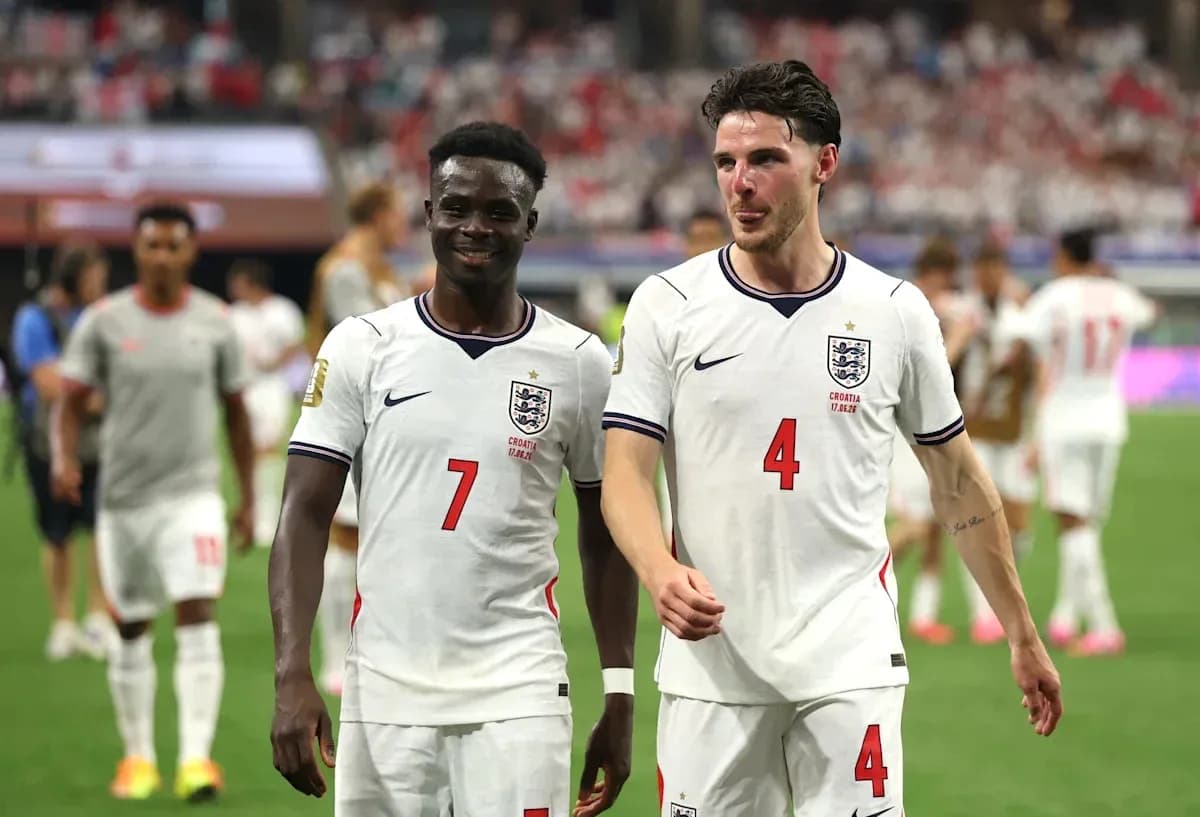
England step into the World Cup knockout stage on Wednesday night with a familiar burden on their shoulders: expectation, and plenty of it.
Top of Group L, but far from top gear, the Three Lions arrive at the Mercedes-Benz Stadium in Atlanta needing more than just progression against DR Congo. They need a performance that convinces a restless fanbase this team can turn talent into something ruthless when it matters.
This is where the tournament really starts. There will be no hiding place here.
A tricky opponent, not a soft landing
On paper, this is the draw most nations would take. DR Congo came through as the highest-ranked third-place side, a label that hints at resilience and awkwardness rather than glamour.
They are not a novelty act. They are battle-tested, dangerous, and carrying the sort of nothing-to-lose edge that has undone bigger names in past World Cups. England have seen this film before. They know how it can end if they drift.
So the question in Atlanta is simple: do England impose themselves, or do they get dragged into a scrap?
Right-back crisis reshapes the back line
The build-up has been dominated by one position. Right-back has become the fault line of England’s preparation.
Reece James, who started the tournament as first choice, missed the Panama match with a hamstring injury that now appears to have ended his World Cup. It is a brutal blow for a player whose delivery and aggression give England an extra gear on that flank.
His replacement, Jarell Quansah, then rolled his ankle against Panama. Thomas Tuchel tried to cool the panic, describing it as “a matter of days” after the final whistle, but this stage of the competition is no place for half-fit defenders. Quansah is expected to be held back.
That leaves Djed Spence. Thrown on in New Jersey, he now walks into the biggest start of his international career, likely anchoring the right side of a back four that otherwise stays intact: Ezri Konsa and Marc Guehi in central defence, Nico O’Reilly again at left-back, and Jordan Pickford behind them.
It is a back line with balance, but not much tournament experience together. DR Congo will test that.
Rice returns, and England’s heartbeat comes back with him
The good news for England lies in midfield. Declan Rice is back.
The Arsenal midfielder sat out the Panama game as the staff managed the calf problem he picked up in the draw with Ghana. His absence was obvious. Without him, England’s structure loosened, the spaces between the lines widened, and control became a negotiation rather than a guarantee.
Rice is expected to start on Wednesday, restoring the side’s anchor alongside Elliot Anderson. It is a partnership that gives England both bite and progression, with Kobbie Mainoo likely to remain on the bench, waiting for his moment.
Ahead of them, Jude Bellingham continues to carry the number ten role and, with it, much of England’s attacking identity. His interventions against Croatia and Panama came at the critical points of both matches. When England have needed someone to grab the game, he has been the one to do it.
This is knockout football. This is his stage.
Saka and Rashford play through the pain and pressure
Out wide, England lean again on familiar faces, even as both manage their own burdens.
Bukayo Saka has been nursing an Achilles issue that shadowed his season with Arsenal and followed him into this World Cup. The problem has not gone away, but he is still expected to start on the right. England’s staff know his value: his angles, his intelligence, his ability to stretch and then cut inside to create chaos.
On the opposite flank, Marcus Rashford keeps his place. He did just enough against Panama to hold off Anthony Gordon for now, offering direct running and the threat of the spectacular from the left.
These are not luxury selections. They are calculated risks on players who can change a game in a heartbeat.
Kane hunts goals, England hunt authority
At the tip of the system, nothing changes. Harry Kane leads the line, chasing not only a place in the last 16 but the World Cup Golden Boot after scoring three times in the group stage.
He has done this before. He knows how quickly a knockout game can turn on a single chance, a single run across a defender, a single misjudged step in the box. For all the questions around England’s fluency, Kane’s numbers remain relentless.
Behind him, the shape is familiar: a 4-2-3-1 with Bellingham central, Saka and Rashford either side, and Rice and Anderson patrolling the base of midfield.
England’s possible XI reads as follows:
Pickford; Spence, Konsa, Guehi, O’Reilly; Anderson, Rice; Saka, Bellingham, Rashford; Kane.
On paper, it is a side that should dominate territory, control tempo and create enough chances to settle the contest. The pitch in Atlanta will tell the truth.
Stage, time, and stakes
The setting is pure modern World Cup theatre. The Mercedes-Benz Stadium, a closed-roof cauldron in Atlanta, will host the last-32 tie on Wednesday, 1 July 2026, with kick-off at 17:00 BST.
In the UK, BBC One and BBC iPlayer will carry the match live, beaming every touch, every misstep, every surge forward back to a country that has seen this generation reach semi-finals and finals, but not yet climb the final step.
This is not just about getting past DR Congo. It is about the tone England set for the rest of the tournament.
Do they finally look like a side ready to own a World Cup, or does another night of questions await?
Related News

Anthony Joshua Names Murat Gassiev as Next Opponent if He Defeats Tyson Fury

UFC 332: Start Time and Fight Highlights for Natalia Silva vs. Wang Cong

Court McGee Opens Up About Choosing UFC 332 as His Final MMA Fight
WBC Orders Lightweight Title Unification: William Zepeda vs Jadier Herrera
BCCI Pension List: Monthly Payments to Retired Indian Cricketers in 2025

Why Fury vs Joshua Is Set for Cardiff, and Dua Lipa’s Unexpected Role