
FAI's Aligned Football Calendar Plan Abandoned
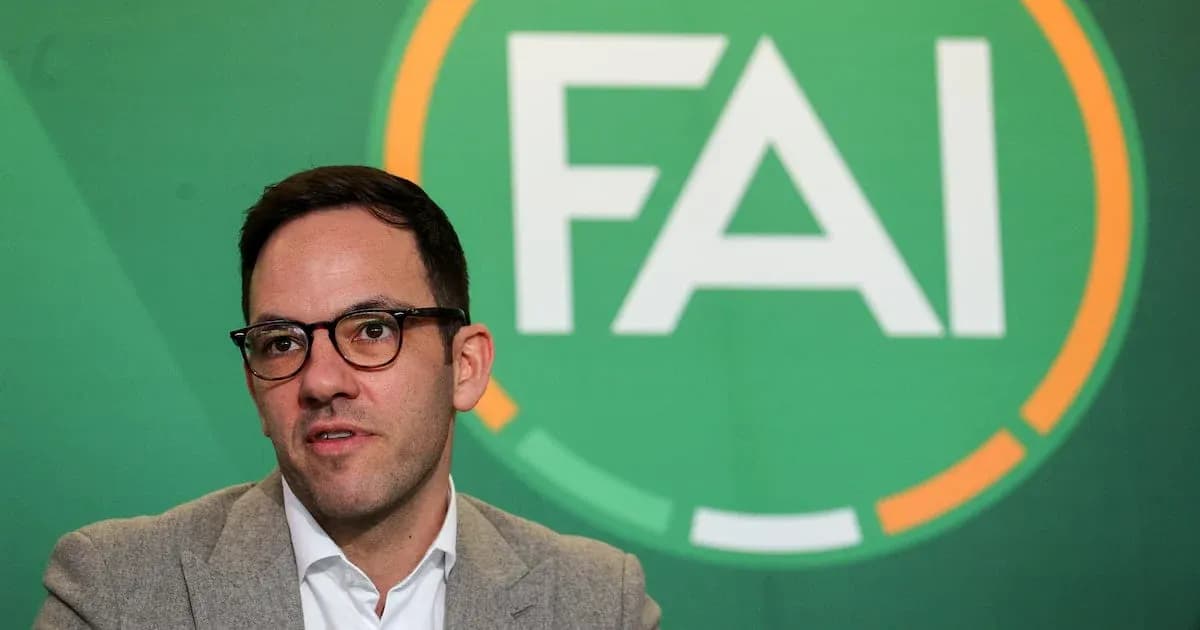
The fog around Gianni Infantino’s war with world football was still hanging over the landscape last Friday when the FAI slipped out a statement. On paper, it was about “key priorities to further boost the development of Irish football”. In reality, it was about something else entirely.
Halfway down, beneath the jargon and the buzzwords, lay the only line that mattered.
The plan to put every level of Irish football on the same calendar is dead.
Or, as Abbotstown now prefers to phrase things: “Following the strategic planning process, the Aligned Football Calendar has been reprioritised and will not be considered a deliverable within the Football Pathways Plan or the FAI’s current 2026–2029 Strategic Plan.”
This is the luxury of the modern football executive: you can kill an idea without ever admitting you’ve killed it. Players don’t get “dropped” anymore, they’re “rotated”. But even the most direct, route-one manager in the country would recognise what the FAI has done here. The aligned calendar has been launched into Row Z.
A blueprint binned
The Aligned Football Calendar sat at the heart of the Football Pathways Plan, the grand design drawn up by former director of football Marc Canham, the man who turned the search for Stephen Kenny’s successor into an odyssey.
The FAI trumpeted that plan as the outcome of 11,000 hours of consultation, much of it conducted on roadshows around the country. Canham arrived with a Premier League CV, polished and impressive. Not everyone tending to the game’s grassroots was dazzled.
At one such roadshow in Cork, he was asked if he knew anything about silage. It wasn’t a joke. It was a test of whether he understood the rhythms of life that shape Irish sport.
The irony is that silage became central to his solution.
Ireland is the only one of UEFA’s 55 members running different calendars at different levels of the game. Canham’s proposal was simple in concept, radical in impact: move everyone onto the same schedule as the League of Ireland by 2028, effectively shifting the game towards the summer.
His reasoning was blunt. Irish football is not maximising its potential. Children do not play enough. Seasons typically last about 30 weeks, and winter rain turns too many pitches into bogs. The conclusion: play more when the sun is out and the pitches are firm.
On paper, it made sense.
On the ground, it lit a fire.
Backlash and retreat
Grassroots leagues erupted. Many insisted they had not been properly consulted. The FAI board had unanimously endorsed Canham’s blueprint but still went looking for political cover, putting the entire pathways plan – calendar included – to a vote at the General Assembly.
It scraped through by a slim majority, carried, critics said, on partisan lines. The professional and League of Ireland bloc was whipped into line. No matter. A vote is a vote. FAI president Paul Cooke stood before the room and hailed those present for “changing the face of Irish football”.
Out in the country, the rebellion didn’t stop. It deepened. Elected directors began to shift uneasily in their blazers.
Canham walked away in April last year, saying he would never work in grassroots football again. The FAI blinked. Leagues were allowed to apply for a two-year delay to the switch. The message had changed from “this is the way forward” to “take your time, if you must”.
Then came his successor.
In his first media briefing earlier this year, John Martin made it clear he would not be mandating anything. The tone was softer, the stance looser. By last week, the inevitable had a date stamp. The aligned calendar wasn’t just on hold. It was buried.
Old fears, old battles
Not all of the opposition came from bad faith. Many leagues fretted about losing players to Gaelic games if football moved further into the summer. The fear was real, even if the logic was debatable.
Those concerns ignored a few awkward facts. Twenty-two of the 69 FAI-affiliated leagues already play on a calendar season and the sky has not yet fallen in. Local co-operation between clubs can ease clashes with GAA fixtures. The plan allowed for pauses, alternative competitions, and workarounds to account for summer holidays.
It would have been messy. It would have taken time. But it would also have meant more football for more kids, on better pitches, in better weather.
There was nostalgia too. Some didn’t want to disturb the old rhythm of football returning alongside the school year, as if that cycle was sacred. History says otherwise. Plenty of what are now winter leagues used to play through the summer, before the GAA scrapped the Ban and the cultural fault lines shifted.
For decades, Irish football could point to the GAA as the great obstructive force. Now the biggest obstacle is in-house.
A house divided
The aligned calendar did not fall because of the weather, or the GAA, or a lack of imagination. It fell because of the FAI’s enduring factionalism.
The amateur wing of the game viewed it as a power play by “that lot” in the League of Ireland. The Leinster FA even wrote to the FAI board, attacking what it called a “flawed voting procedure” and arguing that the plan had been carried by the LOI side of the house, who, they pointed out, would not be directly affected by the change.
This, despite the small detail that their own elected representative on the FAI board had backed the plan.
Whatever your view on the merits of a unified calendar, the outcome is damning. The FAI commissioned a plan, backed it unanimously at board level, brought it to its members, and won a mandate to implement it. Then it walked away from its central recommendation.
This is a governing body that cannot hold its own line, even when it has gone through the full process to establish one.
It also leaves a wider question hanging over the General Assembly itself. That same mechanism has been cited as proof that Irish football stands behind the FAI’s decision not to boycott fixtures against Israel. If a vote can be so easily sidestepped in one area, what weight does it carry in another?
Winter comes again
The practical consequences are less abstract.
When the rain lashes down this winter and your kids sit indoors, staring out at unplayable pitches and puddled goalmouths, understand that this is not an accident of climate. It is a choice.
Irish football has decided that, rather than risk some players drifting towards another sport, it is preferable that many of them do not play at all.
Related News
Carlos Alcaraz Urges an End to Matches Ending in the Early Hours
Carlos Alcaraz Criticizes Late US Open Finish After 3:30 a.m. Match
Jannik Sinner Set for ATP 500 Return in Beijing with Novak Djokovic Also Competing
Meet Iva Jovic: The American Tennis Prospect Making Waves
Flavio Cobolli Shares Insights on Practice Session with Jannik Sinner Ahead of Comeback

Till vs Romero: Fight Details, Undercard, and Viewing Info for This Weekend