
Fifa's Crisis of Confidence: Infantino's Leadership Under Fire
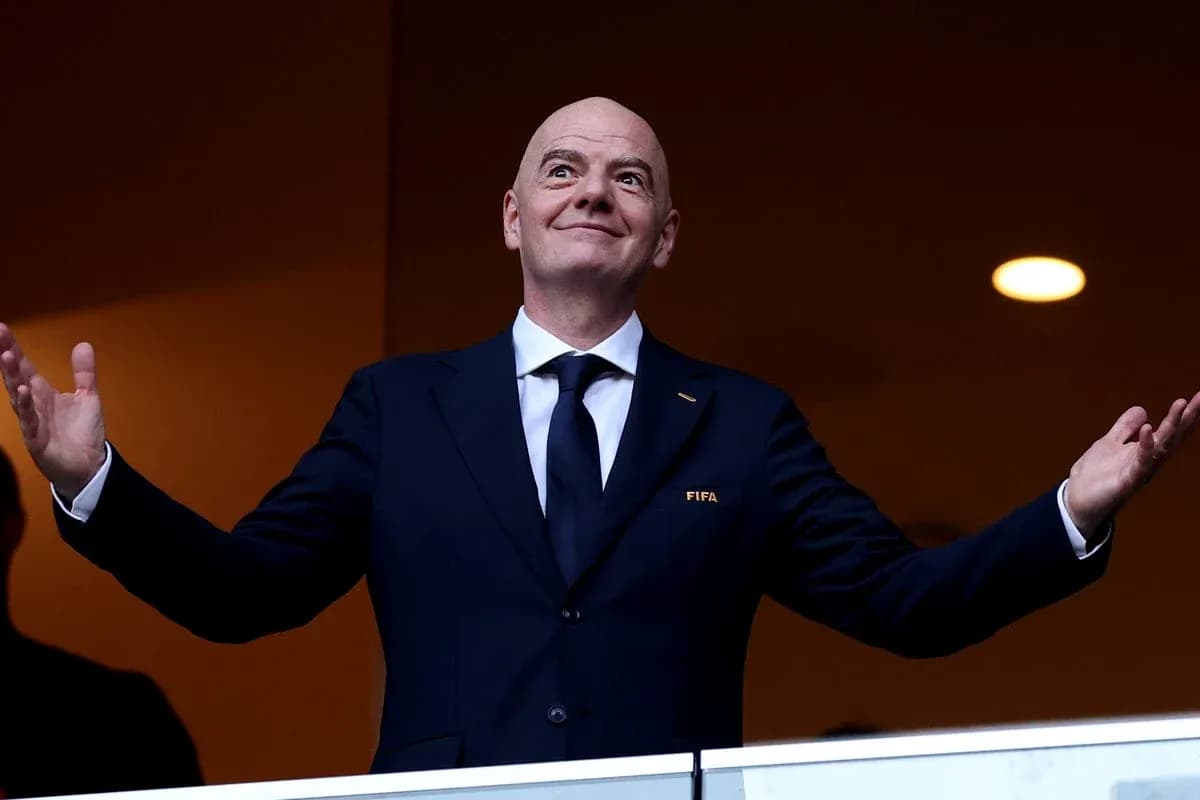
Fifa insists confidence is coming back. How do we know? Because Fifa says so.
In the parallel universe occupied by Gianni Infantino and his inner circle, the organisation’s integrity is under such fierce, unjust attack that it must now be “protected” from the outside world. Not from its own actions. From criticism of them.
This, remember, is the same Fifa that spent recent weeks quietly exploring a plan to effectively sell off the World Cup, then declared it wasn’t doing that at all. Not that many people inside Fifa could say for sure either way. Most of them were never asked.
A crisis made in Zurich
The latest chapter came wrapped in the usual corporate gloss: a “constructive and positive meeting held in Rabat, Morocco”. Strip away the wording and the reality is stark. Of all the people within Fifa, the only official actually elected by the 211 member associations is the president. And that president is facing open revolt.
A growing number of those associations want Infantino out. Others lined up against what Fifa itself christened the “Fifa Forward Enterprise proposal” – the controversial World Cup scheme that triggered this storm. That plan has now been taken off the table, again in Fifa’s own words, via a statement that pushed the limits of Orwellian doublespeak. In Fifa’s telling, the proposal is no longer the problem. The “horrible attacks” on the organisation are.
One man plunged the global game into crisis. Either Infantino came up with a radical idea and forgot to tell almost everyone – Fifa’s chief operating officer Kevin Lamour, its chief of global football development Arsène Wenger, the confederations, the clubs, the national associations, the players, the fans – or he tried to stage a power grab against the sport itself.
A letter from another planet
After the Rabat meeting, Infantino and secretary general Mattias Grafström released a joint letter. This, they suggested, would calm the waters. It contained 19 words that laid bare the scale of the delusion: “Fifa’s top management is fully confident that the outcomes of today’s meeting will help restore confidence in the organisation.”
Why wouldn’t they be confident? Infantino intends to stay. In doing so, he has either become the most divisive figure in football or, perversely, has united an extraordinary coalition of conflicting interests against him.
“Mistakes made were acknowledged,” the letter claimed, in a message otherwise drenched in breezy optimism that jarred with reality. The closest thing to an apology read: “It was agreed that it was not the intention for the Fifa council and Fifa member associations to feel excluded from the process.”
Not the intention. In which case, why were they excluded?
Secrecy, money and power
The World Cup scheme was cooked up with such secrecy that it seemed only a select few – including members of the Kushner family – were fully in the loop. National FAs were told that those voting in favour would receive more Fifa funding than those who did not. For many, that looked uncomfortably like attempted bribery. The word does not appear anywhere in Infantino’s letter.
He has now promised there will be no repeat and that a review will be conducted. Yet who will run that review? Almost certainly the Infantino-aligned faction inside Fifa, which will then deliver the conclusions it was always supposed to deliver.
To point that out, in the current climate, is to risk being accused of another “attack” on the good names of Infantino and Fifa. The thin-skinned tone that has long coloured the 56‑year‑old’s Instagram posts now seems to permeate the entire organisation.
Fifa as the victim
One sentence from the communiqué stood out for its detachment from the outside world: “It was agreed that Fifa will no longer tolerate any attacks on its integrity, good governance and due process and will take all necessary measures to protect and safeguard its name and reputation.”
The victimhood is familiar. Donald Trump has spent years presenting himself as the target of endless unfair assaults; Fifa now strikes the same pose. The problem is that any reputation Fifa once had has already been dragged through the mud during Infantino’s tenure.
This is the regime that quashed suspensions for Cristiano Ronaldo and Folarin Balogun. That twisted the rules to ensure Lionel Messi’s Inter Miami could play in the Club World Cup. That allowed the United States to bar Somali referee Omar Artan from entering the country. That courted Trump. That invented a peace prize, then handed it to a man who would go on to launch an illegal war.
Fifa became shorthand for greed. In the United States, ordinary fans didn’t just complain about ticket prices; they blamed Fifa by name. The governing body didn’t stand for impartiality when it gave preferential treatment to the Trump administration and allowed the sense to grow that decisions were being shaped in the White House. It didn’t represent the global game when it tried to hawk off the World Cup without telling most of that game what was going on.
What real reform would look like
If Fifa truly wants to restore its reputation, the route is not complicated. It needs transparency, accountability and leadership that commands trust beyond a shrinking inner circle. It needs to stop treating legitimate scrutiny as an existential threat.
Above all, it needs new people at the top.
The latest communiqué from Infantino’s Fifa offered none of that. Just another insistence that the problem lies not in Zurich, but with anyone who dares to say otherwise.
Related News
Carlos Alcaraz Urges an End to Matches Ending in the Early Hours
Carlos Alcaraz Criticizes Late US Open Finish After 3:30 a.m. Match
Jannik Sinner Set for ATP 500 Return in Beijing with Novak Djokovic Also Competing
Meet Iva Jovic: The American Tennis Prospect Making Waves
Flavio Cobolli Shares Insights on Practice Session with Jannik Sinner Ahead of Comeback
Till vs Romero: Fight Details, Undercard, and Viewing Info for This Weekend