
Frank Lampard Reflects on Jose Mourinho's Impact at Chelsea
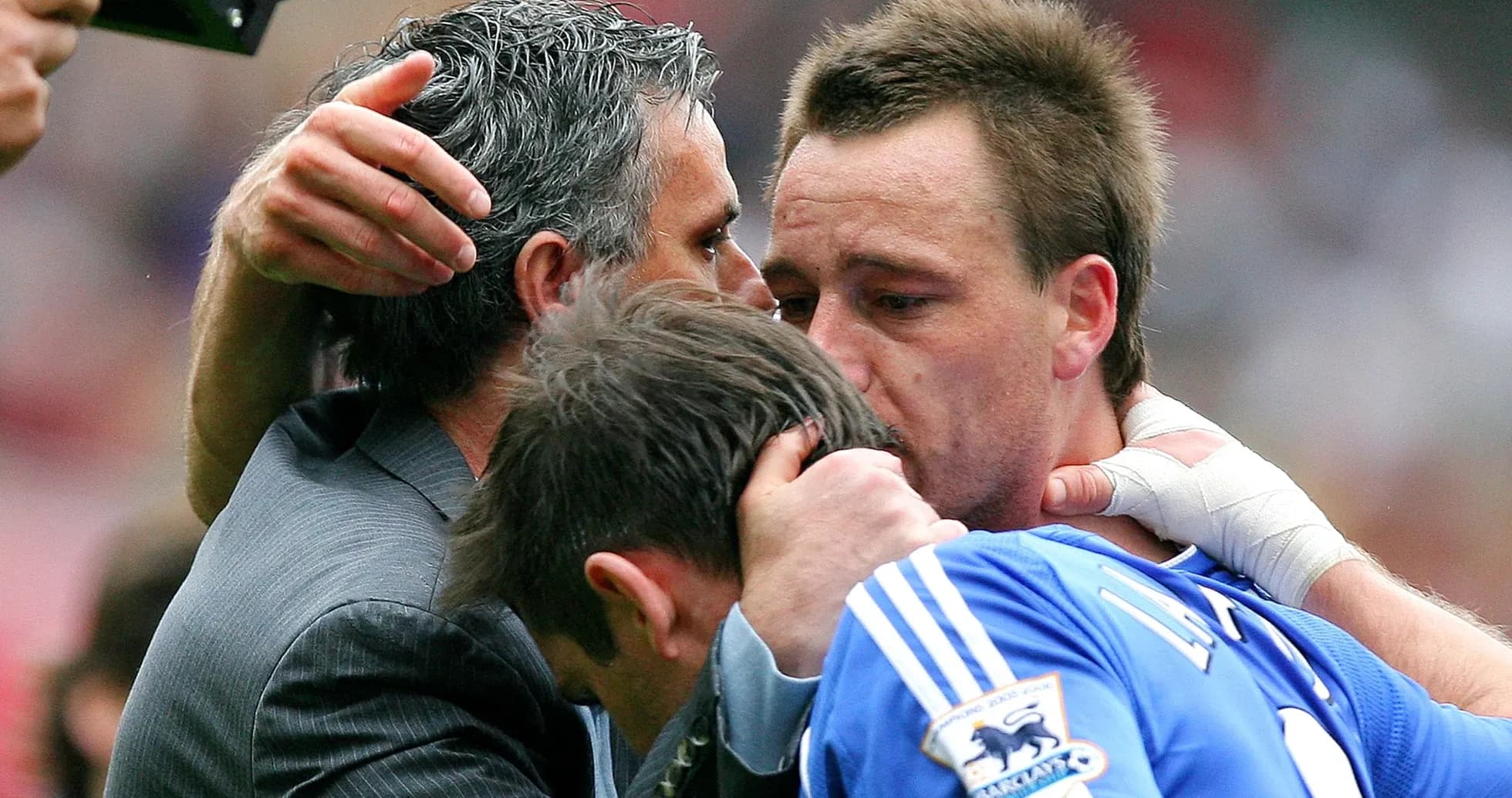
Frank Lampard still remembers the way the room changed when Jose Mourinho walked in.
No team talk. No tactics. Just the blunt truth.
"I remember him coming into the dressing room and he said to me that he’d been sacked," Lampard recalled. The words hung in the air. This wasn’t just a manager leaving; this was the man who had defined his career, the coach who had turned him from a good midfielder into an elite one, telling him it was over.
Lampard didn’t think about the next game or the next manager. He thought about Mourinho. About what he owed him. About how much he loved working for him. And then something happened that almost never happens in an elite dressing room.
There were tears.
Not the quiet, hidden kind either. Grown professionals, hardened by title races and Champions League nights, suddenly stripped of their armour. Lampard admitted: "There were tears, which is not normal in the dressing room when a manager leaves."
John Terry felt it just as deeply, maybe even more. Chelsea’s captain, the standard-bearer of that era, still carries the weight of that night against Rosenborg in the Champions League – the 1-1 draw that proved to be the final crack before Mourinho’s first spell at Stamford Bridge collapsed.
"I would leave that pitch in a coffin for him," Terry said, his admiration undimmed by time. He remembers looking around and seeing the same emotion Lampard described: "You’ve got grown men, tears running down their face, not really understanding why."
But Terry’s mind didn’t stay in that dressing room. It went straight back to his own mistake.
"When we drew the Champions League game, my man scored," he said. "If I didn’t let that person score, would he have lasted another couple of years? Who knows? I still feel kind of responsible for that, if that makes sense."
That is the level of loyalty Mourinho inspired. A defender with a trophy-laden career still replaying a single goal conceded, still wondering if a different outcome in one group-stage game might have rewritten the club’s history.
"It’s just disappointing how it all ended, if I’m honest," Terry added. "I absolutely loved him and adored him and was more upset than anyone, to be honest."
While the players wrestled with guilt and grief, Mourinho’s own explanation for how it unravelled points away from the pitch and up into the boardroom.
He spoke of a triangle that once worked. Jose. Chief executive Peter Kenyon. Owner Roman Abramovich. Clear lines, clear power, clear trust. Then, slowly, the shape started to bend.
"In my work, the triangle: Jose, Peter Kenyon, Roman was invaded by strangers," Mourinho revealed. At first, Abramovich’s box at Stamford Bridge was a tight circle: the owner, his wife, one or two trusted confidants. It felt contained. It felt like a football club.
A few seasons later, Mourinho looked up and saw a different picture. "Former players, agents," he said. People who, in his words, "know where the money is." The more the circle widened, the more his authority felt compromised. Decisions no longer flowed through the triangle. Influence leaked in from the edges.
The tension didn’t just live in strategy meetings or transfer debates. It surfaced in moments that bordered on the surreal.
Mourinho recalled one such incident that left a mark. Kenyon approached him, awkward and apologetic, with a request from Abramovich. The owner was in Sardinia, on his boats. The staff there were playing football against guests from a hotel. They were losing. The message came through: could Mourinho fly out and win a game for him?
"I think Roman changed," Mourinho said. He described Kenyon delivering the request: "Peter came to me quite embarrassed and he told me, 'Jose, I have to tell you something. The boss is in Sardinia with these boats, and the people that work in these boats they play football against guys from the hotel, and they are losing. Can you go there to win a game for him?'"
The answer was as sharp as any touchline instruction.
"'No, Peter, I have training today. I have to prepare for tomorrow; I cannot go'. And he was not happy with that."
One refusal. One training session protected. One owner left dissatisfied.
Put that alongside the agents in the box, the growing cast of voices around Abramovich, the Champions League draw that wouldn’t go away, and the picture becomes clearer. On the inside, players were in tears. On the outside, power was shifting. In the middle stood Mourinho, still trying to run a football team the way he believed it should be run.
The trophies tell one story of his time at Chelsea. The memories of Lampard and Terry, and Mourinho’s own account of that changing triangle, tell another – of a bond so strong it left champions in tears, and a fault line at the top of the club that no amount of silverware could fully repair.
Related News
Carlos Alcaraz Urges an End to Matches Ending in the Early Hours
Carlos Alcaraz Criticizes Late US Open Finish After 3:30 a.m. Match
Jannik Sinner Set for ATP 500 Return in Beijing with Novak Djokovic Also Competing
Meet Iva Jovic: The American Tennis Prospect Making Waves
Flavio Cobolli Shares Insights on Practice Session with Jannik Sinner Ahead of Comeback

Till vs Romero: Fight Details, Undercard, and Viewing Info for This Weekend