
Goals that defined a World Cup: Messi and Cabral's Moments
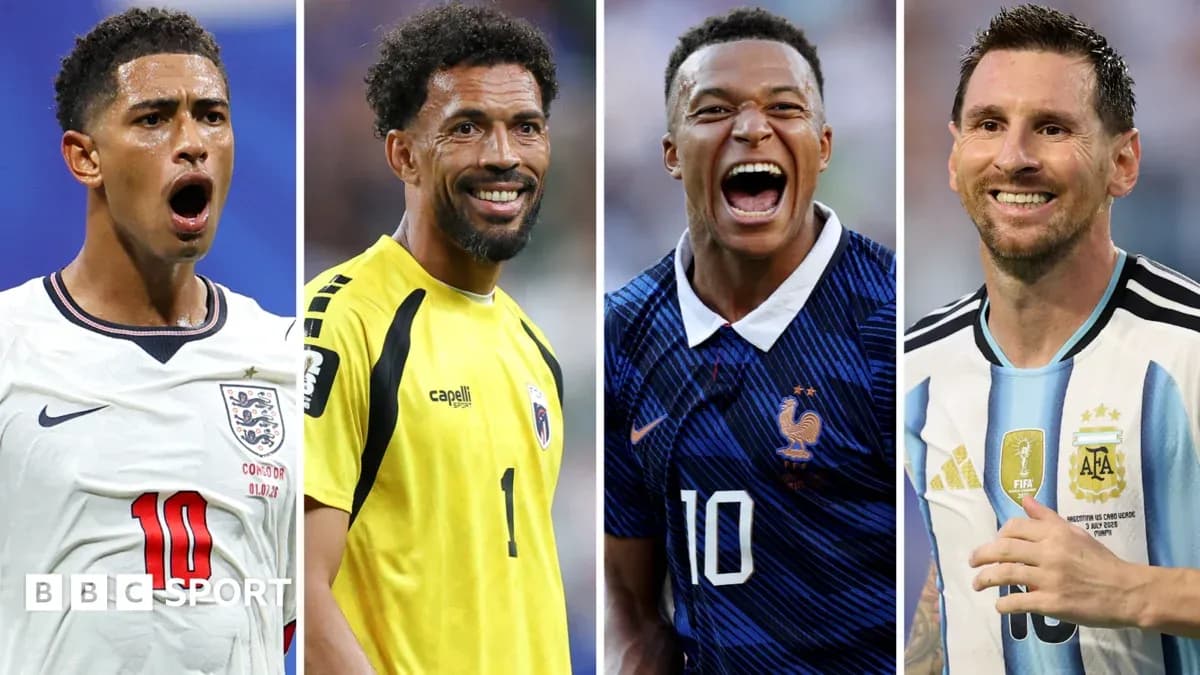
Lionel Messi bent his run, killed the pass with one velvet touch and, with barely a pocket of space to breathe, ripped the ball into the top corner. Cape Verde’s resistance, so stubborn and so proud, was finally pierced by a 39-year-old who still treats World Cups like his personal stage.
It was a finish of pure technique, the kind that silences noise in an instant. Yet this tournament refused to stay quiet for long.
Because even Messi’s masterpiece had a rival – and it came from a tiny Atlantic nation that refused to play the role of grateful guests.
Sidny Cabral, 103 minutes into extra time against Argentina, stepped on to the ball just inside the area and shaped a right-footed curler that flew beyond Emiliano Martinez and into the far top corner. The stadium didn’t so much celebrate as gasp. Cape Verde 2, Argentina 2. The world blinked. For a few, wild seconds, the holders were staring at the edge of a cliff.
Argentina survived, edging it 3-2. Cabral’s strike, though, walked straight into World Cup folklore.
Goals that defined a World Cup
This was a tournament rich in outrageous finishes, each one carrying its own weight and story.
Kerim Alajbegovic’s goal for Bosnia-Herzegovina against Qatar came straight from a playground fantasy: a weaving solo run, defenders left trailing, then a rising right-foot shot lashed into the top corner. One man, one idea, no compromise.
Erling Haaland’s contribution was different in tone but no less devastating. Norway were grinding through a bruising last-16 tie with Brazil when what looked like a casual swing of his right boot detonated into a match-winning strike. The power was frightening, the placement cruel. It crowned a performance that felt like a personal statement: this World Cup would hear from him.
Julian Alvarez chose extra time in a tight quarter-final with Switzerland to produce his own moment of genius. From distance, his swerving right-foot drive arrowed into the top corner and blew open a game that had been suffocating under tension. Under-rated? Perhaps. Decisive? Absolutely.
Antonio Nusa’s opener for Norway against Ivory Coast was all about finesse. A feint, a little shimmy to unbalance the defender, then a measured, curling finish into the top corner. No fuss. Just precision.
The art of the save
If the goals were spectacular, the goalkeeping often bordered on the absurd.
Johny Placide’s double save for Haiti against Morocco belonged on a loop. First, he blocked with his legs. Before anyone could react, he twisted and flung out a hand to his left to claw away the follow-up. It was reflex, instinct and defiance rolled into one.
At the Azteca Stadium, Jordan Pickford produced one of those World Cup performances that stick. In England’s win over Mexico, his early dive low to his left to deny Raul Jimenez’s header felt like a hinge moment. Mexico roared, the Azteca shook, and Pickford simply refused to be beaten.
Orjan Nyland’s best stop of the tournament came from his own defender. Kristoffer Ajer inadvertently sent the ball spinning towards the Norway net against Brazil. Nyland scrambled backwards, read the flight, and somehow leapt to turn it on to the post. It was chaos, solved by agility and anticipation.
Aymen Dahmen, for Tunisia against Japan, faced a close-range effort from Takehiro Tomiyasu that seemed destined to cross the line by sheer force. It didn’t. Dahmen’s reactions were so sharp the ball did everything but go in.
Patrick Beach, in Australia’s group game with Turkey, dived full stretch to his right to touch Abdulkerim Bardakci’s rising 30-yard drive on to the post. Alireza Beiranvand, for Iran, added his own highlight: beaten initially by a Kevin de Bruyne shot, he somehow recovered to block Maxim de Cuyper’s effort from inside the six-yard box. It looked impossible. He made it look routine.
The kings of the tournament
When FIFA handed over the Golden Ball to Spain captain Rodri, it confirmed what the competition had already made obvious: he was the heartbeat of the best team in the tournament. Immaculate on the ball, immovable without it, he played with the same authority that makes him irreplaceable at Manchester City.
Messi took the Silver Ball. Kylian Mbappe, the Bronze. Yet the story of their campaigns runs deeper than a podium.
Messi, at 39, was not drifting towards retirement. He was dragging Argentina through storms. In that dramatic semi-final against England, he slowed the game, sped it up, pulled strings, dictated tempo. When England tried to suffocate him in the first half, he simply waited, then struck with two assists that turned the tie.
Mbappe arrived with a different kind of energy. Early in the tournament he walked into a news conference relaxed, smiling, and spoke like a man ready to own the stage. On the pitch, that confidence turned into goals, leadership, flashes of outrageous flair and a work rate off the ball that surprised even those who thought they knew him.
For England, Jude Bellingham became something else entirely: a force of nature. The Real Madrid midfielder dragged his country through difficult spells by sheer will. He didn’t just meet the World Cup stage; he rose above it, taking his game to a new level when England needed him most.
Others impressed in quieter ways. Some saw Rodri as the true player of the tournament, the metronome of a side that conceded only once. Some pointed to Michael Olise, whose seven assists and audacious scissor-kick against Sweden – denied only by the post – lit up France’s campaign before Spain shut him down in the semi-final.
But wherever the arguments land, Messi remained the reference point. Eight goals, four assists, and a semi-final masterclass against England. At 39, still bending tournaments to his will, still rewriting the limits of longevity.
A new generation steps forward
While the old masters commanded the spotlight, the future of the game quietly took shape around them.
Pau Cubarsi, Spain’s 19-year-old centre-back, played every minute of their campaign. Calm, composed, and relentless in his reading of danger, he anchored a defence that conceded just one goal all tournament. His display against France in the semi-final, in particular, felt like a coming-of-age performance for a Barcelona defender destined for the highest level.
Morocco’s Ayyoub Bouaddi used the opening match against Brazil at the New York New Jersey Stadium to announce himself. His movement off the ball, intelligent and constant, drew comparisons to Patrick Vieira and Luka Modric. On a pitch full of stars, eyes kept drifting towards him.
Some “breakout” stories were more about global impact than discovery. Erling Haaland is hardly an unknown, yet in the US he became a phenomenon. His goals, his presence, his aura – by the end of the tournament he had crossed into household-name territory for a whole new audience.
Cape Verde’s 40-year-old goalkeeper Vozinha turned into an unlikely cult hero. Seven stunning saves in a 0-0 draw with Spain on their World Cup debut, eight more as they pushed Argentina to the brink. By the time they went out, his following had exploded from around 50,000 to more than 29 million on Instagram. A veteran keeper from a small island nation, suddenly a global star.
The USA’s early exit did little to dim the shine on full-back Alex Freeman. His performances were so strong that Mauricio Pochettino openly talked about him becoming one of the best in the world in his position.
Switzerland’s Johan Manzambi played with a grin and a swagger. Three goals in four games at just 20, a natural entertainer who never seemed overwhelmed by the stage. An injury cut his tournament short, but not before he had earned a Premier League move to Aston Villa for around £50m.
Mexico’s 17-year-old midfielder Gilberto Mora slipped into the starting line-up and immediately carried himself with the poise of a seasoned playmaker. There was a touch of Modric about him – in how he received the ball, in how he saw the pitch.
The future, clearly, is already here.
Nights that will not fade
Some World Cup memories live in scorelines. Others live in sound.
Mexico v England at the Azteca might have been the loudest of the lot. The atmosphere, a full-body experience. The Mexican national anthem rolled around the stadium like thunder. For those in the stands, it felt less like a match and more like an assault on the senses.
Outside another stadium, in Boston, Paraguay fans left a different kind of mark. After a dramatic penalty shootout win over Germany, supporters draped in flags wept in the street. One father and son called it the best day of their lives. It was raw, unfiltered emotion – the sort of scene that explains why this tournament matters so much to so many.
Messi’s opening hat-trick set an early tone. Any doubts about his hunger vanished in 90 minutes. He wasn’t done. He was coming for another World Cup.
Cabral’s equaliser against Argentina in Miami became the tournament’s cult moment. Cape Verde, the smallest nation ever to reach the knockout stages, had already stunned the champions once. At 2-2, deep into extra time, they had them reeling again. The goal was so outrageous that even neutrals didn’t know whether to laugh or scream.
Across the US, the World Cup seeped into everyday life. Tailgates with beer and sausages from the back of pick-up trucks. Strangers asking for selfies just because someone had a BBC microphone. One question kept coming back, especially around England games: “Is it coming home?”
Giants who fell, chances wasted
Not everyone left with memories they will treasure.
Brazil, under Carlo Ancelotti, trudged through the tournament. Slow. Uninspired. Un-Brazilian. Norway exposed every flaw in the last 16 and sent them home with no real complaints from anyone watching.
Senegal arrived with arguably the most talented squad in their history. Off-pitch problems and a poor environment stifled them. They led Belgium 2-0 in the last 32, looked ready to salvage their campaign, and then unravelled through tactical errors and weak game management. A gifted generation watched a golden chance slip away.
Scotland’s failure to reach the third-placed spots in their group hurt, made worse by the wait for confirmation. Portugal, led by Cristiano Ronaldo and billed as contenders, went out with a whimper – a 1-0 defeat by Spain in the last 16. Ronaldo scored three in five games, but Portugal never hit the level many expected.
The USA began brightly, fuelled by home support and optimism. Controversy around Folarin Balogun, then a limp defeat to Belgium, punctured the mood and ended their run too soon.
France, packed with attacking talent, produced a flat, strangely lifeless display in their semi-final loss to Spain. Their frontline floundered, their spark deserted them. Brazil’s early exit felt like a shock; France’s performance felt like a let-down.
Even the final venue drew criticism. MetLife Stadium in New Jersey is vast, but for many it was an expensive, awkward trip, a giant bowl stranded far from the city. Some argued Philadelphia, with its purpose-built sports complex on the edge of town, would have been a better, more human stage for the last act.
The people who coloured the tournament
For all the tactical debates and VAR arguments, it is the fans who often decide the soul of a World Cup.
Mexico’s supporters were everywhere. In Mexico City, a simple question from a restaurant MC – “Where are you from?” – turned into a spontaneous round of applause when the answer was “England”. At the Azteca, and in cities across the US, the green shirts, the songs, the fireworks after victories made their presence impossible to ignore.
Curacao’s fans, from a nation of just 150,000, filled the Philadelphia Stadium with a noise that felt far bigger than their population. Brazil’s travelling army turned every city they visited into an outpost of Rio or Sao Paulo. For 48 hours at a time, streets changed colour.
Colombia took over Arrowhead Stadium in Kansas City when they faced Ghana, turning it into a rolling party. Norway’s supporters brought the Viking row – lines of red shirts, rowing in unison – to global prominence. It became a ritual, especially when the players joined in on the pitch after matches. In Miami, during a quarter-final with England, Norwegian fans belted out “You’re going home” as they led 1-0. Seconds later, Jude Bellingham equalised. Football has a sense of humour.
Argentina’s following was sheer volume and passion. In Miami and Kansas City, crowds of more than 60,000 roared them on, singing relentlessly, turning neutral stadiums into temporary Buenos Aires enclaves.
And then there was Los Angeles, where the Mexican diaspora made every Mexico game feel like a home fixture. Fireworks cracked over the city after wins, green shirts flooded the streets, and the noise never really stopped.
Spain lifted the trophy. Rodri took the Golden Ball. Messi, older but undiminished, still bent the game to his will. Around them, a new generation announced itself, and nations large and small wrote their own chapters.
The question now is simple: when the next World Cup arrives, who will still be standing at the centre of it all – and who will seize the stage for the first time?
Related News

UFC 332 Preview: Natalia Silva vs. Wang Cong Fight Card, Odds, Start Time, and Details
Andy Roddick Responds to Andre Agassi’s Comments on Alexander Zverev at the Laver Cup

Knicks Prepare for Flexible Roles in Title Defense
Rui Hachimura Swaps Lakers Fans to Clippers in Surprising Jersey Exchange

Who Will Be the NBA's Next First-Time All-Stars? Top Picks and Long Shots for 2027
How Strong Is Your Team at Home? Check Out the 2026 Brasileirão Home Standings