
Guardiola's Warning: The Challenge of Rebuilding Manchester City
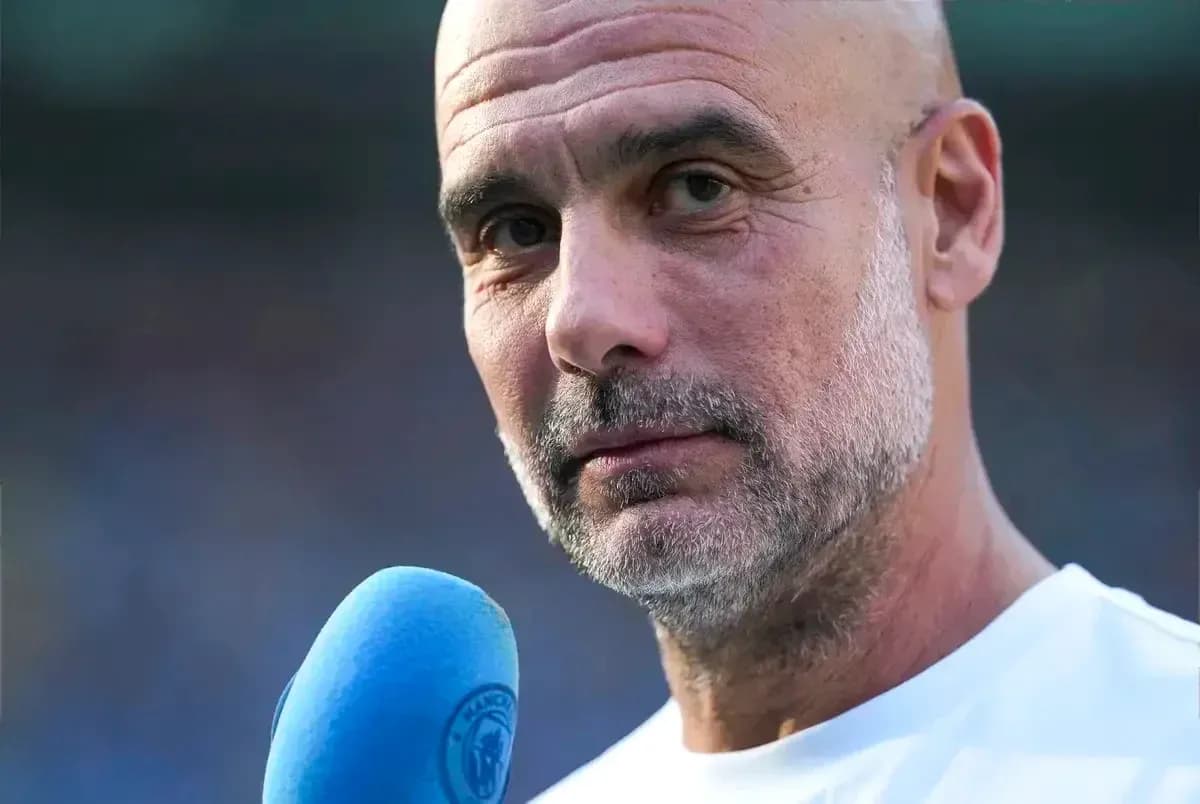
Pep Guardiola has never been one for soft landings. Not as a coach, not as a communicator. And even from a distance, the former Manchester City manager is still shaping the conversation at the Etihad.
This time, his words are aimed squarely at sporting director Hugo Viana and new head coach Enzo Maresca, as they embark on one of the most delicate operations in modern elite football: rebuilding a winning squad without breaking it.
Guardiola’s warning from experience
Guardiola spent a decade in Manchester and bent English football to his will. Four Premier League titles in a row, three FA Cups, a first UEFA Champions League crown. That kind of legacy gives him the right to speak plainly about what comes next for those who follow.
In a new interview with OKX, he did exactly that.
"I spoke many times with the Manchester City sporting director(s) (former) Txiki Begiristain and (current) Hugo Viana, and said, 'Now we have a young team for the next three or four years!'" Guardiola recalled.
Then came the sting.
"It's not true. You don't know why, but it doesn't work. A lot of players, young players, don't play and say, 'I want to leave! I'm here in cold Manchester, not playing, I want to leave!' And you have to replace those guys."
That is the heart of his message. The myth of the neatly planned “cycle” with a young core locked in for years. On paper, it looks perfect. In real life, players want minutes, status, sunshine, a different league, a different role. Especially the young ones.
The reality facing Viana and Maresca
Guardiola’s timing is no coincidence. Maresca is only just into his first pre-season as City manager. Viana is overseeing what amounts to a controlled demolition and reconstruction of a squad that has already reached the summit.
Several players are understood to be pushing for moves. Others are in limbo, waiting to see where they fit in Maresca’s plans for the 2026-27 campaign. The squad is large, the competition brutal, the patience of ambitious young footballers short.
This is exactly the tension Guardiola is talking about: a club that sells itself as a destination for the world’s best prospects, but where breaking into the starting XI is one of the hardest tasks in the sport.
The cold Manchester line was not just a throwaway quip. It was a reminder of the trade-offs. If a 21-year-old is sitting on the bench, watching another season drift by, the weather and the lack of rhythm start to matter. So do agents, national team ambitions, and the simple desire to feel important.
“Make as few mistakes as possible”
For Guardiola, the solution is not some grand philosophical reset. It is sharper decision-making.
"But the big task is how the club, organisation, sporting director, manager, CEO, hierarchy recruit the right players you need – everyone makes mistakes, but make as few as possible. That's the key point."
That line cuts to how he has always viewed recruitment: as a collective responsibility. He namechecks Begiristain and Viana, then widens the lens to the CEO, the manager, the hierarchy. If a signing fails, it is not just on the sporting director. If a young player stagnates, it is not just on the coach.
At City, those decisions now fall under Viana’s watch in a way they never have before. This is his first truly major rebuild at the club, and it is happening in full view, with Guardiola’s shadow still stretching over every department.
Young talent, hard choices
Guardiola’s warning about young players agitating to leave is not theoretical. It mirrors what is happening now.
Maresca is in assessment mode, running the rule over every player as he shapes his squad for 2026-27. Around that process, Viana is juggling loan options, permanent sales, and contract calls. Some players will be told they are central. Others will be told they are depth. A few will be told, bluntly, that their future lies elsewhere.
The risk is obvious: misjudge the balance, and the club either clogs its pathway for emerging talent or strips away too much depth in one window. Get it right, and City stay fresh without losing their edge.
This is where Guardiola’s experience bites hardest. He knows the strain of keeping 20-plus elite players happy when only 11 can start. He knows the internal politics when a young player believes he is ready and the manager does not agree. He knows that one unhappy prospect quickly becomes three.
Evidence of a new transfer approach
On the incoming side, there are early signs that Viana has taken Guardiola’s mantra to heart.
The headline move so far is the club-record £116 million signing of Elliot Anderson from Nottingham Forest. That fee alone demands scrutiny. But inside City, the move is being framed as a long-tracked, targeted addition rather than a panic buy.
It fits the profile Guardiola is pushing: know exactly why you are signing a player, how he fits, and what role he will play over several seasons. Do not simply react to an outgoing by grabbing the nearest available name.
The margin for error at this level is brutally thin. One or two bad calls in a window can be absorbed. String a few together, and even a machine as well-oiled as City’s starts to judder.
Guardiola’s message, then, is not a nostalgic look back at what he built. It is a live briefing for the people now in charge of keeping it alive.
He has laid down the rule: young players will walk if they do not play, the squad will churn faster than any five-year plan suggests, and recruitment must be ruthless in its clarity.
The question now is simple. In an era without the man who defined their greatest decade, can Manchester City still make “as few mistakes as possible” when it matters most?
Related News
UFC 332 Preview: Natalia Silva vs. Wang Cong Fight Card, Odds, Start Time, and Details
Andy Roddick Responds to Andre Agassi’s Comments on Alexander Zverev at the Laver Cup
Knicks Prepare for Flexible Roles in Title Defense
Rui Hachimura Swaps Lakers Fans to Clippers in Surprising Jersey Exchange

Who Will Be the NBA's Next First-Time All-Stars? Top Picks and Long Shots for 2027

How Strong Is Your Team at Home? Check Out the 2026 Brasileirão Home Standings