
Harry Kane: Bayern Munich's Best Transfer Ever
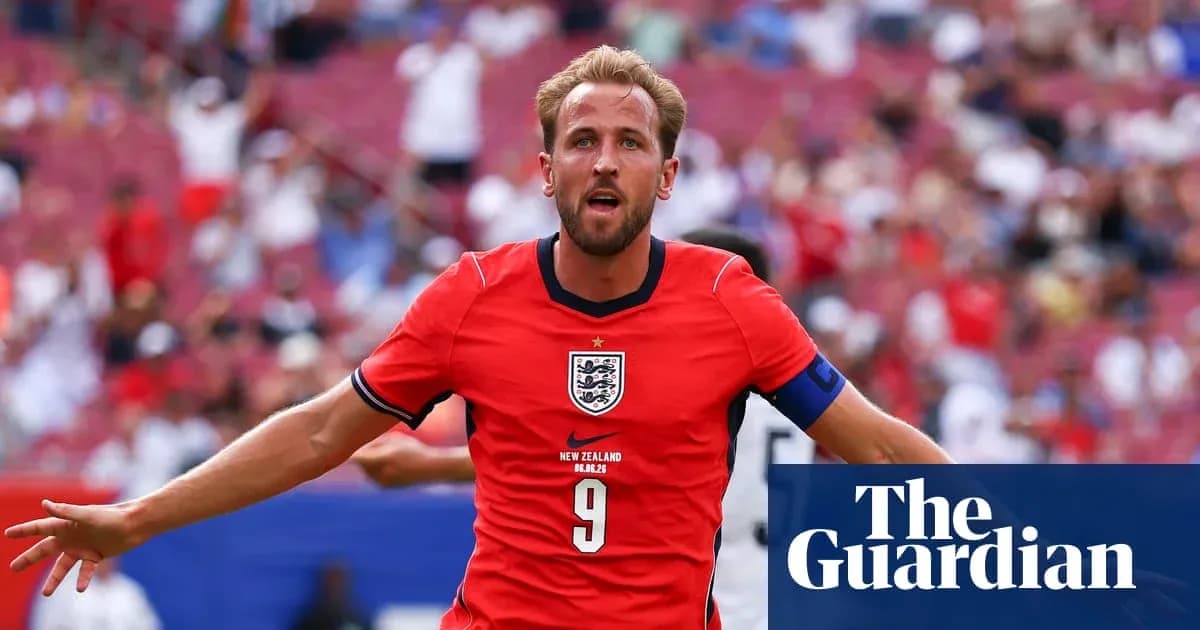
Uli Hoeness has never been shy with a superlative, so when he walked out of the DFB-Pokal final and declared Harry Kane “the best transfer the club has ever made” after a Kane hat-trick sealed a 3-0 win, it sounded like classic Bayern bombast. A month later, with the confetti swept away and the adrenaline gone, the verdict inside the club has not softened.
“He absolutely is the best we’ve had,” says one senior Bayern voice. No one is laughing it off now.
From doubted finisher to global frontman
Kane’s ascent to this point has been oddly circuitous. His struggles at Euro 2024, still ring-fenced by that glaring absence of silverware, painted the picture of a striker edging past his peak. Outside England, his Golden Boot at Russia 2018 was often dismissed with a curl of the lip – a flat-track haul, padded before the serious games began. Le Journal du Dimanche sniffed that he was “top goalscorer despite not having scored from the quarter-finals on.” The implication was clear: a tireless worker, but ultimately a nearly man.
That storyline has been ripped up in Bavaria.
When Time assembled the faces of this World Cup – Lionel Messi, Cristiano Ronaldo, Neymar, Kylian Mbappé, Lamine Yamal, Jude Bellingham – the roll call felt inevitable. Yet there, among the global icons, stood Kane. Not as a token Englishman, but as a striker who has finally forced his way to football’s top table.
Hoeness knows exactly what that means for Bayern. “When we bought him for more than €100m, that was new territory for us and a crazy risk,” he said. “But he’s paid back every single euro. Not just because he scores so many goals, but because he is a role model in the dressing room.”
The captain who doesn’t need the armband
Inside Säbener Straße, the stories are piling up. Kane putting an arm around a young teammate after a bad session. Kane staying late to talk movement with a winger. Kane, still not fluent in German but taking lessons as written into his contract, navigating a multilingual dressing room that Vincent Kompany largely runs in English.
The language barrier? Barely a bump. Bayern’s core are comfortable in English and Kane’s football does most of the talking anyway.
Hoeness, a World Cup winner in 1974 and no stranger to the dark arts of defending, has been struck by something else: the punishment Kane absorbs. “I think you’d have to cut off his head or his arm to stop him playing,” he said, half-joking, wholly admiring. In the Bundesliga, defenders kick him, lean on him, test him. He keeps coming, same rhythm, same relentlessness.
Those who watch the dressing room dynamics compare his influence to only two recent figures: Manuel Neuer and Thomas Müller. Both are Bayern institutions, Müller literally raised at the club. Kane walked in as an outsider and, in less than two years, has become one of the room’s gravitational forces.
Not the cliché Englishman abroad
When the Kane family hesitated before moving fully to Munich, the old stereotype surfaced. The British star abroad, half-in, half-out, counting the days until a Premier League return. The ghost of Ian Rush at Juventus hovered, along with that apocryphal line about Italy being “like living in a foreign country”.
The reality has been the opposite.
Kane and his wife, Kate, have settled into a rural home once owned by Lucas Hernández, tucked near the affluent suburb of Grünwald. Talk to him about life off the pitch and he comes alive about Kate and the children – Ivy, 9, Vivienne, 7, Louis, 5, and Henry, 4 – taking to Bavarian life. The kids ski in winter. Kane, contractually barred from risking the slopes, heads instead for Alpine trips to Garmisch and watches from a safe distance.
Then there was the fan day at Kirchweidach, a village of 2,000 near the Austrian border, deep in postcard Bavaria. Kane seasoned the soup in a local wedding ritual symbolising his “union” with the region, then played a form of skittles using litre beer steins. He later called it “a bit crazy” with classic English understatement, but he threw himself into it. No rolling of the eyes. No superstar aloofness.
Bavaria has taken to him. He has taken to Bavaria.
A striker at his absolute peak
Bayern knew they were buying a world-class forward. They did not fully anticipate this.
Since breaking his personal trophy drought with the 2025 Bundesliga title – the first of two league crowns and a DFB-Pokal he has now banked – Kane has gone up another level. He looks lighter, sharper, more explosive. The numbers back that up, but the eye test is even more damning for defenders.
His goal against Atalanta in the Champions League stands as a showreel piece: a drag-back and swivel that left two defenders wrong-footed, followed by that familiar, ruthless low finish. Yet his second in the recent cup final tells a deeper story. A curling strike from distance thundered off the bar; when the rebound dropped, Kane didn’t snatch. He killed it, dragged it back, spun into space he created himself, and finished. A centre-forward who used to be pigeonholed as a six-yard-box predator now manufactures his own chances from nothing.
With 61 goals for Bayern, he is the only player in Europe’s major leagues currently operating in the statistical stratosphere once reserved for Messi and Ronaldo. Only Erling Haaland, who stood alongside him at the Time photoshoot, is even close. Ronaldo once hit 66 goals in a season without a major tournament; Messi went to 73. After England’s game against New Zealand in Tampa, Kane sits on 67.
Yet his game is not just about the net rippling. At Bayern he often drops into a No 6 zone when out of possession, collecting the ball deep and dictating play. His passing range has become almost as feared as his finishing. The assist for Luis Díaz in the Champions League semi-final first leg against Paris Saint-Germain – a perfectly weighted ball threaded through the lines – underlined that. Thomas Tuchel looks certain to lean heavily on that blueprint at the World Cup.
From Ballon d’Or outsider to genuine contender
During his Tottenham years, Kane’s name rarely surfaced in serious Ballon d’Or debates. Too few trophies. Too many early exits. Too much of his brilliance lost in May rather than showcased in June.
Now the context has changed. Regular runs to the sharp end of the Champions League, medals finally on the shelf, and those absurd goal returns have pushed him into the conversation. Whether he actually wins it may hinge on what happens at this World Cup, but he is no longer gate-crashing the gala. He belongs in the room.
If you were inclined to seek a grand narrative, this summer feels like the culmination of a long, deliberate climb. Kane is 32, an age at which many strikers are managing decline. He looks like a man arriving. In football’s fable of hare and tortoise, he has always been the latter – steady, unfashionable, relentless. The finish line is suddenly in sight.
The boy nobody picked
Those who worked with him at Spurs’ academy still shake their heads. As a teenager, Kane did not fit the prototype. By elite standards he carried extra weight, he lacked top-end speed, and he was not the most eye-catching technician.
“You would never have thought that he would be what he is now,” recalls one youth coach. The turning point came around 14, when a growth spurt aligned with technical improvement. The clean, heavy strike of the ball began to separate him. So did his mind. “Any message you relayed to him, he only needed telling once, whether that was gym work or finishing practice.”
That mentality carried him through the bleak early loans. At Norwich, his spell was scarred by a glaring miss on debut against West Ham and a half-time substitution in a humbling FA Cup defeat to non-league Luton. Between those low points, he was dropped to the under-21s, where he was not even trusted to take penalties. Leicester was not much kinder. During their 2013 Championship playoff semi-final with Watford, he and Jamie Vardy both started on the bench for both legs.
Nothing about his early career screamed “future Bayern icon”.
The straight talk that lit the fuse
Even at Spurs, the man who would later build a team around him did not immediately see the star in front of him. Mauricio Pochettino watched an underwhelming pre-season in 2014 and was unconvinced. Then came the body fat test.
“We had our body fat test done and I was the highest in the team, something like 18%,” Kane has recalled. He went to see Pochettino, who did not sugarcoat it. The Argentine told him his numbers were too high, that he was not pushing himself as hard as he could. Then came the line that stuck: “You can be the best striker in the world.”
At the time, it sounded like motivational excess, a manager inflating a struggling young forward to jolt him into action. Just as Hoeness’s “best transfer ever” sounded like a headline-grabber.
Both men, it turns out, were simply ahead of the curve.
Now Kane stands at the centre of Bayern’s attack, at the heart of England’s hopes, and on the brink of the one individual prize that has always felt slightly out of reach. The question is no longer whether he belongs in that company.
It is how much higher he can still climb.
Related News
UFC 332 Preview: Natalia Silva vs. Wang Cong Fight Card, Odds, Start Time, and Details
Andy Roddick Responds to Andre Agassi’s Comments on Alexander Zverev at the Laver Cup
Knicks Prepare for Flexible Roles in Title Defense
Rui Hachimura Swaps Lakers Fans to Clippers in Surprising Jersey Exchange

Who Will Be the NBA's Next First-Time All-Stars? Top Picks and Long Shots for 2027
How Strong Is Your Team at Home? Check Out the 2026 Brasileirão Home Standings