
Jose Mourinho's Missed Opportunity at Manchester United
“Sliding doors.”
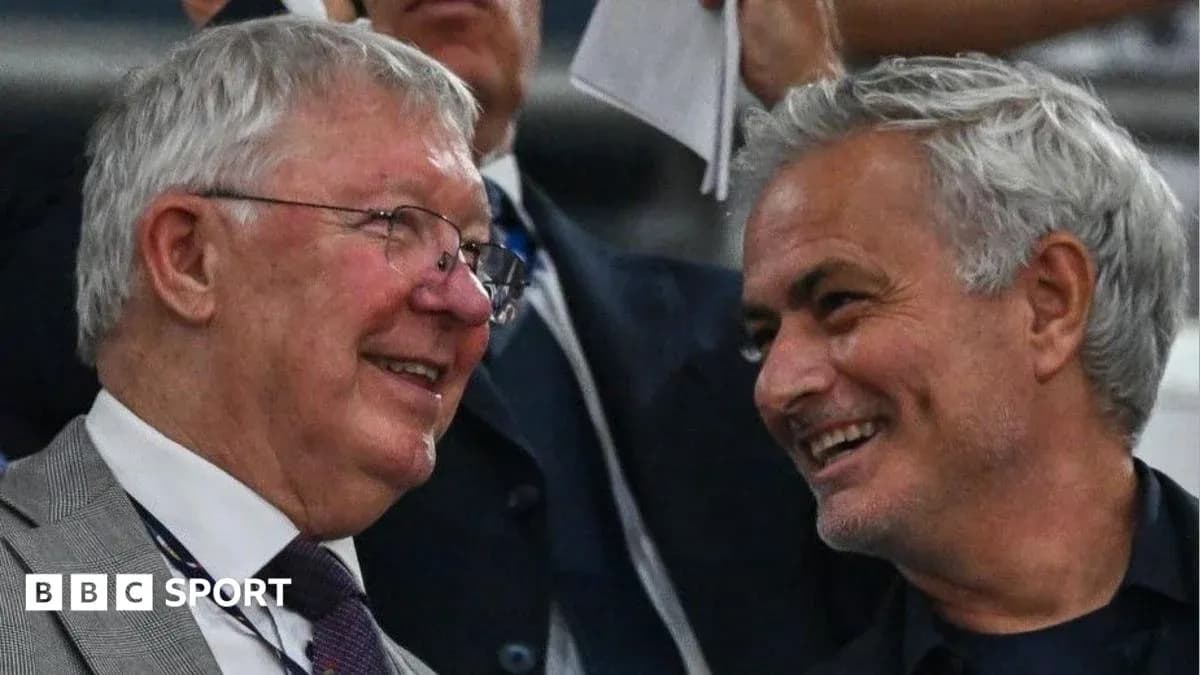
Inside Manchester United, that’s how more than one figure now describes the moment in 2013 when the club let Jose Mourinho slip away as Sir Alex Ferguson’s successor. A decision that took days to unravel, after weeks of work. A decision they still feel.
A new Netflix documentary on Mourinho, released on 11 August, finally puts meat on the bones of a story that has floated around Old Trafford for years. The courtship was real. The U-turn was real. And, in the eyes of some at United, the consequences still shape the club a decade on.
The night Mourinho cried
By the spring of 2013, Mourinho knew. In private meetings in Madrid and London, Ferguson had told the Portuguese he would step down at the end of the season. The admiration between the two managers was genuine and long-standing. This was not a cold, corporate pitch. It was the greatest manager of his era hand-picking his heir.
Talks quickly moved from possibility to practicality. Terms were discussed. Agreement was reached. For a short spell, Manchester United believed Mourinho was theirs.
Then it collapsed.
Ferguson recalls the moment in the documentary with striking clarity: “One night, he phoned me and he was crying and he says: ‘Alex, I can't take it. I've given my word to Chelsea and I'm not going to break my word’.”
In that call, the future of two superclubs shifted. Mourinho cited family reasons. He had a home in London, a promise to return after his first Chelsea sacking in 2007, and a strong bond with Roman Abramovich. The story fits. Yet some inside United remain unconvinced that domestic comfort alone pulled him back to Stamford Bridge.
What is not disputed is how close United came. For a brief window, they thought the succession plan was perfect.
A club at a crossroads
Ferguson’s departure was seismic enough. But it came in the same summer as the exit of David Gill, the respected chief executive who had been central to United’s modern dominance. The club knew it was not simply replacing a manager. It was dismantling and rebuilding an entire power structure.
Ferguson had been unique: a manager with control of almost every football decision. Replacing that with a more modern, shared structure was always going to be delicate. The feeling at the time was that Mourinho had the ego, the presence and the sheer force of will to walk straight into that storm and bend it to him.
Then the plan vanished with one emotional phone call.
With Mourinho gone and Pep Guardiola already committed to Bayern Munich, United pivoted to David Moyes. On paper, Moyes carried some of Ferguson’s traits – meticulous, demanding, steeped in British football. But he had never operated at the elite level United now lived in every week.
The club branded him “The Chosen One”. The banner hung at Old Trafford. The reality never matched the slogan.
The Mourinho that finally arrived
Three years later, in 2016, Mourinho did walk through the doors at Old Trafford, replacing Louis van Gaal, who was dismissed 48 hours after winning the FA Cup. By then, everything had changed.
The dressing room was different. Of the 18 players who started 10 or more Premier League games in Ferguson’s final title-winning season of 2012-13, only six – David de Gea, Phil Jones, Wayne Rooney, Chris Smalling, Michael Carrick and Antonio Valencia – would do so in Mourinho’s first campaign.
Mourinho had changed too. He had returned to Chelsea, won another Premier League title, and then departed in acrimony in December 2015 with the team 16th, one point above the relegation zone. The edge was still there, but the aura had been dented.
His United reign divides opinion even now. On one side, the trophy list: Europa League, EFL Cup, two Champions League qualifications. On another, the sense of a club left fractured, promises unfulfilled, and relationships scorched.
Mourinho himself has called finishing second in 2017-18 – 19 points behind Manchester City – one of the best achievements of his career. The numbers back his pride to a point: United’s 81 points that year remain their highest tally in the Premier League since Ferguson left.
Yet the story is not just about results. Mourinho clashed with key figures, most notably record signing Paul Pogba. He publicly challenged the board, accusing them of failing to back him in the market, especially over Anthony Martial, whom he wanted to sell. The tension seeped into everything.
The great ‘what if?’
Inside the club, there is a lingering belief that the Mourinho of 2013 would have been a very different proposition. A better fit. A more natural bridge from Ferguson’s empire to whatever came next.
For a start, he would have walked into a title-winning dressing room still close to its peak, not a squad already reshaped and scarred by the Moyes and Van Gaal years. The sense is that his personality – the conviction that he could outdo Ferguson – would have driven that group rather than spooked it.
There is also the matter of recruitment. Under Moyes, United hesitated. Deals dragged. Targets slipped away. Thiago Alcantara’s move from Barcelona had been agreed, sources insist, only for it to fall apart. With Mourinho in charge, those same voices are adamant: Thiago would have signed.
The Marouane Fellaini saga, still a byword for muddled thinking, is another sore point. United ended up paying £27.5m on deadline day, having earlier missed a cheaper release clause. Those close to the process are blunt – under Mourinho, Fellaini simply would not have been signed.
Mourinho had already provided United with his thoughts on potential recruits, including Daniele de Rossi, a player he admired for his intelligence and steel. The sense is not just that he would have brought in different profiles, but that he would have extracted more from the experienced core he inherited.
Everyone now accepts that Ferguson squeezed every last drop from that 2012-13 squad. They overperformed for him. The collapse to seventh the following season stunned the dressing room as much as anyone. Even the players have struggled to explain it. The belief lingers that Mourinho’s presence, his relentless demand for standards, would at least have softened the fall.
A call that still echoes
In the documentary, Ferguson tells the story of Mourinho’s tears with a calm clarity that belies its impact. For United, it was more than a missed appointment. It was a fork in the road.
They chose one path. Or rather, it was chosen for them in a late-night phone call.
The club that once seemed to control every variable has been scrambling to regain that sense of certainty ever since. And as United continue to search for a new era to rival the Ferguson years, the question hangs in the air:
What would this club look like if Jose Mourinho had never made that call?
Related News
Carlos Alcaraz Urges an End to Matches Ending in the Early Hours
Carlos Alcaraz Criticizes Late US Open Finish After 3:30 a.m. Match
Jannik Sinner Set for ATP 500 Return in Beijing with Novak Djokovic Also Competing
Meet Iva Jovic: The American Tennis Prospect Making Waves
Flavio Cobolli Shares Insights on Practice Session with Jannik Sinner Ahead of Comeback

Till vs Romero: Fight Details, Undercard, and Viewing Info for This Weekend