
Jurgen Klopp Takes Charge as Germany’s Head Coach: A Bold Comeback
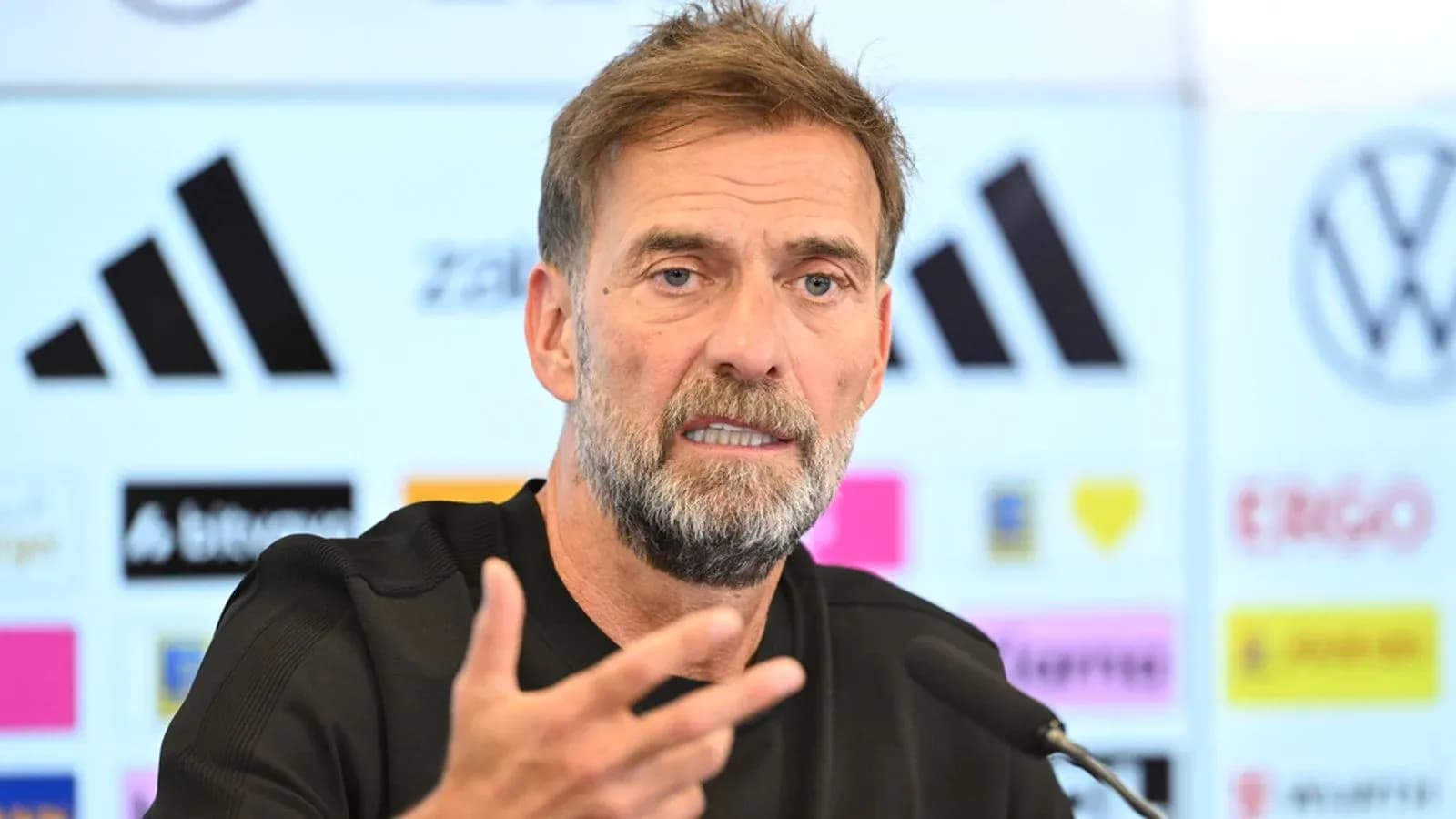
Jurgen Klopp has walked back into the dugout – and straight into the hottest seat in German football.
The 59-year-old has been unveiled as Germany’s new head coach on a deal running through to the end of the 2030 World Cup, ending months of speculation over whether one of the game’s most charismatic figures would ever return to the touchline after leaving Liverpool in 2024.
This is not a quiet comeback. It is a statement.
“If tomorrow Jurgen Klopp is s***, I will be gone”
Klopp arrived with the same raw honesty that made him a phenomenon on Merseyside. No soft landing, no gentle introduction.
"I will be remunerated very graciously and if tomorrow Jurgen Klopp is s***, I will be gone," he said, laying out his terms with the bluntness of a man who knows exactly what this job will demand. "But if the DFB says let us discontinue the job, then that's it. And if you behave badly and don't let my family in peace, I'll be gone. I'll just turn away."
It was a warning shot to critics and a line in the sand for the media and public. He wants intensity on the pitch, not toxicity off it.
Klopp framed the role not as another rung on a career ladder, but as the summit.
"Jurgen Klopp is not going to have any 'career' after the national team. This is the pinnacle, the high point of my footballing career as a coach. I will give everything I've got, and I have the best possible assistant coaching team."
For a man who walked away from Liverpool saying he was "running out of energy", this is a remarkable re-commitment to the grind of elite football. After a six‑month break, he took on a strategic role as Red Bull's head of global soccer and publicly ruled out a return to club management. The national team, though, is different. It has pulled him back.
Resetting Germany’s expectations
Klopp did not promise miracles. He dismantled that idea before anyone could build it.
"Jurgen Klopp being in the job doesn't automatically mean we're going to be world champions," he said. The name on the office door is not a shortcut to a trophy parade.
"Success is performance vs expectations. We need a new set of expectations."
Germany’s recent record has forced that conversation. The DFB turned to Klopp immediately after Julian Nagelsmann resigned in the wake of a World Cup that ended with a last‑32 penalty shoot-out exit to Paraguay. A country accustomed to measuring itself against the very best now has to admit it is no longer at the top of the food chain.
"Many people have asked themselves, are we as good as France? If the answer is no, then that is not necessarily true. If the question is, do we have players like Dembele, Barcola, Mbappe? Then the answer is no, we don't, but we can still beat them."
That is classic Klopp: realism with a competitive edge. No illusions about the talent gap, no acceptance of inferiority.
"We don't want to play like Argentina, Spain, England or France. We want to play like Germany, do it the German way but very intense. Are we the number one team at the moment? No, we aren't; I accept that. Would we be happy to be the number two team? Then people would say we aren't number one.
"At the moment, we have 11 teams ahead of us. Yes, we can beat them, but for this to happen, you need to play very good, intense football."
The message is clear: Germany are chasing, not leading. The route back is through identity and work, not nostalgia.
Building his inner circle
Klopp has always built his empires with trusted lieutenants, and the national team is no exception.
Former Liverpool assistants Pep Lijnders and Peter Krawietz join him on the Germany staff, bringing with them years of shared understanding from Anfield and, in Krawietz’s case, from Borussia Dortmund before that. Sven Bender, who played under Klopp at Dortmund, also comes into the coaching team, adding another familiar voice and a bridge to the players.
Off the pitch, there is a structural shift too. Per Mertesacker, who left his role as Arsenal's academy manager at the end of last season after eight years in charge, will become Germany's sporting director in January, replacing Andreas Rettig. A World Cup winner stepping into a key strategic position alongside one of the most influential coaches of his generation signals a clear reset at the top of the German game.
Klopp called it his mission "to make the national team squad a better team" and to widen the pool of players he can select from. "It is not something I am doing against you, I am doing it for you. It is an honour," he said.
The tone was combative but inclusive: he wants the country with him, but on his terms.
From Liverpool legend to national figurehead
Klopp arrives in the job with a club résumé that few international coaches can match. At Liverpool he won the Champions League, Premier League, Club World Cup, FA Cup and League Cup twice, transforming a sleeping giant into a relentless, high‑pressing machine that went toe‑to‑toe with Manchester City for years.
Those nine years at Anfield, and his earlier success at Borussia Dortmund, have shaped the expectation that he will impose a clear, intense style on Germany. He has already rejected the idea of copying anyone else’s blueprint. This will not be a German version of Argentina’s possession control or England’s star‑driven model. It will be something built around German traits, supercharged by his trademark aggression and energy.
The question is how quickly he can translate a club manager’s daily influence into the sporadic windows of international football.
The first test: Netherlands await
There will not be long to wait before the first judgement. Klopp’s debut on the Germany bench comes against the Netherlands in the Nations League on September 24, a fixture heavy with history and emotion.
By then, his ideas will only be in their infancy. The squad will still be adjusting. The country will still be learning how to live with a coach who has promised everything and, in the same breath, promised to walk away if the line around his family is crossed.
Germany wanted a leader, a visionary, a figure to rally around after years of drift. They have got Jurgen Klopp, on his own uncompromising terms.
Now the question is simple: can his intensity, his identity, and his refusal to accept limits drag a fallen giant back to the summit of world football before 2030?
Related News
UFC 332 Preview: Natalia Silva vs. Wang Cong Fight Card, Odds, Start Time, and Details
Andy Roddick Responds to Andre Agassi’s Comments on Alexander Zverev at the Laver Cup

Knicks Prepare for Flexible Roles in Title Defense
Rui Hachimura Swaps Lakers Fans to Clippers in Surprising Jersey Exchange

Who Will Be the NBA's Next First-Time All-Stars? Top Picks and Long Shots for 2027
How Strong Is Your Team at Home? Check Out the 2026 Brasileirão Home Standings