
Kevin Keegan: The Bridge Between Liverpool and Hamburg
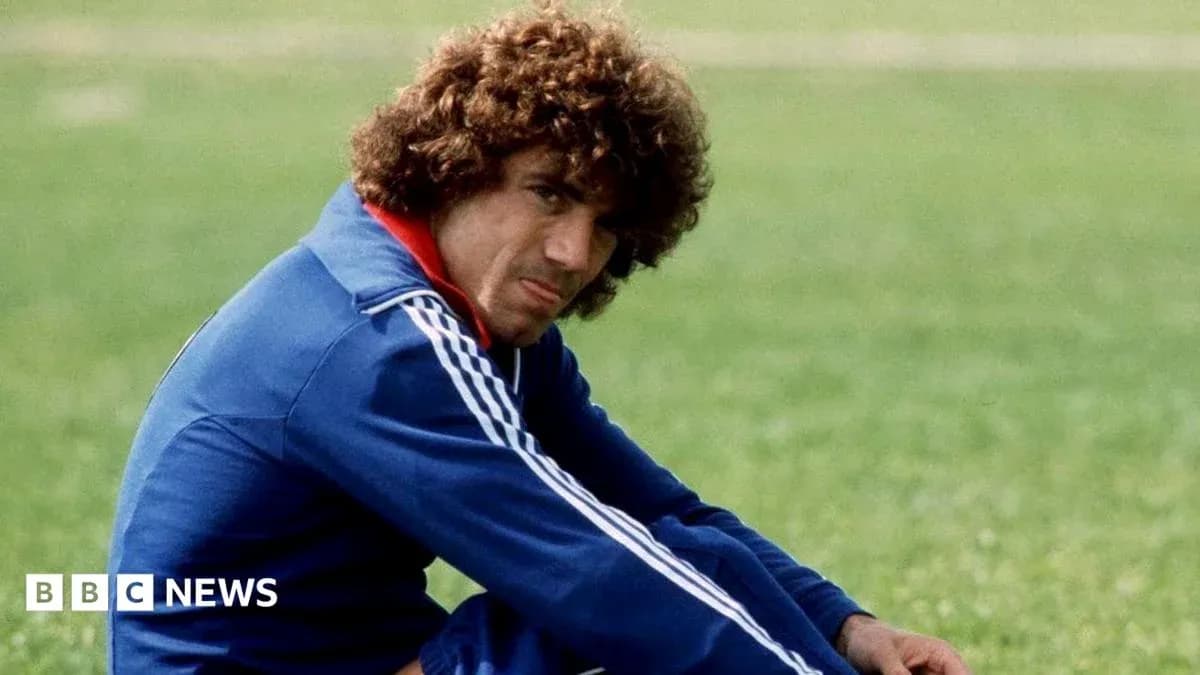
Kevin Keegan never just changed clubs. He changed landscapes.
In Liverpool, he arrived as a bustling forward with a relentless engine and left as the man who helped drag the club onto the European throne. In Hamburg, he landed as a superstar from England and became the face of a club desperate to step onto the continental stage. Between those two ports, separated by the North Sea but united by football, he built something bigger than a transfer.
Liverpool City Region Mayor Steve Rotheram captured it in a letter to the mayor of Hamburg this week, after Keegan’s death at the age of 75. Keegan, he wrote, had become “a bridge between two great cities”.
He was supposed to be back in Hamburg soon. Rotheram revealed that Keegan had been due to visit the German city with him for its annual Harbour festival, a fitting return for a man who once lit up the Volksparkstadion. Cancer stopped that journey. The diagnosis meant the former England striker was unable to travel.
By then, his story was already written in two languages.
At Liverpool, Keegan’s numbers and medals tell one part of it. One of the most decorated English players of all time, he won the Ballon d'Or twice and lifted seven major honours with Liverpool. On his final appearance for the club, he helped secure the club’s first European Cup, the moment that confirmed Liverpool’s arrival among Europe’s elite. Then he walked away, not down, but across – choosing a new challenge in Germany with Hamburg SV in 1977, in what was then a record transfer.
That decision stunned English football. It also reshaped Hamburg’s identity. Rotheram’s letter, seen by the Local Democracy Reporting Service, stressed that Keegan’s success “belonged equally to Liverpool and Hamburg”, where he was both “admired and loved”.
Back on Merseyside, his impact cut across tribal lines. “For one half of our football-mad city, Kevin was a footballing hero,” Rotheram wrote. “For the other, a well-respected irritant on derby day.” That is as close as you get to a compliment from the blue half of Liverpool.
He was never just a star in red. He became part of the city’s fabric. “He was not just a Liverpool FC legend and one of the most beloved figures our city has ever known,” Rotheram added, underlining how Keegan’s appeal ran beyond the Kop and into the streets, pubs and playgrounds where kids copied his work-rate as much as his goals.
The move to Hamburg could have broken that bond. It did the opposite. In Rotheram’s words: “When Kevin left our shores for Germany in 1977, he did more than make a then-record transfer between two football clubs. He built a bridge between two great cities.”
That bridge still stands. It runs through shared memories of a No. 7 who never stopped running, who took the risk of leaving the comfort of Anfield for a different football culture, and who ended up adored on both sides.
Rotheram closed his tribute with a line that fits Keegan’s career as neatly as it fits his legacy: “To me, he embodied better than anyone else that famous maxim: football is the people’s game.”
For Liverpool and Hamburg, Kevin Keegan didn’t just play that game. He connected two cities that will now mourn him together.
Related News

UFC 332 Preview: Natalia Silva vs. Wang Cong Fight Card, Odds, Start Time, and Details
Andy Roddick Responds to Andre Agassi’s Comments on Alexander Zverev at the Laver Cup

Knicks Prepare for Flexible Roles in Title Defense

Rui Hachimura Swaps Lakers Fans to Clippers in Surprising Jersey Exchange

Who Will Be the NBA's Next First-Time All-Stars? Top Picks and Long Shots for 2027

How Strong Is Your Team at Home? Check Out the 2026 Brasileirão Home Standings