
Klopp Takes Charge of Germany National Team Ahead of New Era
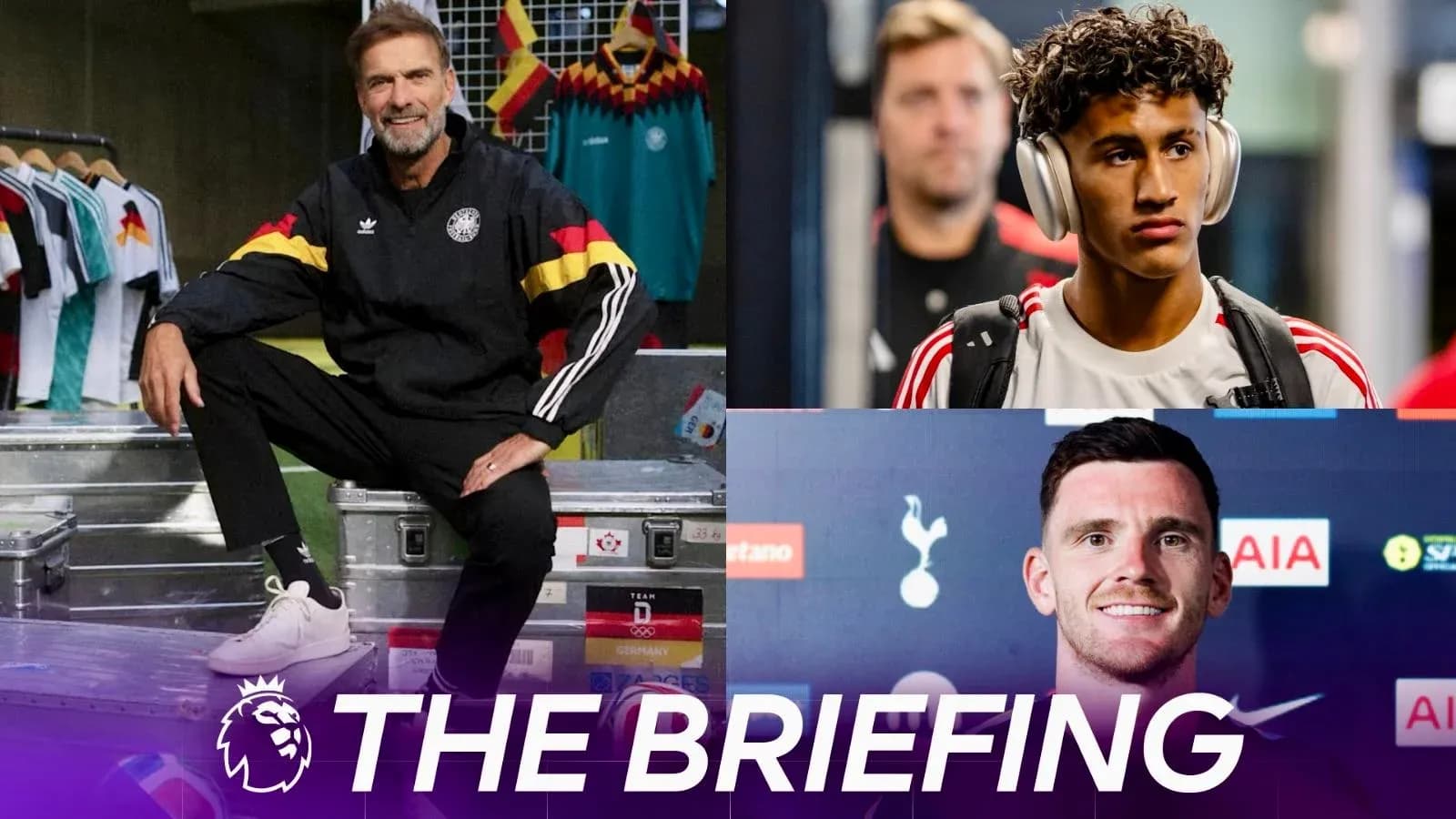
Jurgen Klopp is back where he belongs: on the touchline, at the heart of a storm.
Germany have confirmed the 57-year-old as their new head coach on a contract running to the end of the 2030 FIFA World Cup, luring him out of his post-Liverpool hiatus and into the most scrutinised job in German football.
He walks into a mess. He also walks in as the man most of the country has been waiting for.
Klopp left Liverpool in 2024 citing fatigue after nine thunderous years that delivered a Premier League title, a UEFA Champions League crown and a FIFA Club World Cup among a stack of trophies. Since late 2024 he has operated at a distance from the dugout as Red Bull’s global head of soccer. Now the distance disappears.
“Over the last few days it was almost like a movie happening to myself,” he said, as the reality of the role began to land. He knew the scale of the position from afar. Living it is something else. “I have always surmised the job of Germany head coach is really big, but now it is really dawning on me what being the national team head coach is all about.”
Germany need that energy. They were dumped out of last month’s tournament in the round of 32 by Paraguay, a defeat that prompted Julian Nagelsmann’s resignation and underlined how far the four-time world champions have fallen. This is not a handover at the top. This is a salvage operation.
Klopp has never hidden that the national team job hovered in the distance, once unthinkable, then gradually inevitable. “For many, many years it was unimaginable for me to assume this position,” he admitted. “As the years went by, it became more or less evident that sooner or later I would be asked to do this job. Now I think the time is right.”
He will not do it alone. Familiar faces are coming with him. Former Liverpool assistants Pep Lijnders and Peter Krawietz will join his staff, the trusted lieutenants who helped build the Anfield machine now tasked with rebooting a wounded giant. Per Mertesacker, who left his post running Arsenal’s academy at the end of the 2025/26 season, will step in as the German Football Federation (DFB)’s new sporting director in January, adding a World Cup winner’s gravitas and a development expert’s eye.
The first glimpse of the new era arrives in September. The opponent could hardly be more fitting. Germany face the Netherlands, captained by Virgil van Dijk, the defender who became a pillar of Klopp’s Liverpool. Old alliance on one side, new responsibility on the other. No easing in. No gentle friendlies to find his feet.
Germany wanted a leader with presence, conviction and a track record of turning doubt into belief. They now have the man who has built exactly that, twice, at Borussia Dortmund and Liverpool. The question is simple, and ruthless: can Klopp do it a third time, with a nation watching every step?
While Germany turn to a proven heavyweight, Manchester United have taken a different kind of gamble: they have handed a first senior squad call-up to a boy who is still months away from his 16th birthday.
JJ Gabriel, just 15, has been named in United’s travelling party for Friday’s pre-season friendly against Rosenborg in Trondheim. It is only a pre-season game, but it is a clear marker. United want him close.
Gabriel’s numbers at youth level are startling. Last season he was named Under-18 Premier League player of the season despite starting the campaign aged only 14. The rules kept him out of the top flight: academy players must have turned 15 before the end of August to be eligible for that Premier League season, so he could not feature in a senior matchday squad.
He simply dominated his own age group instead. The forward scored 29 goals in 32 appearances for the Under-18s, driving United to the finals of both the FA Youth Cup and the Premier League Under-18 Cup. He arrived as a winger, all pace and directness, but spent much of last season in a more central role, showing he could finish as well as create.
The coaches already know his habits. Even without eligibility for first-team squads, Gabriel became a regular in senior training, learning the tempo and physical demands long before most players his age get near the first team building.
Perspective remains vital. The youngest player to appear in a competitive fixture for United is still David Gaskell, who debuted in 1956 at 16 years and 19 days. Gabriel will not reach that age until October. There is time.
“JJ’s a big talent,” manager Michael Carrick said last season. “It’s pretty obvious to know that. And he’s had a really good season for the Under-18s. We obviously think an awful lot of him, but patience is important in managing everything that comes with working with him.”
The excitement is real. So is the caution. For now, Trondheim is a step, not a destination. How quickly the next ones come will define whether Gabriel becomes another name on a long list of prospects, or the next teenager to bend Old Trafford to his will.
Newcastle United are not dabbling in youth recruitment. They are building a strategy around it.
The club have signed 20-year-old central midfielder Aladji Bamba from Monaco, a player who only made his professional debut last season but has already done enough to convince Newcastle he can anchor their midfield of the future.
His arrival drags the average age of Newcastle’s summer signings down to a striking 19.5. Goalkeeper Ewen Jaouen, 20, has come in from Reims. Winger Bazoumana Toure, also 20, has joined from Hoffenheim. Central midfielder Sean Steur, 18, has arrived from Ajax. Four signings, all barely out of their teens.
The context is clear. Sandro Tonali has gone to Tottenham Hotspur. Anthony Gordon has departed for Barcelona. Newcastle have lost established quality and responded not by chasing like-for-like, peak-age replacements, but by investing in players they believe can grow into the roles.
Bamba fits that template. Naturally more defensive-minded, though capable of operating higher up, he profiles as a potential long-term successor to Tonali at the base of midfield. The numbers from Ligue 1 back up the eye test. Among midfielders who played at least 500 minutes last season, Bamba ranked in the top five for duels won (9.1 per game on average), tackles (3.6), successful take-ons (1.6) and aerial duels won (1.9).
Those are the metrics of a player who relishes contact, covers ground and can step past a press. Raw, yes. But raw in the right areas.
Newcastle are betting that if they cannot outbid Europe’s giants for finished articles, they can out-scout them for the next wave. Whether that gamble sustains a push at the top end of the Premier League table will be one of the more intriguing subplots of the coming seasons.
At Tottenham Hotspur, a new left-back has arrived and immediately made a decision that will resonate with the club’s older guard.
Andy Robertson, signed from Liverpool after nine years at Anfield, has chosen not to wear his usual No 26 shirt out of respect for Ledley King. The former Spurs captain last wore 26 before his retirement in 2012, and no player has taken the number since.
Robertson has carried 26 through most of his domestic career, at Dundee United, Hull City and Liverpool. It is his number, his identity. At Spurs, he decided that history mattered more.
“From my point of view, I wanted to respect that,” he said of King, now a club ambassador. “He was an unbelievable player and has done so many good things for this football club.”
So Robertson will wear 3 instead, a choice with its own meaning. “Number 3 means a lot to me – that’s my national team number, I’ve had so many good memories as number 3 for Scotland so when I knew 3 was going to become available, it was a no-brainer for me.”
His first minutes in a Spurs shirt should come on their pre-season tour to New Zealand and Australia, with games against Auckland, Sydney FC and Chelsea offering early glimpses of how he will reshape the left flank.
He has already begun to slot into the dressing room dynamic. Robertson revealed that James Maddison is his closest friend in the squad, a bond quickly put on public display when Maddison posted a photo of the Scot looking distinctly unimpressed on the flight to New Zealand, captioned: “He better liven up if he’s my company for this 26 hour flight.”
Twenty-two hours later came the follow-up: Robertson smiling at last.
A small moment, but a telling one. Spurs have brought in a serial winner who understands tradition, embraces responsibility and still has the edge to be teased by his new teammates. The shirt number has changed. The standards he brings with it will not.
Related News
UFC 332 Preview: Natalia Silva vs. Wang Cong Fight Card, Odds, Start Time, and Details
Andy Roddick Responds to Andre Agassi’s Comments on Alexander Zverev at the Laver Cup
Knicks Prepare for Flexible Roles in Title Defense
Rui Hachimura Swaps Lakers Fans to Clippers in Surprising Jersey Exchange

Who Will Be the NBA's Next First-Time All-Stars? Top Picks and Long Shots for 2027
How Strong Is Your Team at Home? Check Out the 2026 Brasileirão Home Standings