
Korea's World Cup Journey: A Coach Under Siege and a Fragile Squad
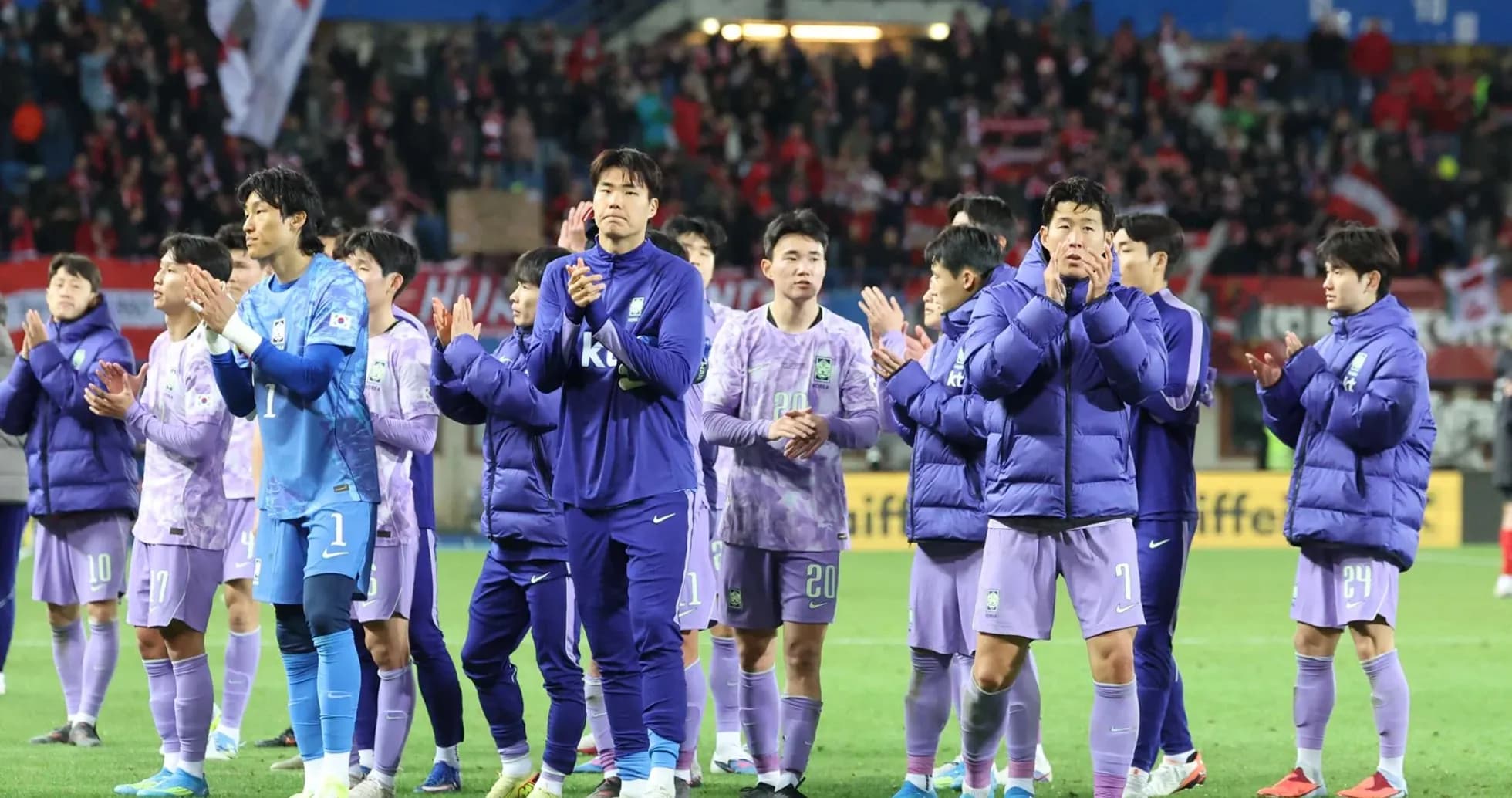
Thirty days from a World Cup, a football nation is usually humming with anticipation. In Korea, the soundtrack is different: grumbles, boos and a low, persistent doubt.
The Taegeuk Warriors are heading to their 11th consecutive World Cup, ranked 25th in the world and dropped into what looks, on paper, like a forgiving Group A. Yet the mood around Hong Myung-bo’s side is as bleak as it has been in a decade.
A Coach Under Siege, A Crowd Falling Silent
The tension started with the appointment. When the Korea Football Association handed the reins to Hong in the summer of 2024, the backlash was instant and fierce. Fans questioned the process, the timing, the vision. They didn’t keep it to social media.
They turned up at national team games and let the federation hear it. Hong was booed relentlessly. Banners demanding the resignation of KFA president Chung Mong-gyu were held aloft in stands that, for years, had been a reliable sea of red and noise.
Then came something even more damning than protest: apathy.
On Oct. 14, only 22,206 fans made their way to the 66,000-seat Seoul World Cup Stadium for a friendly against Paraguay — the lowest attendance for a men’s international in 10 years. A month later, against Ghana at the same venue, the crowd improved but still left wide swathes of empty seats: 33,256 in a stadium built for nights that shake.
Korea won both of those matches, with a victory over Bolivia in Daejeon wedged in between. Three straight wins, roughly 33,000 fans in the central city, and yet almost no one left convinced. The football was laboured, the ideas thin.
Then 2025 arrived, and the results finally caught up with the performances. A 4-0 dismantling by Ivory Coast on March 28, followed three days later by a 1-0 defeat to Austria, both away. Two friendlies, zero goals scored, five conceded. Confidence — in the stands and in the squad — sank another level.
A Soft Group, A Hard Truth
The irony is that the draw has been kinder to Korea than the public mood suggests.
Ranked 25th, Korea landed in Group A with Mexico (15th), Czechia (41st) and South Africa (60th). No Brazil. No France. No heavyweight that tilts the group on its axis from the start. Many pundits have quietly filed this under “manageable.”
The schedule helps as well. Korea open against Czechia at 8 p.m. on June 11 in Guadalajara (11 a.m. on June 12 in Korea), stay in Guadalajara for a June 18 showdown with Mexico at 7 p.m. local time, and then travel to Monterrey to face South Africa at 7 p.m. on June 24.
All three games in Mexico. Two in the same city. Minimal travel in a World Cup that will stretch across three countries — Mexico, Canada and the United States — and test logistics as much as legs.
This is the first 48-team World Cup, with 12 groups and a newly expanded knockout phase. The top two from each group advance, joined by the eight best third-place finishers to form a round of 32.
On the surface, the math favours a team like Korea. There is more room for error, more doors into the knockouts. Many experts believe they should escape the group without too much drama.
What happens after that is where the debate begins.
Korea have twice reached the knockout stage at World Cups held outside their own borders: in South Africa in 2010 and in Qatar in 2022. This squad is expected to at least match that.
Television analyst Kim Dae-gil is among those backing them to do so.
“I think Korea will get to at least the round of 16,” Kim said. “Just looking at the group stage opponents, Korea won’t have to expend as much energy as in some previous tournaments. We can beat Czechia and South Africa six times out of 10. And if we qualify for the knockouts as the top seed or No. 2 seed, then we will meet a beatable opponent in the round of 32.”
Stars, Gaps and a Fragile Core
Kim’s optimism leans heavily on two names that define this generation: Son Heung-min and Lee Kang-in.
Son, now with Los Angeles Football Club, remains the captain and emotional reference point. Lee, the Paris Saint-Germain midfielder, has grown into the team’s primary creator. Kim sees them as “game changers,” players capable of conjuring chances from nothing when structure and patterns fail.
But he also sees the cliff that lies behind them.
“The gap between the starters and backups is substantial,” he warned. “To reach beyond the round of 16, the team will need players who can support the regulars. It is imperative for the likes of Son Heung-min to stay healthy.”
That word — imperative — hangs over more than just Son.
Midfielder Hwang In-beom, a tireless two-way presence and arguably as irreplaceable as anyone in the squad, is racing against time. He injured his right ankle in March playing for Feyenoord and is currently rehabbing with the help of the national team’s medical staff. His availability could tilt the entire balance of Korea’s midfield.
Analyst Seo Hyung-wook had initially pencilled Korea in for the round of 16. Hwang’s injury forced a rethink.
Seo has now downgraded his expectations to a round of 32 exit.
“Other mainstays have not been playing well,” he noted. “Lee Kang-in and Kim Min-jae (of Bayern Munich) have not been playing much for their clubs.”
The strength, in Seo’s eyes, lies in the familiarity between the Europe-based core — Son, Lee, Kim and others who have shared dressing rooms and pressure for years. The problem is that the group is small, and the truly elite among them, at this moment, even smaller.
“The problem is there just aren’t many of them,” Seo added. “At this moment, I don’t think you could say anyone can play at a world-class level at the World Cup.”
It is a harsh assessment, but it reflects a broader concern: Korea may have enough to navigate a soft group, yet fall short when the tournament’s true pace begins.
A System Under Question
Park Chan-ha, another analyst, shares Seo’s caution and goes one step further. He also predicts Korea will bow out in the round of 32 — and he points straight at the way Hong’s team plays.
“Hong Myung-bo’s team has some talented players,” Park said. “And yet, they often have trouble creating scoring chances. The team relies on players’ individual skills to try to capitalize on those few opportunities, but you can only do so much of that at the World Cup. I think we already saw problems with this approach in the two losses in March.”
Those defeats to Ivory Coast and Austria did more than dent confidence. They exposed a tactical fault line: a side that leans heavily on individual brilliance without a reliable mechanism to generate chances, especially against organized defences.
If Hwang In-beom cannot fully participate, Park believes those issues will deepen.
Park’s focus, like Seo’s, sharpens on the opener against Czechia.
“I think the first match against Czechia will be the most important one,” he said. “This is the one Korea must win, and they will be in trouble if they don’t get it done. Czechia are not an offensive-minded team, and Korea may have difficulty breaking through their defense.”
Seo agrees on the weight of that first night in Guadalajara.
“In our World Cup history, the outcome of the first match often determined the fate for the rest of the tournament,” he said. “Mexico will be a tough test in the second match, and if we don’t win the first match, we will be in big trouble.”
History supports that anxiety. A good start has often propelled Korea forward; a stumble has usually been fatal.
Kim Dae-gil, though, looks one step further down the schedule.
He believes the second game, against Mexico, will ultimately define the group.
“I think Korea and Mexico will battle for the top spot in the group,” Kim said.
A Month to Change a Mood
So the stage is set: a sceptical public, a coach under pressure, a group that invites ambition, and a squad built on a handful of stars and a fragile supporting cast.
The travel schedule is kind. The format is forgiving. The path to the round of 32 is clear enough that failure to reach it would ignite a firestorm back home.
The bigger question is whether this team, as currently constructed and currently received, can do more than just survive a soft draw.
In 30 days, Korea will walk out in Guadalajara to face Czechia with their World Cup history — and their immediate future — hanging over them. Will that night mark the start of a deep run, or the first sign that the boos of the past year were a warning the federation chose to ignore?
Related News
Carlos Alcaraz Urges an End to Matches Ending in the Early Hours
Carlos Alcaraz Criticizes Late US Open Finish After 3:30 a.m. Match
Jannik Sinner Set for ATP 500 Return in Beijing with Novak Djokovic Also Competing
Meet Iva Jovic: The American Tennis Prospect Making Waves
Flavio Cobolli Shares Insights on Practice Session with Jannik Sinner Ahead of Comeback
Till vs Romero: Fight Details, Undercard, and Viewing Info for This Weekend