
Lionel Messi and the Unlikely Heroes of the World Cup
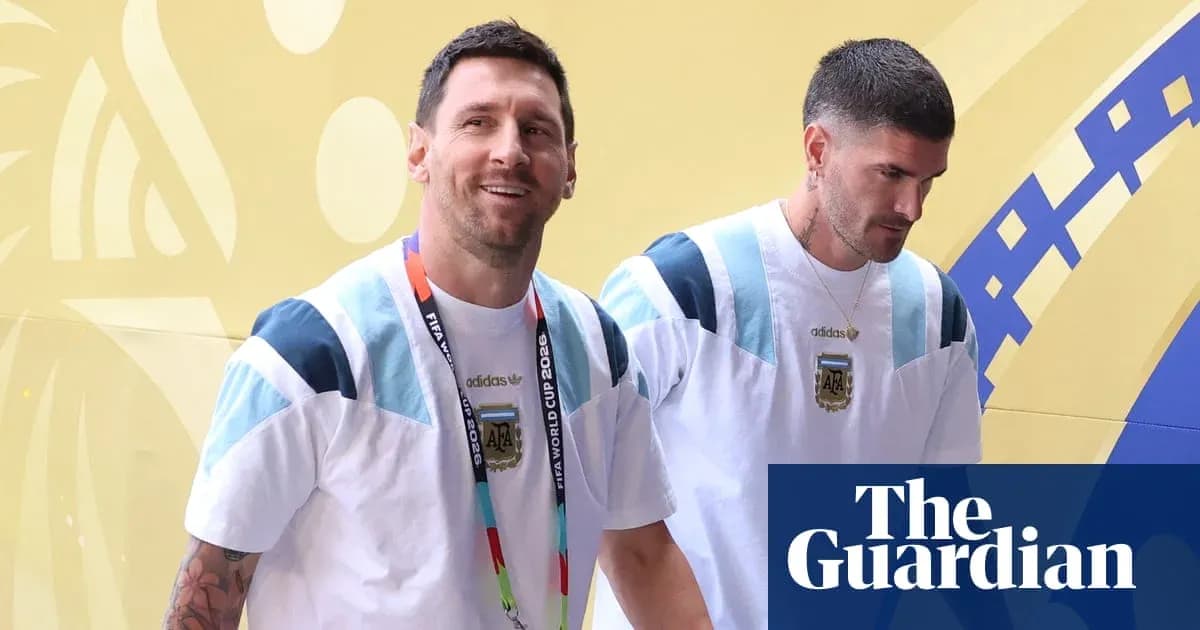
Some World Cups end careers quietly. Lionel Messi refused that script.
Across the tournament he played as if time no longer applied to him, drifting where he pleased, dictating everything with the ball and nothing without it. Argentina built the entire structure around his freedom. He repaid them with numbers that would define anyone else’s life’s work: eight goals, four assists and more progressive passes than any other player, according to Futi.
He dragged Argentina back from the edge again and again. He scored in the 3-2 win over Cape Verde. He assisted and then equalised against Egypt. He created both of Argentina’s late goals against England. At 39, he still bent games to his will.
Then came the final. And the silence.
Across 139 minutes, including stoppage time, Messi completed just 28 of 39 passes, had a single shot and never quite found the rhythm that had carried him through the month. No Golden Ball, no Golden Boot, no trophy. For him, that is almost unthinkable. But the body of work – another deep run, another tournament shaped around his genius – stretches a World Cup legacy that already lives in a different air to almost everyone who has played this sport.
Argentina’s engine room: De Paul does the dirty work
While Messi painted, Rodrigo De Paul mixed the cement.
The Inter Miami midfielder started all but two of Argentina’s games and got through 70 hard minutes against Spain. He pressed, snapped into tackles, recycled possession and kept Argentina’s shape intact. He was never going to own the headlines. His job was to keep the ball, keep the tempo and keep Messi supplied.
He did it well enough to help deliver a second straight World Cup final for his country.
Canada’s creator-in-chief and a moment for the ages
Some players leave with numbers. Stephen Eustáquio left with a moment.
The Porto midfielder – on loan at Los Angeles FC in the build-up – became one of Canada’s main creative hubs. He slung in cross after cross, averaged 2.76 chances created and 0.36 expected assists per 90 minutes, and his 46 progressive passes ranked sixth in the entire tournament.
Then came South Africa in the last 32. In the dying minutes, he intercepted a clearance, cushioned the ball on his chest and lashed a half-volley into the bottom corner. That strike sealed Canada’s first-ever World Cup knockout win. For a nation still learning what it feels like to belong at this level, that goal will live for a long time.
Richie Laryea, usually a heartbeat of this team, could not match that influence. He progressed the ball down the left and posted 0.26 xA per 90, but defensive lapses hurt. He lost his man on Bosnia and Herzegovina’s opener from a corner and struggled with positioning and tracking in the defeat to Switzerland. For a long-time Toronto FC and national-team stalwart, this tournament never truly caught fire.
Maxime Crépeau’s World Cup told a different story. The Orlando City goalkeeper conceded six goals and made six saves in five games. Functional, but far from transformative. Jacob Shaffelburg came off the bench in all five matches for LAFC and Canada without changing any of them. Jayden Nelson saw only the 87th minute of a 3-0 loss to Morocco. Mathieu Choinière started once, in the 2-1 defeat to Switzerland, and Jonathan Osorio was restricted to late cameos that passed without incident.
Canada’s history books will remember Eustáquio’s volley. The rest of the MLS contingent drifted around the margins.
South Africa’s young rock and a rising valuation
At 20, Mbekezeli Mbokazi arrived as South Africa’s youngest call-up. He did not play like it.
The Chicago Fire defender, once of Orlando Pirates, looked one of the calmest figures on the pitch for Bafana Bafana. He read danger early, stepped into duels with conviction and used the ball cleanly. Scouts noticed. Transfermarkt’s valuation of him more than doubled during the tournament, from $4m to over $9m.
His World Cup became a launchpad.
Paraguay’s grinders: little of the ball, lots of bite
Paraguay spent the tournament without the luxury of possession. Their average share of the ball across all games: 29%, the lowest of any team. That shaped everything.
Matías Galarza adapted. After missing the opener, he started every remaining match, scored the only goal against Turkey and assisted Julio Enciso in the knockout win over Germany. With so little of the ball, his attacking output was always going to be capped, yet he still found ways to matter. Having returned to River Plate after a loan at Atlanta United, he leaves with the reputation of a midfielder who can live in a low-possession system and still strike.
Beside him, Andrés Cubas did the dirty work. The Vancouver Whitecaps midfielder played every minute of Paraguay’s five games as the team’s midfield destroyer. His positional discipline and ball-winning underpinned a run that took Germany to penalties and restricted France to a single goal. In the quarter-final, he won seven of 12 duels, made seven tackles and three interceptions, and even found time to get into a heated clash with Kylian Mbappé. Paraguay went out, but not quietly.
Braian Ojeda’s role was smaller. The Orlando City midfielder played just 21 minutes against Germany in the last 32, touching the ball nine times. Miguel Almirón’s tournament, meanwhile, will be remembered for the wrong reason. Across four starts he managed only four shots and 0.11 xG, and his most notable act was a red card against Turkey for covering his mouth during an altercation – the first enforcement of IFAB’s new mouth-covering ban.
Uruguay’s defensive assignment: keep Lamine Yamal quiet
Some jobs are simple to describe and brutal to execute. Juan Manuel Sanabria’s was exactly that.
The Real Salt Lake man started two of Uruguay’s three group games, including the decisive meeting with Spain. His task: contain Lamine Yamal. Across the match, the Spanish prodigy created just 0.03 xG and 0.10 xA, completing only five of 12 attempted dribbles. Sanabria did not erase him, but he dulled the threat to a murmur.
In a tournament where full-backs and wide defenders were often exposed, that counts as a standout shift.
New Zealand: a breakout, and a veteran who looked his age
New Zealand arrived with modest expectations and left with a new name on the radar.
Finn Surman, the 22-year-old Portland Timbers centre-back, opened with two breakout performances. He threw himself into last-ditch tackles, cleared danger under pressure and looked like one of the All Whites’ best players. He even scored their only goal in a 3-1 defeat to Egypt, a rare attacking highlight for a defender who spent most of his time firefighting.
On the other side of the age spectrum, Michael Boxall endured a rougher ride. The Minnesota United veteran, one of the oldest players at the tournament, seemed half a step behind on nearly every goal New Zealand conceded. His experience could not quite cover the physical gap.
USA: Pochettino’s puzzle, a brutal night against Belgium
Mauricio Pochettino’s United States side left with more questions than answers, and several MLS-based players lived that reality in full.
Sebastian Berhalter became one of Pochettino’s go-to substitutes, appearing in every match. When he finally started, he was dropped into the No 6 role – a position that exposed the squad’s lack of natural defensive midfielders. The Vancouver Whitecaps man struggled structurally, but still produced a goal and an assist. He did what he could in a role that never quite fit.
At the back, Tim Ream’s World Cup turned on one harrowing evening. For a moment, the 38-year-old Charlotte centre-back looked like the same composed figure from Qatar. Then Belgium arrived. In a 4-1 defeat, he became the symbol of the collapse. On the opener, Charles De Ketelaere ghosted away from him to poach the first goal. Minutes after the US equalised, De Ketelaere climbed above Ream at the back post and buried another. Two blows, both on the veteran’s watch.
In goal, Matt Freese’s tournament distilled into one mistake as well. Across four games for NYC FC’s keeper, he made nine saves and passed the ball cleanly. Yet one poor outing overshadowed that work, just as it did for Ream. Matt Turner, now New England Revolution’s No 1, had even less room for error: handed a single start against Turkey, he conceded three times and did not register a save.
Miles Robinson’s World Cup almost didn’t exist. Pochettino’s reluctance to rotate meant the FC Cincinnati centre-back saw the field only in a meaningless final group game. Max Arfsten, Columbus winger, entered at the 90th minute of the 4-1 loss to Belgium and never touched the ball.
A handful of minutes, a handful of touches, and a long off-season to wonder what might have been.
Australia: steady hands, teenage steps
Australia leaned on familiar faces and introduced a new one.
Aiden O’Neill played the same understated, possession-focused role for his country that he does for New York City FC. Calm on the ball, rarely flustered, he kept Australia ticking through midfield. He earned the Superior Player of the Match award against Paraguay and followed it with another strong display versus Egypt, proof that control can be as valuable as chaos.
Behind him, 18-year-old Lucas Herrington – the youngest player in Australia’s squad – forced his way into the starting XI for the final two matches. The Colorado Rapids centre-back handled the stage with composure. Kai Trewin, another NYC FC defender, came on at half-time of the knockout clash with Egypt to replace the injured Jordan Bos and helped drag the game all the way to penalties.
For Australia, this World Cup did not deliver a shock run. It did, however, hint at a defensive core that could serve them for years.
Colombia’s old maestro, fading into the dusk
Twelve years after he lit up Brazil, James Rodríguez arrived in the United States looking like a man chasing one last great summer.
It never came.
On loan at Minnesota United, he had only recently reminded the continent of his class with a Copa América run of one goal and six assists in six matches, leading Colombia to a narrow final defeat to Argentina. That version of James – the one who bent tournaments around his left foot – did not show here. Flashes of quality remained, but there was no end product, no decisive night.
Colombia’s last-16 exit to Switzerland felt like the closing of a chapter. His World Cup story, like his club career, ended not with a bang but with a slow, empty fade.
South Korea and Son: a star left on the bench
For Son Heung-min, the World Cup delivered little but frustration.
The 34-year-old LAFC forward started twice without scoring and then watched from the bench as South Korea faced a must-win final group game. For a player who has carried his country for so long, the sight of him unused in their biggest moment said everything about a campaign that never found its spark.
Croatia’s blunt edge
Croatia’s MLS contingent had fleeting chances to leave a mark. They mostly slipped away.
Petar Musa, the FC Dallas striker, played 110 minutes across two starts and managed just one shot. He scored it, a clinical finish, but never imposed himself beyond that. Marco Pasalic, Orlando City’s winger, turned in a productive display in Croatia’s third group match yet squandered his one clear chance to score.
Two careers that might yet offer more on this stage, but this World Cup will not be the one they point to.
Haiti and Panama: fighting uphill
For Haiti and Panama, every game felt like a climb.
Danley Jean Jacques, the Philadelphia midfielder, formed half of Haiti’s double pivot alongside Jean-Ricner Bellegarde. Given Haiti’s status as the tournament’s lowest-ranked side, they were under siege in almost every match. Louicius Deedson, the FC Dallas winger, played all three group games, totalling 112 minutes and 13 completed passes – a stark illustration of how little time Haiti spent in control. Derrick Etienne Jr saw just nine minutes against Brazil, completing four passes in a cameo that changed nothing.
Panama’s Carlos Harvey started all three group-stage games. The 6ft 1in Minnesota United midfielder threatened occasionally from set-piece headers but otherwise had a quiet tournament. Aníbal Godoy, of San Diego, touched the ball only eight times, completing all eight passes in a single minute plus stoppage time against Ghana. He could not stop the last-gasp winner that knocked Panama out.
Sometimes the World Cup offers only a view of how far there is to climb.
Iraq’s brief hope and quick reshuffle
Ahmed Qasem tasted both trust and ruthlessness.
The Nashville forward featured in all of Iraq’s games and played the full 90 minutes against France, a sign of his standing in the squad. He started again in the final group match, only to be sacrificed early when Rebin Sulaka was sent off in the 13th minute and the coach was forced into a tactical reshuffle.
His tournament became a reminder that on this stage, even a starter’s status can vanish in an instant.
The margins that define a World Cup
World Cups are built on fine lines: a mistimed jump, a late red card, a single volley that cuts through decades of waiting.
For MLS and MLS-linked players, this tournament offered the full spectrum. Messi, still bending time until the final slipped away. Eustáquio writing history for Canada. Young defenders like Mbokazi, Surman and Herrington announcing themselves. Veterans such as Ream, Boxall and James Rodríguez discovering that the game no longer moves at their speed.
The numbers will live on in databases and scouting reports. The real question is simpler: which of these players will treat this World Cup as a peak, and which will look back on it as only the start of something bigger?
Related News

UFC 332 Preview: Natalia Silva vs. Wang Cong Fight Card, Odds, Start Time, and Details
Andy Roddick Responds to Andre Agassi’s Comments on Alexander Zverev at the Laver Cup

Knicks Prepare for Flexible Roles in Title Defense

Rui Hachimura Swaps Lakers Fans to Clippers in Surprising Jersey Exchange

Who Will Be the NBA's Next First-Time All-Stars? Top Picks and Long Shots for 2027

How Strong Is Your Team at Home? Check Out the 2026 Brasileirão Home Standings