
Liverpool Welcomes New Investors: Bezos, Bhatia, and the Future of Anfield
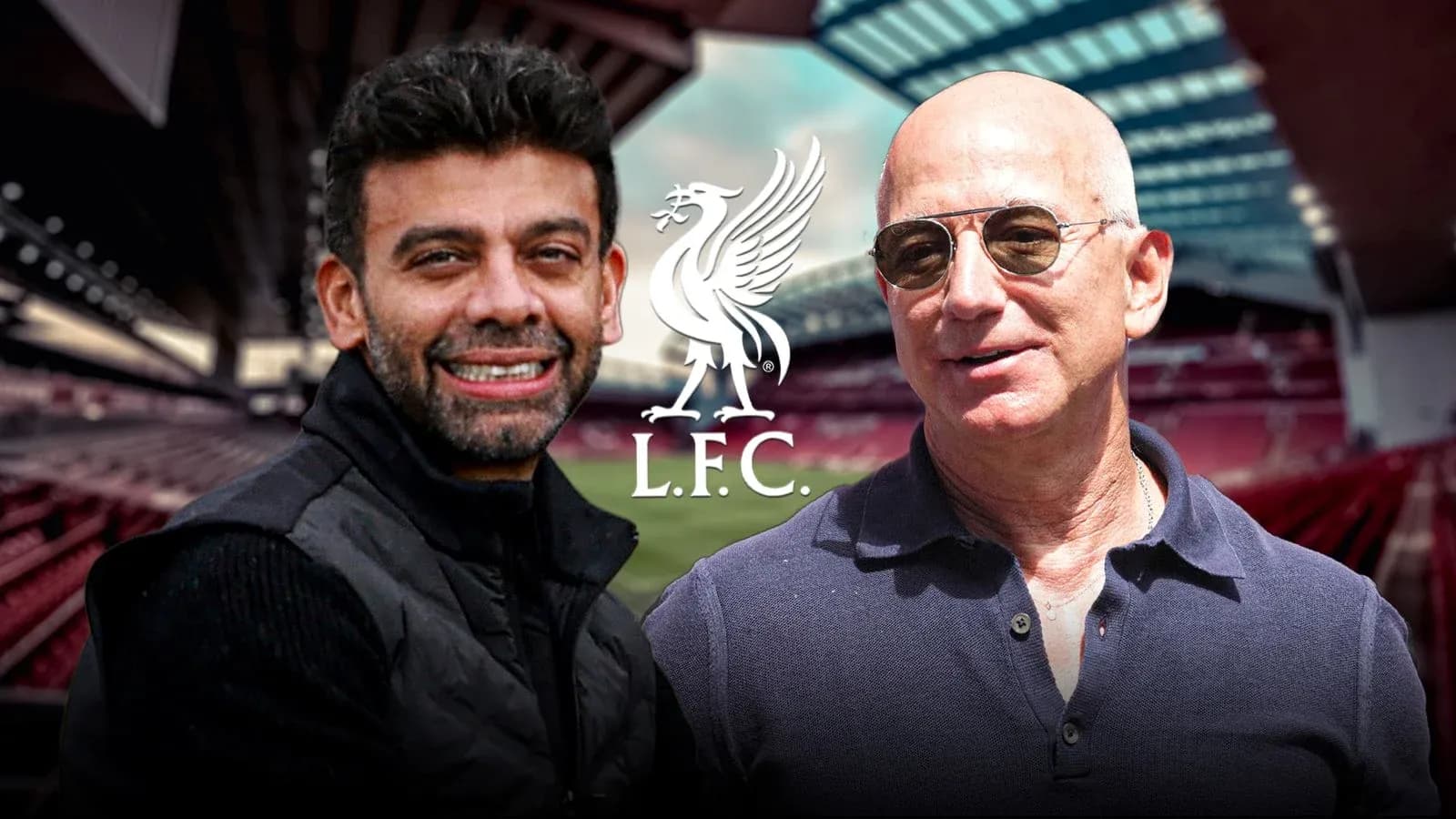
Liverpool are on the brink of welcoming one of the world’s richest men into Anfield’s boardroom.
Fenway Sports Group (FSG) are close to selling roughly a one-third stake in the club to a heavyweight consortium fronted by former QPR co-owner Amit Bhatia and featuring Amazon founder Jeff Bezos and Facebook co-founder Eduardo Saverin, according to Sky News. The deal is expected to value Liverpool at around £4.4bn ($6bn) – one of the biggest valuations the sport has ever seen.
This is not a full changing of the guard. But it is a seismic shift in who sits at the table.
Bezos, Bhatia and a new kind of power at Anfield
Bezos barely needs an introduction. The Amazon founder, Blue Origin boss and owner of Nash Holdings – the vehicle through which he owns The Washington Post – is estimated by Forbes to be worth about $281bn (£209bn). Only Elon Musk and Google co-founder Larry Page sit above him on the global rich list.
He has long been linked with American Football, previously exploring potential moves for the Washington Commanders and the Seattle Seahawks. Yet, for all his wealth, he does not currently hold a major stake in any sports franchise. Liverpool would be his first serious step into elite club ownership.
Bhatia brings something different. Less global profile, more football mileage.
The 46-year-old British Indian entrepreneur has an investment banking background and runs AyBe Capital, a multi-asset investment firm with interests spanning technology, media, property and real estate, consumer retail and health. He is married to Vanisha Mittal Bhatia, daughter of steel magnate Lakshmi Mittal, whose own fortune is estimated by Forbes at £23.2bn, making him the 72nd richest person in the world.
Bhatia’s football education came at Loftus Road. He joined the QPR board at just 28 in 2007 when the Mittal family bought a 20 per cent stake, lining up alongside Bernie Ecclestone and Flavio Briatore. He later spent five years as QPR chairman from 2018 to 2023 and remained a director and co-owner until this week, when he transferred his stake to majority owner Ruben Gnanalingam.
He has been quietly building a wider sporting portfolio too. Through AyBe Capital, Bhatia is an investor in TGL, the tech-driven golf league fronted by Rory McIlroy and Tiger Woods, and in Switch Hitter, Kevin Pietersen’s media brand focused on elite cricket content. Earlier this year, his father-in-law took a 75 per cent stake in the Rajasthan Royals IPL franchise.
This is not casual money. It is strategic, multi-sport, media-savvy capital.
Why FSG are ready to deal
FSG are not being forced to sell. They are choosing their moment.
When they arrived in 2010 – then under the New England Sports Ventures banner – they paid £300m to rescue Liverpool from the chaos of the Tom Hicks and George Gillett era. Since then, the club have climbed back to the summit of European football, lifting every major trophy on offer.
From a pure investment perspective, it borders on textbook. A £300m purchase, now a club being valued at around £4.4bn. Even selling only a slice of their holding locks in a vast profit while retaining overall control.
They have already tested the waters. In 2022, FSG signalled they were open to new investment rather than a full sale, and in 2023 they completed a deal with Dynasty Equity, who injected £164m at a valuation north of $4.5bn. RedBird Capital and Arctos Sports Partners also sit on the shareholder register as minority investors.
Now comes a different level of firepower. A one-third stake, if agreed at the reported valuation, would mark a huge step up from previous deals and place Liverpool in a financial bracket reserved for only a handful of clubs worldwide.
What the new money might mean
This is not a takeover. FSG will still own and run Liverpool. But the profile of the minority investors matters.
Bezos brings global reach, technological clout and a personal fortune that dwarfs most sovereign wealth funds. Bhatia brings hands-on club experience and a growing web of sports and media assets. Saverin, who was part of an unsuccessful consortium that tried to buy Chelsea in 2022, adds another layer of tech wealth and ambition to the syndicate.
The precise structure of the investment has not been made public. Nor has the full list of backers beyond Bezos, Bhatia and Saverin. What is clear is that this is institutional-grade money arriving at a club already operating near the top of the food chain.
For Liverpool, it raises obvious questions. How aggressively will they spend? How far can commercial revenues be pushed? What does this do to the balance of power with rivals who are backed by nation states or vast private fortunes?
Those answers will come later. For now, the move underlines FSG’s belief that Liverpool’s value still has room to grow – and that partnering with some of the world’s richest and most connected investors is the way to unlock the next phase.
Timeline and next steps
The deal was first reported at the end of last month and has moved quickly since. There is no fixed deadline, but an announcement could arrive as early as this week, or slip into next.
When it lands, Liverpool will not have changed hands. Yet the club that FSG bought for £300m in 2010 will be standing at a very different financial altitude, backed by a consortium that includes the third-richest person on the planet.
Anfield has seen plenty of eras. Shankly’s revolution, Paisley’s dominance, the modern resurgence under Jürgen Klopp. Now comes a new question: what does Liverpool look like when Silicon Valley wealth and Wall Street strategy sit behind the famous red shirt?
Related News
Carlos Alcaraz Urges an End to Matches Ending in the Early Hours
Carlos Alcaraz Criticizes Late US Open Finish After 3:30 a.m. Match
Jannik Sinner Set for ATP 500 Return in Beijing with Novak Djokovic Also Competing
Meet Iva Jovic: The American Tennis Prospect Making Waves
Flavio Cobolli Shares Insights on Practice Session with Jannik Sinner Ahead of Comeback
Till vs Romero: Fight Details, Undercard, and Viewing Info for This Weekend