
Liverpool Players at the World Cup: Performance Overview
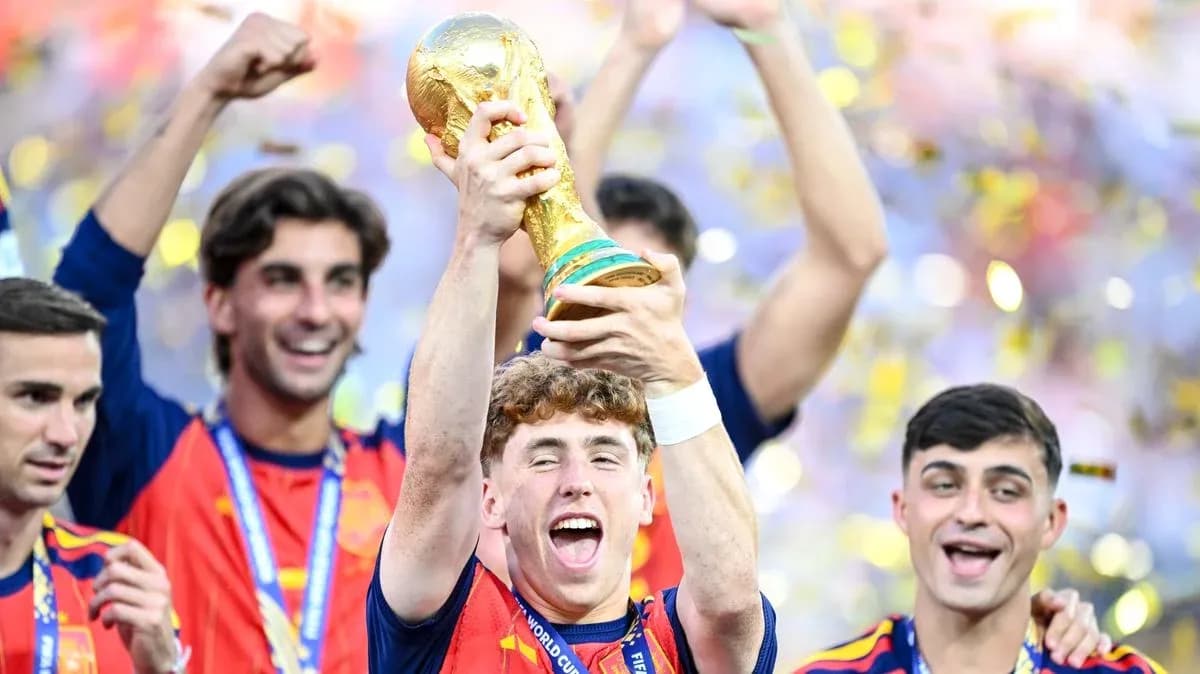
The World Cup has packed up and left North America after 104 games, a trail of VAR rows and tactical trench warfare in its wake. Spain climbed out on top, Argentina sank beneath their own cynicism, and somewhere inside that sprawling story sat Liverpool’s World Cup eight – one new signing with a medal, one reigning champion dethroned, and several reputations nudged in new directions.
This is how they fared.
Victor Munoz – N/A
A World Cup winner without a World Cup minute.
Spain were still digesting a goalless stalemate with Cape Verde when word broke that Liverpool had dropped £34.5million to prise Victor Munoz from Osasuna, the first signing of the Andoni Iraola era. It felt like perfect timing: a live audition for Anfield, set against the backdrop of a team on the march.
Then his body shut the door. An injury ruled him out for a chunk of the tournament, and when he did return to fitness, the Spain machine rolled on without him. Luis de la Fuente never turned to the winger, not even for a late cameo as the trophy edged closer.
Munoz never got on the pitch, but he did climb the podium. He becomes only the sixth serving Liverpool player to win the World Cup, following Roger Hunt, Ian Callaghan, Gerry Byrne, Fernando Torres and Pepe Reina. No clues yet about what he brings in red. That judgment will have to wait for Sunderland, Leeds, Wrexham – and the long season beyond.
Alexis Mac Allister – 7
Not the final he wanted. Very much the tournament Argentina needed from him.
Alexis Mac Allister couldn’t escape the general malaise in that grim showpiece against Spain, one of many Albiceleste players to underwhelm as the title slipped away. But strip the final out and his World Cup stands up to serious scrutiny.
He played every minute bar the dead rubber against Jordan, with Argentina already through as group winners. From a more advanced midfield role, he knitted play, broke lines and contributed decisively: a created goal against Cape Verde, then the crucial opener in the quarter-final win over Switzerland.
When Argentina teetered on the brink against England, Mac Allister helped drag them back into the fight, showing the same blend of bite and composure Liverpool fans recognise – with one notable twist. Across eight games he picked up only a single booking, a minor miracle for a 27-year-old who usually lives on the disciplinary tightrope.
He returns to Merseyside without the trophy but with momentum. Liverpool will want that version of Mac Allister, high up the pitch and brimming with responsibility, from day one of Iraola’s reign.
Alisson Becker – 7
The calm eye in a very ordinary Brazilian storm.
Back from injury, Alisson Becker did what Alisson Becker usually does: made difficult things look routine and hid the chaos swirling in front of him. Brazil bore little resemblance to their great sides of the past, brittle at the back and blunt in big moments, but the goalkeeper rarely flinched.
He had no real say in Erling Haaland’s two ruthless finishes as Norway dumped Brazil out. Those were defensive failures, not goalkeeping errors. Across the tournament he reinforced the obvious – he remains one of the elite keepers in world football.
For Liverpool, the takeaway is simple. If he stays fit, they start every game with a foundation most clubs would envy. That’s the challenge now.
Alexander Isak – 6
Ninety-minute Isak. Just not for Liverpool.
Eyebrows at Anfield will have shot up when the team sheets landed. Alexander Isak, who never once went the full distance for Liverpool last season, completed three 90-minute shifts in four games for Sweden.
He began like a man released. A goal and two assists against a feeble Tunisia side showcased his full repertoire – movement, link play, penalty-box sharpness. Another assist followed in the thumping of Holland, and the numbers looked impressive.
Then the returns dwindled. As Sweden’s level dipped, so did Isak’s influence. The longer the tournament went on, the more he resembled the player Liverpool fans saw too often last season: involved, talented, but not quite decisive often enough.
The fitness question, though, lingers loudest. Sweden got the full package. Iraola will want to know why Liverpool haven’t.
Cody Gakpo – 8
Unshackled, emotional, and devastating from the left.
Cody Gakpo arrived in North America with something to prove. Criticised heavily by sections of the Liverpool support last season, he used this World Cup with Holland to remind everyone what he can be when the role suits him.
Shifted to the left flank, he came alive. The standout display came against Sweden, where he tore into them with two goals and an assist, a performance full of direct running and conviction. He looked quicker, sharper, and far more instinctive than he had for much of his club campaign.
There was a different weight to his goal in the round of 32 defeat to Morocco. That strike came shortly after the heartbreaking news of the loss of his unborn son. In that context, his composure and clarity were remarkable, a moment that cut through the noise of tactics and systems.
For Liverpool, the message is blunt. Use Gakpo where he’s most dangerous, and you don’t just get a useful squad player. You get a match-winner.
Virgil van Dijk – 7
A captain under fire, holding a flawed line.
Virgil van Dijk’s World Cup with Holland will be remembered as much for the noise around him as for what he actually did. He scored in the entertaining group draw with Japan and laid on an assist against Tunisia, yet certain voices back home continued to pick holes in his performances.
Ronald Koeman set his side up to attack, often at the expense of defensive solidity. The back line, Van Dijk included, never looked entirely comfortable in that structure and conceded in all four matches. In such a system, mistakes are magnified, and the captain’s every decision became a talking point.
Strip away the agenda and you see a defender still operating at a high level, still dominant in most duels, still a leader. But this wasn’t a campaign to silence critics. It was one that will fuel the debate.
He returns to Liverpool with another point to prove, which is rarely bad news for the club he captains.
Ryan Gravenberch – 7
Two roles, one encouraging tournament.
Ryan Gravenberch’s World Cup offered a glimpse of his versatility – and the ongoing question of where he truly belongs. Koeman initially used him higher up the pitch than Liverpool typically do, and the midfielder responded with a bright start.
Against Japan, he produced a brace of clever assists, ghosting into pockets and threading passes that split lines. It was the kind of inventive, forward-thinking play that hints at a long-term future as an attacking eight rather than a holding player.
Then came the shift. For the defeat to Morocco he dropped back into a more defensive role, tasked with anchoring rather than breaking. He had been substituted before Holland conceded the late equaliser that dragged the tie to penalties, but the change in his remit dulled his influence.
Liverpool will note both sides of the story: a player capable of dictating games higher up, and one still learning the discipline of deeper work. Iraola’s system will decide which version emerges.
Florian Wirtz – 6
Numbers up, questions lingering.
On paper, Florian Wirtz delivered. Operating mostly off the left for a stuttering Germany, he finished with assists in three of their four matches – a solid return in a malfunctioning side.
Yet the feeling persisted that he left something out there. The talent was obvious in his first touch, his vision, his ability to slip passes through tight seams, but he never quite took full command of games in the way his reputation suggests he can.
By the time Germany’s campaign ended in controversy, knocked out by Paraguay on penalties, Wirtz was already off the pitch. Symbolic, perhaps, of a tournament in which he contributed but never truly owned the stage.
For Liverpool, watching from afar, the verdict is clear enough: the ceiling remains high, the output is encouraging, but the demand at the very top is for players who dominate, not just decorate.
Eight Liverpool players flew to the World Cup. One came back a champion, another lost his crown, and several returned with fresh questions attached to their names. Iraola’s US tour with Sunderland, Leeds and Wrexham won’t match the noise of New York or the glare of a World Cup final, but for Liverpool’s season, it might prove every bit as decisive.
Related News
UFC 332 Preview: Natalia Silva vs. Wang Cong Fight Card, Odds, Start Time, and Details
Andy Roddick Responds to Andre Agassi’s Comments on Alexander Zverev at the Laver Cup
Knicks Prepare for Flexible Roles in Title Defense
Rui Hachimura Swaps Lakers Fans to Clippers in Surprising Jersey Exchange

Who Will Be the NBA's Next First-Time All-Stars? Top Picks and Long Shots for 2027
How Strong Is Your Team at Home? Check Out the 2026 Brasileirão Home Standings