
Luka Modric's Tottenham Departure: A Complex Farewell
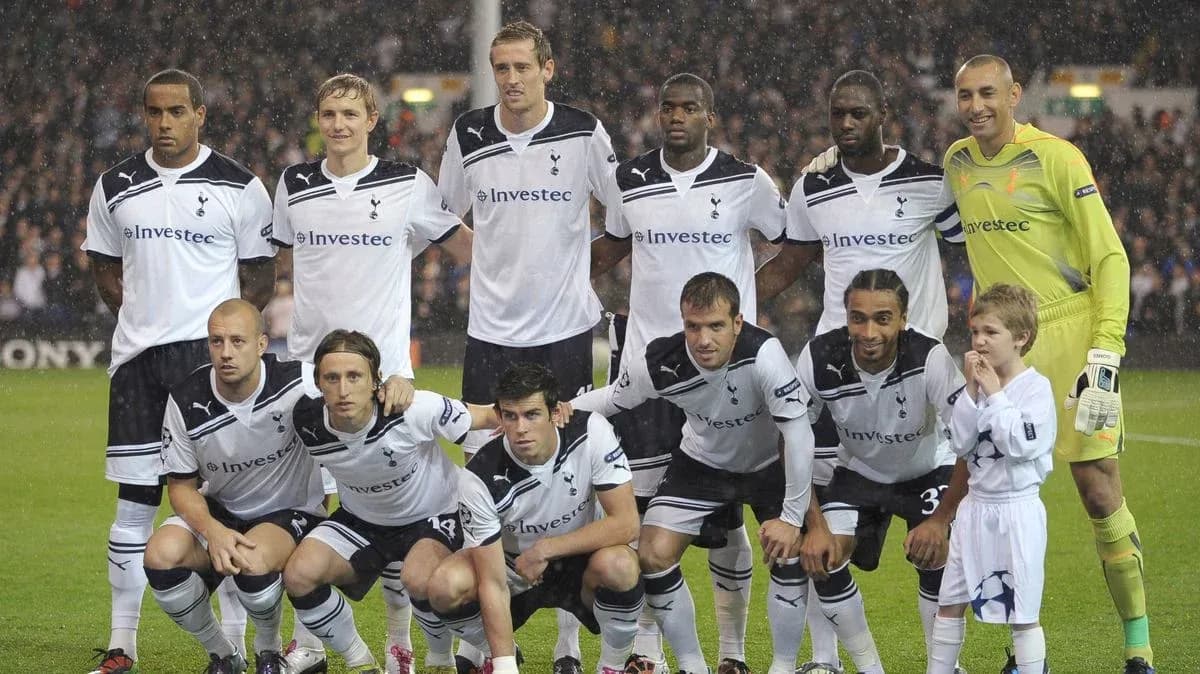
Tottenham supporters know how this story ends. They have watched Luka Modric lift the biggest trophies in the game, year after year, in white. Just not their white.
Before he became the metronome of Real Madrid’s modern dynasty, Modric was something else in north London: the signing that signalled Spurs could dream bigger. A slight playmaker with a wiry frame and a steel core, he dragged the club towards the Champions League places and gave them a midfield identity they had lacked for years.
And then, in the summer of 2012, he walked away. Not quietly.
A modern great, a messy exit
By then, Modric was approaching his peak. He had shone for Croatia at Euro 2012, already spent several seasons as one of Tottenham’s leaders on the pitch, and attracted the attention of the game’s biggest operators. Real Madrid, guided by Jose Mourinho, identified him as a priority. The feeling was mutual.
This was not Modric’s first flirtation with the exit. A year earlier he had tried to force a move to Chelsea. Spurs held firm. The relationship survived, just. But the tension never really left.
Twelve months on, with Real circling, Modric pushed harder. He didn’t just agitate. He didn’t turn up.
In a move that infuriated the club and stunned many fans, he refused to board the team flight for Tottenham’s pre-season tour of the United States, a deliberate act designed to force the club’s hand. For a player so often associated with elegance and control, it was a jarringly blunt tactic.
The punishment was swift: a fine of two weeks’ wages. Spurs, under new manager Andre Villas-Boas, still tried to keep him. They knew exactly what they were losing.
But the pull of the Bernabeu was too strong, the player too determined, and the power balance too clear. At the end of August 2012, after a summer of brinkmanship, Modric completed his £33 million move to Real Madrid.
Regret on both sides
Villas-Boas later spoke of his disappointment over the saga and said Modric had apologised for how it unfolded. The apology didn’t change the outcome. It did, however, hint at a more complicated truth behind the headlines.
Modric himself has since admitted he mishandled his exit. Speaking in 2018, he called that period one of his great career regrets, not because he left, but because of how he left. He also revealed another nagging frustration from his time in England: “My one regret is that I didn’t win a trophy with Tottenham, despite us being a strong team who played good, attractive football… I’m sorry for the way I left. I wish we had parted in a nicer way. I hope fans understand that I followed my dreams.”
Some do. Some never will.
For a section of the Spurs fanbase, refusing to travel with the squad crossed a line that brilliance alone cannot erase. For others, the move was painful but understandable. Tottenham could not match Real Madrid’s ambitions or their trophy prospects, and Modric, already 26, knew his window at the very top would not stay open forever.
The Madrid legacy that proved him right
What came next in Spain makes his decision almost impossible to argue with on football terms.
At Real Madrid, Modric did not just win trophies; he helped redefine an era. Six Champions League titles. Four La Liga crowns. Five FIFA Club World Cups. Two Copas del Rey. He became the heartbeat of a side that dominated Europe, the conductor of some of the most ruthless counter-attacking football the competition has seen.
Every medal he added in Madrid made the original Tottenham fee look smaller. At £33 million, with four years still left on his six-year deal, he left north London for a sum that now feels like a bargain. The comparison became even starker a year later when Gareth Bale, another Spurs talisman, followed him to Spain for £89 million.
For Tottenham, that contrast still stings. They lost one generational talent for what now seems like a modest fee. They sold the next for a record sum. The timing and leverage in each deal could hardly have been more different.
Still going, still dictating
Remarkably, the story hasn’t finished yet. Now at AC Milan, Modric continues to play at the highest level, a testament to his conditioning and football intelligence. He recently signed a one-year extension to stay at San Siro, and he will turn 41 next month still operating in elite company.
The sight of him gliding through midfields in Serie A offers a reminder of what Tottenham once had—and how long he has managed to stay at the top. Not many players who left the Premier League in 2012 are still shaping games in 2026.
Lessons for the new Spurs era
Tottenham today are a very different club off the pitch. They have a new stadium, a different hierarchy, and a transfer strategy bold enough to spend close to £250 million on reinforcements in a single summer. They are no longer the plucky outsiders trying to cling to their best players at any cost; they are now the ones turning the screw on others in the market.
But Modric’s departure still hangs there as a warning.
When a player of that calibre decides his ambitions have outgrown his surroundings, the club faces a brutal choice: fight and risk a stand-off that turns ugly, or sell and risk being accused of a lack of ambition. Spurs tried the first route with Modric, then had to pivot to the second. They kept him for a while, but at the cost of a messy goodbye and a fee that never truly reflected his value.
The question for Tottenham now, armed with money and a clearer vision, is simple: the next time a world-class player wants out, will they handle it with more control than they managed with Luka Modric?
Related News
Carlos Alcaraz Urges an End to Matches Ending in the Early Hours
Carlos Alcaraz Criticizes Late US Open Finish After 3:30 a.m. Match
Jannik Sinner Set for ATP 500 Return in Beijing with Novak Djokovic Also Competing

Meet Iva Jovic: The American Tennis Prospect Making Waves
Flavio Cobolli Shares Insights on Practice Session with Jannik Sinner Ahead of Comeback

Till vs Romero: Fight Details, Undercard, and Viewing Info for This Weekend