
Maisie Symonds Signs Long-Term Deal with Brighton as Captain
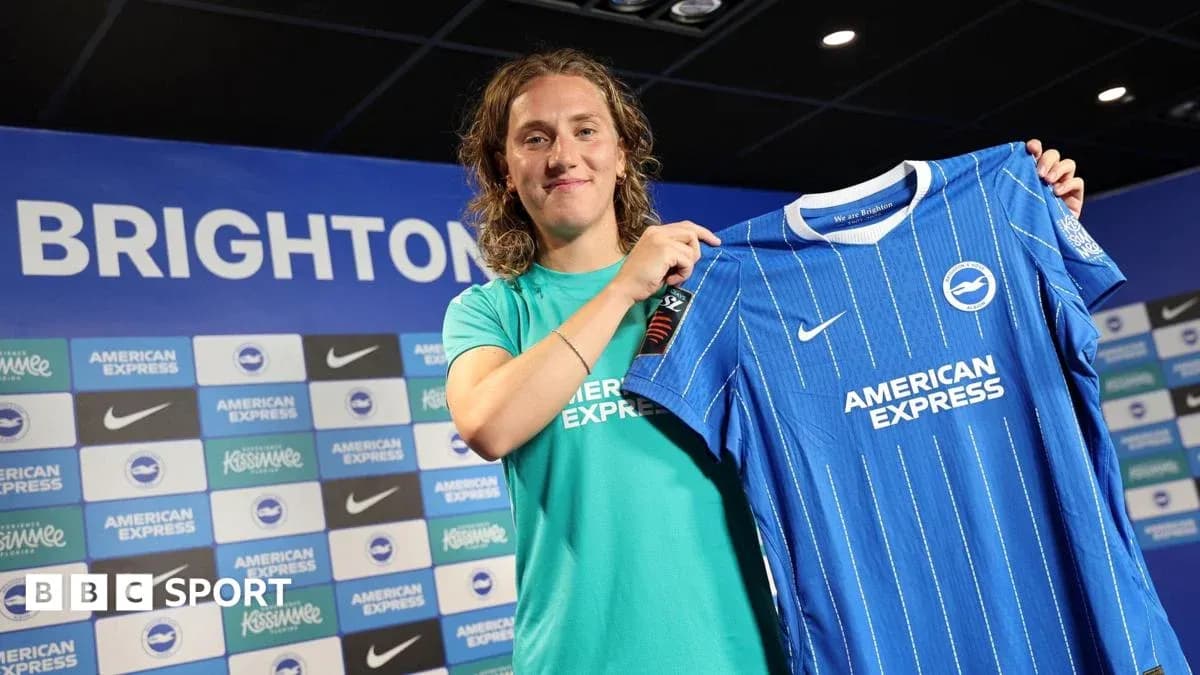
Brighton have locked in the heartbeat of their midfield and the face of their project. Captain Maisie Symonds has signed a new long-term contract, a deal that underlines both her importance and the club’s ambition to crash the Women’s Super League elite.
At 23, Symonds is already Albion’s longest-serving player. She arrived from Chelsea in 2021, quietly at first, then grew into the club’s on-field compass and, eventually, its captain. Across 103 appearances in all competitions, she has become the constant in a side that has changed around her.
Head coach Dario Vidosic did not bother to play down her influence.
“Maisie is a massive influence both on and off the pitch and since becoming captain last season she has developed both as a player and as a person,” he said, framing the deal as a cornerstone of Brighton’s future. He made the club’s intent just as clear: “We are thrilled that she is committing her long-term future and will be part of our vision to establish Brighton as one of the top four WSL clubs.”
That’s the level Brighton now talk about openly. Top four. Regularly.
A captain at the centre of a club’s rise
Symonds’ journey with Brighton has mirrored the club’s own push to be taken seriously among the WSL’s heavyweights. This is the only professional club she has known, and she has grown up with it.
“I’m very happy. I feel so at home here,” she said after signing. “It’s the only club I’ve ever played for professionally and I feel I’ve grown so much over the last six years along with the club and the women’s team.”
The statement fits what supporters see. Symonds is not just wearing the armband; she embodies the shift in standards. Training, tempo, expectations – all rising.
“It really felt like we are setting high standards for ourselves with what we’ve been building in the last two years,” she added. “We are starting to reach our potential, and we only want to get better and better.”
The words carry weight because the evidence is already there.
In May, Symonds led Brighton out at Wembley for the first Women’s FA Cup final in the club’s history. They faced Manchester City, a side used to these stages, but for Albion it was a landmark afternoon – a visual confirmation that their project is no longer theoretical. Symonds, armband on, walking her team into a national final, became the image of Brighton’s new era.
Club ambition meets international recognition
Her rise has not gone unnoticed beyond the south coast. Symonds has represented England at every age group up to under-21 level, and in March 2025 she received her first senior call-up. That step onto the international stage fits the wider pattern: Brighton are not just developing players for themselves; they are producing internationals.
For the club, keeping a player on that trajectory is a statement. For Symonds, staying put rather than testing herself elsewhere says just as much about what Brighton are building.
And the building is literal as well as metaphorical. Earlier this year, the club announced plans for Europe’s first purpose-built women’s football stadium, a £75-80m project that would place Brighton at the forefront of infrastructure in the women’s game. A dedicated home, designed for the women’s team, changes how a club is perceived – and how it perceives itself.
Tie that to a young captain on a long-term deal, a recent Wembley final, and a coach openly talking about the top four, and the direction of travel is unmistakable.
The question now is not whether Brighton are serious. It’s how quickly Symonds and this group can turn vision into regular, hard results against the WSL’s established powers.
Related News
UFC 332 Preview: Natalia Silva vs. Wang Cong Fight Card, Odds, Start Time, and Details
Andy Roddick Responds to Andre Agassi’s Comments on Alexander Zverev at the Laver Cup

Knicks Prepare for Flexible Roles in Title Defense

Rui Hachimura Swaps Lakers Fans to Clippers in Surprising Jersey Exchange

Who Will Be the NBA's Next First-Time All-Stars? Top Picks and Long Shots for 2027

How Strong Is Your Team at Home? Check Out the 2026 Brasileirão Home Standings