
Mallorca vs Villarreal: A Tactical Clash Ends in 1–1 Draw
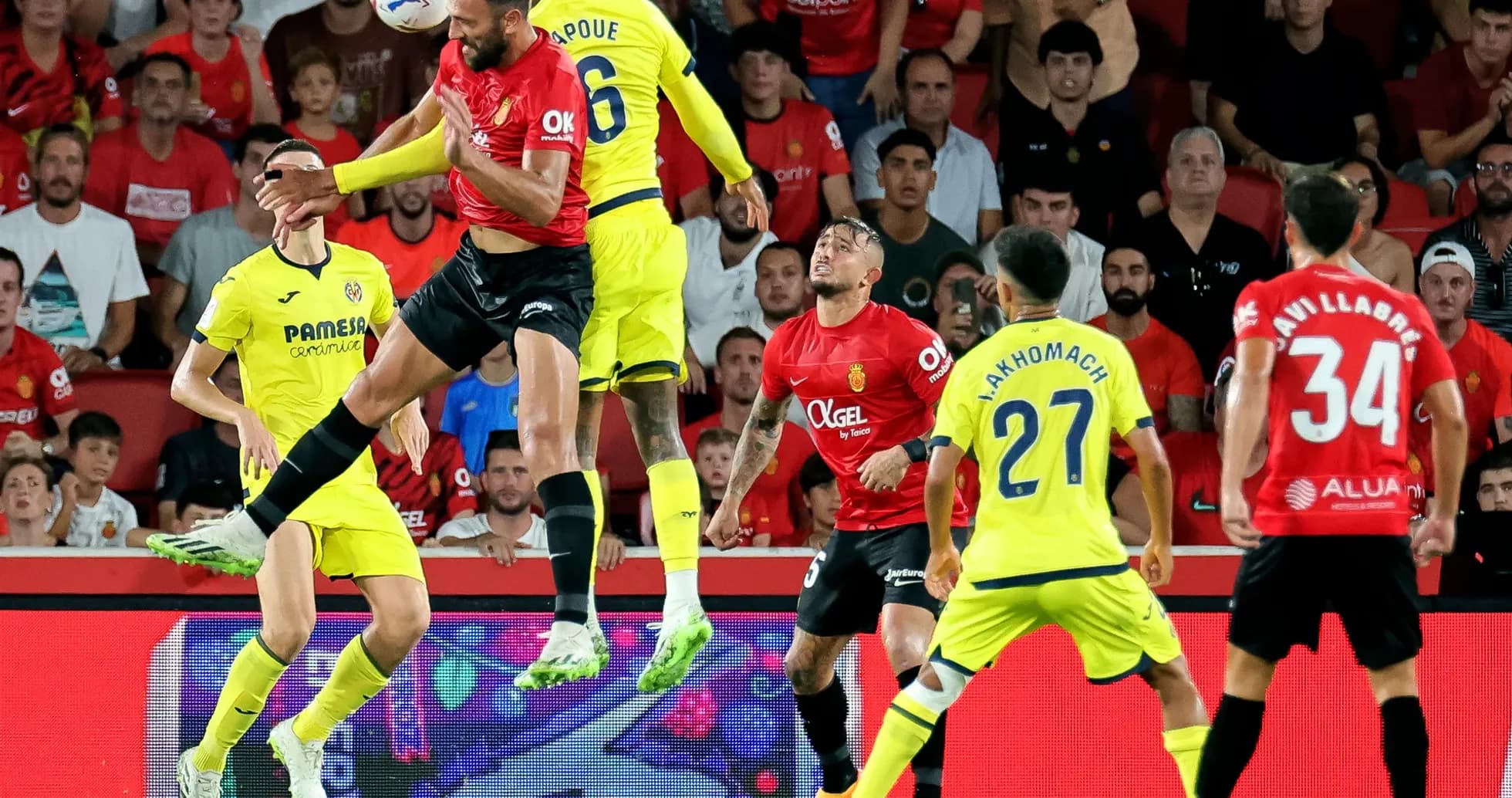
Under the midday glare at Estadi Mallorca Son Moix, Mallorca and Villarreal played out a 1–1 draw that felt like a clash of footballing identities as much as league positions. Following this result, the table snapshot still tells a story of asymmetry: Mallorca in 15th on 39 points, Villarreal in 3rd with 69. One is fighting to stay clear of the relegation undertow; the other is cruising toward Champions League waters.
Across the season overall, the numbers underline that gap. Villarreal have 21 wins from 35 league games, scoring 65 and conceding 40 for a goal difference of +25. Mallorca, by contrast, have 10 wins, 9 draws and 16 defeats, with 43 scored and 52 conceded, giving a goal difference of -9. Yet on the island, the dynamic shifts. At home, Mallorca have taken 8 wins from 18, scoring 28 and conceding 21; they average 1.6 goals for and 1.2 against at Son Moix. Villarreal, on their travels, are more mortal: 7 wins, 5 draws and 6 defeats from 18 away games, scoring 24 and conceding 25, with an away average of 1.3 goals for and 1.4 against.
The 1–1 scoreline mirrors those splits almost perfectly: a high‑flying side whose attacking ceiling travels, meeting a home team whose defensive stubbornness is amplified in familiar surroundings.
Martin Demichelis set Mallorca up in a 4‑3‑1‑2, a compact, central block built around the physical presence of V. Muriqi and the vertical running of Z. Luvumbo. Marcelino stayed true to Villarreal’s season-long blueprint: a 4‑4‑2 that morphs in possession, with wide midfielders T. Buchanan and A. Gonzalez stretching the pitch and the double pivot of S. Comesaña and T. Partey orchestrating the tempo.
Tactical voids – absences that shape identity
Mallorca’s squad sheet told its own story before a ball was kicked. A defensive spine was missing: A. Raillo (injury), M. Kumbulla (muscle injury), J. Salas (knee injury) and the suspended Pablo Maffeo (yellow cards) all absent. L. Bergstrom, M. Joseph and J. Kalumba also missed out through injury. That forced Demichelis into a back four of M. Morey Bauza, M. Valjent, O. Mascarell and J. Mojica, with Mascarell repurposed as a centre‑back. It was a solution that traded aerial dominance for ball security and line‑breaking passing from deep.
For Villarreal, the notable absentee was J. Foyth, sidelined with an Achilles tendon injury. Without him, S. Mourino’s presence at right‑back took on greater weight. Mourino is already one of La Liga’s most combative defenders this season, with 98 tackles and 9 blocked shots; his ability to defend big spaces on the flank was crucial against Mojica’s overlaps and Luvumbo’s diagonal darts.
Disciplinary trends framed the risk calculus. Heading into this game, Mallorca’s yellow-card profile showed a pronounced spike between 46–60 minutes (22.08%) and significant late‑game aggression from 76–90 and into 91–105 (each 15.58%). Villarreal, meanwhile, lean heavily into late‑game duels: 25.00% of their yellows come in the 76–90 window, with another 22.37% between 61–75. It is no coincidence that the second half in Palma turned attritional; both teams are conditioned to raise the physical temperature after the interval.
Key matchups – hunter vs shield, engine vs enforcer
Hunter vs Shield: V. Muriqi against Villarreal’s away defence
Muriqi entered this fixture as one of La Liga’s deadliest finishers: 22 league goals and 1 assist in 34 appearances, from 85 shots (47 on target). His game is about more than goals: 18 key passes, 214 duels won from 416 and 59 fouls drawn sketch the picture of a classic reference striker who anchors attacks and destabilises back lines.
Against him stood a Villarreal rearguard that, away from home, concedes 1.4 goals per game and has shipped 25 in 18 matches. The plan was clear: use Muriqi as the fulcrum to exploit that slight away fragility. His aerial presence pinned R. Marin and R. Veiga, while his ability to hold off contact allowed P. Torre to step into pockets as the “10” and Luvumbo to spin in behind.
Villarreal’s main “shield” in that context was not just the centre‑backs but the structural protection from Comesaña and Partey. Comesaña’s season profile is that of a hybrid controller‑enforcer: 45 tackles, 15 blocked shots and 30 interceptions, alongside 6 assists. He repeatedly dropped into the back line to form a situational back five against direct balls into Muriqi, trying to deny the Kosovan clean touches in the box.
Engine Room: Samu Costa vs S. Comesaña
If Muriqi was the hunter, the game’s soul lived in the duel between Samu Costa and Comesaña. Costa has been Mallorca’s heartbeat all season: 7 goals and 2 assists, 62 tackles, 13 blocked shots, 25 interceptions and a bruising duel load of 400 contests, 207 of them won. He also arrives here carrying 10 yellow cards, emblematic of his willingness to live on the disciplinary edge to protect his back line.
Comesaña, for Villarreal, mirrors that profile with a slightly more polished passing range. His 1,169 completed passes at 82% accuracy and 26 key passes make him the conduit between build‑up and the front two. In Palma, their duel was about who could dictate where the game was played: Costa trying to drag the contest into central scrums and second balls; Comesaña aiming to shift it into Villarreal’s preferred wide channels.
When Costa stepped high to press, S. Darder and M. Morlanes had to close the gaps behind him, forming a tight triangle to prevent Villarreal’s midfield from turning. That congested the centre, forcing Villarreal to rely on Buchanan’s width and A. Gonzalez’s inside‑out movements to create overloads.
Wide battles and the second wave
On the flanks, J. Mojica’s willingness to surge from left‑back was a deliberate ploy to pin S. Mourino and test Villarreal’s right side, where Mourino’s aggressive front‑foot defending can occasionally leave space in behind. On the other side, M. Morey Bauza’s more conservative positioning helped Mallorca guard against transitions led by Buchanan.
Villarreal’s bench also carried significant threat. G. Mikautadze, with 11 goals and 5 assists in the league, and N. Pépé, who has 8 goals and 6 assists plus 53 key passes, offered Marcelino the option of injecting creativity and 1v1 threat against a tiring defence. Their presence on the team sheet alone shaped how deep Mallorca’s full‑backs were willing to defend in the final quarter of an hour.
Statistical prognosis – xG tilt, resilience restored
Even without explicit xG values, the season-long trends offer a clear lens. Villarreal’s overall attacking average of 1.9 goals per game, combined with Mallorca’s total defensive average of 1.5 conceded, suggests that, on paper, the visitors should have generated the higher xG and more sustained pressure. Mallorca’s home attacking average of 1.6, against Villarreal’s away defensive average of 1.4 conceded, points to the hosts creating enough to justify their goal.
The draw therefore fits a pattern: Villarreal’s firepower travelled, but not at full domestic strength; Mallorca’s home resilience held, even with a patched‑up back line. With both teams perfect from the spot this season overall (Mallorca 5 penalties scored from 5, Villarreal 6 from 6, and no penalties missed for either), there was always the sense that a single moment in the box could swing it. That it finished level speaks to Mallorca’s collective discipline and Villarreal’s ability to keep their Champions League push on track without overextending.
In narrative terms, this 1–1 is a point of confirmation for both. Mallorca remain a stubborn, combative home side whose structure and central steel – embodied by Samu Costa and the ever‑willing Muriqi – can bloody the nose of anyone. Villarreal leave Palma still looking like a complete, top‑three outfit, their 4‑4‑2 and deep creative pool (Comesaña, Mikautadze, Pépé, Alberto Moleiro) ensuring that even on an off‑day, they carry enough threat to avoid defeat.
Related News

Barcelona Dominates Sevilla in Tactical Showdown
Atletico Madrid vs Real Madrid: A Tactical Derby Analysis
La Liga Officials Admit Refereeing Mistake in Madrid Derby Over Lee Kang-in's Tackle on Federico Valverde

Elche vs Real Madrid: A Clash of Opposites in La Liga

Atletico Madrid Dominates Osasuna 4-0 in La Liga Showdown

Barcelona's Dominance: 7-2 Triumph Over Racing Santander